What Big History misses

Ian Hesketh in Aeon:

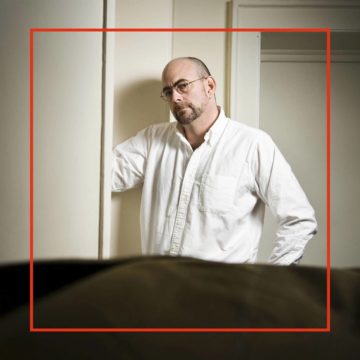
Big History burst on to the scene 30 years ago, promising to reinvigorate a stale and overspecialised academic discipline by situating the human past within a holistic account at a cosmic scale. The goal was to produce a story of life that could be discerned by synthesising cosmology, geology, evolutionary biology, archaeology and anthropology. This universal story, in turn, would provide students with a basic framework for their subsequent studies – and for life itself. Big History also promised to fill the existential void left by the ostensible erosion of religious beliefs. Three decades later, it’s time to take a look at how Big History has fared.

David Christian first made the case for what he called ‘Big History’ in an article in the Journal of World History in 1991. He based it on an interdisciplinary course that he had been teaching at Macquarie University in Sydney that brought together faculty members from the sciences and the humanities. The idea for the course was to situate human history within a grand historical narrative that stretched backwards in time to the origins of the cosmos in the Big Bang and forwards to include the present and future development of the human species. The course promised to transform the way students were taught history by focusing on the big picture and what united all humans rather than what divided them.

At the time, Christian was reacting to a trend in academic life towards increasing specialisation. This trend played a role in further dividing the ‘two cultures’ of knowledge represented by the arts and sciences, but also led to divisions within those two cultures as well. Christian’s discipline of history, for instance, had grown fragmented into geographic and temporal specialisations, while narrow studies of archival sources were preferred to large-scale narratives that were more common earlier in the century. At a time when, in Jean-François Lyotard’s memorable phrase from 1979, an ‘incredulity towards metanarratives’ represented the era’s postmodern condition, Christian headed in the opposite direction.

More here.

What is a Bitcoin worth?

Thomas Belsham in Bank Underground:

The price of Bitcoin is currently around $57,000 (see Chart 1). But what is the price of Bitcoin based on? It’s just a bunch of code that exists only in cyberspace. It’s not backed by the state. There’s no recourse to a central authority. There’s no underlying asset, no stream of income. There’s just the thing itself. But does that mean it has no inherent worth? The code on which Bitcoin is based does give it scarcity value. Only 21 million Bitcoin will ever be created. And that might be worth something. That scarcity is why some people refer to Bitcoin as ‘digital gold’. But the very scarcity on which Bitcoin is based might also be its undoing. Its scarcity may even, ultimately, render Bitcoin worthless.

Chart 1: Bitcoin price in US dollars

Source: Blockchain.com

Satoshi Nakamoto said in his/her/their (the creator or creators remain anonymous) canonical paper, ‘Bitcoin: A Peer-to-Peer Electronic Cash System’, that ‘a peer-to-peer version of electronic cash would allow online payments to be sent directly from one party to another without going through a financial institution’. This was the driving force behind Bitcoin: create a payments system outside of the existing official financial architecture – a form of digital money, with no official entity standing behind it, just the strength of the underlying computer code.

Now, so far, Bitcoin has not performed well as money. Quick recap: money issued by central banks, fiat money, acts as a ‘store of value’ – it preserves the spending power of income and wealth, so that you can be confident that a pound, say, will buy about as much in a year’s time as it would today. It’s also a medium of exchange – you can use it as payment. And, largely by dint of satisfying those two criteria, the denomination of money – be it in the form of dollars, pounds, seashells, whatever – tends also to be used as a unit of account (a means of pricing other things in general).

More here.

The Accidental Murderer

Marco Roth in Tablet:

In One Friday in April, the writer Donald Antrim recounts his attempted suicide, subsequent cycles of hospitalization, treatment, and recovery. “I believe that suicide is a natural history, a disease process, not an act or a choice, a decision, or a wish. I do not understand suicide as a response to pain, or as a message to the living … I see it as a long illness with origins in trauma and isolation, in deprivation of touch, in violence and neglect, in the loss of home and belonging,” he states at the outset. With this credo, and in other ways, Antrim announces that we’re about to read a remarkable document of the medicalization of culture. Doctors are of course trained to view every problem through the lens of disease. But what happens when artists do the same?

Once considered a thorny question for theology, philosophy, and sociology, suicide is being recast—like much else in our society—as a medical problem. Self-harm—as it’s now commonly termed— is understood to be latent in some bodies, similar to the gene for cancer, indeed as a sort of cancerous mutation of our characters, and therefore—in a more hopeful way—also subject to treatment—unless the patient self-terminates first. What seemed, until recently, the most intimate and possibly important of philosophical questions—does a person have the right, or, even, under special circumstances and in certain cultures and epochs, the duty to end one’s earthly existence—has been classified as a medical disease, and no more the distinctive product of an individual consciousness than, say, liver failure.

More here.

Religion in the Time of Covid

Steven Malanga in City Journal:

Throughout much of human history, famine, pestilence, and war have sent people seeking the comforts of religion. From the religious processions of Europe during the fourteenth-century Black Plague to the sharp uptick in churchgoing in America during World War II, it’s often been the case that the more terrifying times are, the more prayerful communities become.
Covid-19 has turned that historical precedent on its head. The percentage of Americans joining the ranks of the religiously unaffiliated has increased during the pandemic, according to a new survey by Pew, thanks largely to a drop in those identifying as Christian. Nearly three in ten Americans now report no religious affiliation, up from 26 percent in 2019 and nearly double the number in a Pew survey in 2007. The share of Americans who say religion is very important in their lives has declined to 41 percent today, from 56 percent in 2007.

Absent Covid, those numbers might fit into the long-term pattern of secularization in Western societies. In countries like Canada, Germany, France, and even Israel, surveys show that religious belief continues to decline and plays even less of a role today than it does in the U.S. But even in the modern age, tragedy and crisis have been the exceptions to secularization. Recent studies show that people still turn back to religion amid catastrophe—even if only temporarily. After 9/11, Gallup surveys reported a sharp uptick in the number of Americans saying that religion was an important influence—71 percent in months after the terrorist attacks, up from less than 40 percent before 9/11. Today, that number stands at a mere 16 percent. While a core of ardent religious believers, amounting to about 28 percent of Americans, said in a survey earlier this year that the pandemic had boosted their faith, some 14 percent said that it had done the opposite.

More here.

A Political Philosopher Is Hopeful About the Democrats

Benjamin Wallace-Wells in The New Yorker:

What is the matter with the Democrats? On one level, the answer is simple. Voters with college degrees are increasingly siding with the Party, while those without are moving toward the Republicans, and there are more people in the second category than the first: about two in five voters in the 2020 Presidential election were college graduates. The Party’s prospects in the midterms do not look bright, and everyone involved in Democratic politics is exhorting the Party’s elected officials to do something about it. This has created a slightly comic situation, in which a group of highly credentialled people urgently instruct one another in how to appeal to those who are not.
On Twitter, the self-proclaimed popularists—a cadre of political consultants and opinion journalists alarmed about these trends—argue that policy might be the problem: the Democrats need to shake the influence of their activist élites and stop talking about issues likely to spook working-class voters, such as liberalizing immigation policy and defunding the police. To many, the Party’s fate hinges on the earthy personas of a few red-state survivors—Joe Manchin in West Virginia, Jon Tester in Montana—as if the only thing keeping the center left from a total wipeout is, as one Montana Democratic operative put it to me last week, in describing Tester, “a flat-topped, three-fingered dirt farmer.” Pick different candidates, Democrats tell their leaders, and say different things. Republicans shout for their candidates, full-throatedly, as if they were the Ohio State Buckeyes. Democrats shout at theirs.

But there is another way of thinking, in which the Democrats’ problem runs deeper than political positioning, to the question of who gets ahead and why. The chief proponent of this perspective is Michael Sandel, a political philosopher and professor at Harvard. Sandel, who is in his late sixties, first made his mark as a critic of John Rawls, but has also long been engaged with non-professional audiences, in part by teaching a storied Harvard course called Justice that in 2016 was adapted as a series by BBC Radio 4. As globalization lost its early gloss and produced some discontents, Sandel argued, in “What Money Can’t Buy: The Moral Limits of Markets,” that markets had usurped civic decision-making, and that the decisions that ought to be left to a democratic citizenry had wrongly been handed over to economic experts. This line of thinking made him a figure of mass interest—when he spoke in Seoul in 2012, it was to an audience of fifteen thousand.

More here.

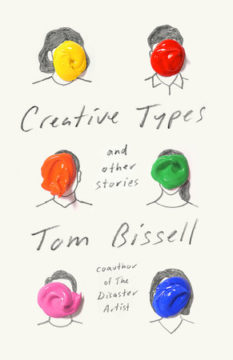
‘Creative Types: And Other Stories’ By Tom Bissell

Jim Ruland at the LA Times:

This kind of career serenity prayer led to Bissell’s biggest breakthrough: “The Disaster Artist,” which he co-wrote with the actor Greg Sestero about Sestero’s experiences making the cult film “The Room,” which many regard as the worst film ever made. The book became a bestseller and was adapted into an award-winning film in which Franco plays the mercurial director Tommy Wiseau. It almost didn’t happen.
Bissell had never written a book with another writer before. Again, he wondered if it was the right move, but he was so captivated by the material he threw caution to the wind. “The careerist would have said, ‘Tom, don’t collaborate with a male model actor on his life story about making a bad movie.’”

more here.

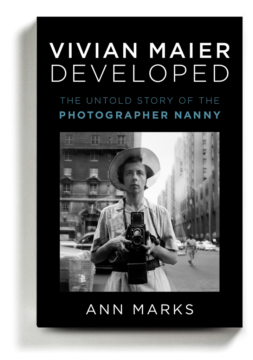
Vivian Maier Developed

Alexandra Jacobs at the New York Times:

If a picture were still worth a thousand words, we’d know more than enough by now about Vivian Maier, the so-called photographer nanny whose vast trove of images was discovered piecemeal and not fully processed, in all senses of the word, after her death at 83 in 2009, just as the iPhone was going wide.
Long before we were all carrying around those little wafers of pleasure and misery, Maier made constant companions of her Brownies, Leicas and Rolleiflexes. The ensuing record of her movement throughout the world — at least 140,000 negatives of landscapes, common folk, celebrities, children, animals and garbage — has more range and rigor than any influencer’s. Despite recurring selfies, some in noirish shadow, Maier was in fact the anti-influencer: Her startling compositions were not only largely unshared and unsponsored during her lifetime — she made abortive attempts to start a postcard business — but almost entirely unseen.

more here.

Saturday Poem

Chinese Magic

Before my morning exercise
I took to stealing a glance
at the wise man sitting cross-legged
(in his painting done in Chinese ink)
near the door of the room.

When I return, exhausted, an hour later
I take three or four cookies out of the package
and prepare a cup of tea with milk,
which I drink in peace
with the first—and last—
cigarette of the morning.

The wise man of the painting,
which bears one of the Chinese Emperor’s red seals,
is not content with stealing glances,
and stares right at me through the smoke
with his two piercing eyes.
I’m so embarrassed that I don’t see his hand
as it reaches, stealthily, from the painting
to open the shutters:
a small bird from the neighbor’s garden
lands on the table
and steals some crumbs
as soon as I leave to water my plants.

The neighbors’ bird and I are thieves no longer.
We’re friends now, so steeped
in this wisdom
that one of us, this morning,
is writing a poem
while the other flaps its wings
in front of the painting on the wall—
in twin gratitude to our master,
the wise man of the painting.

by Mohamed Al-Harthy
from:
Back to Writing with a Pencil
publisher: Dar al-Inteishar al-Arabi, Beirut, 2013
translation (original here): 2014, Kareem James Abu-Zeid


Friday, December 17, 2021

Who’s Afraid Of Pantheism?

Clayton J. Crocket at Marginalia Review:

In this book, she explores the history of intellectual discussions of pantheism, and raises questions about why so many Western philosophers and theologians have resisted this concept. Pantheism is combined of two Greek words, pan—which means ‘all’—and theism, which consists of belief in God. Here All is God, or God is All. In most of Western thought, pantheism functions as a limit concept. That is, if we want to think about or have faith in a divinity, it needs to be related to the world, the all or everything, but pantheism names the collapse of this God into everything else to the extent that there is nothing that is not God.
One way to characterize Western religious thought is the resistance to pantheism. Rubenstein mines this resistance, and offers new ways to think about pantheism and even pantheology.

more here.

Dostoyevsky’s Relationship With His Long-Suffering Wife

Rebecca Panovka at Bookforum:

IN THE FALL OF 1866, FYODOR DOSTOYEVSKY FOUND HIMSELF barreling toward every writer’s worst nightmare: a deadline he couldn’t ignore. Having signed an ill-advised contract to avoid a trip to debtor’s prison, he now owed the publisher Fyodor Stellovsky a new novel of at least 160 pages by November 1. If he failed to deliver, Stellovsky would be entitled to publish whatever Dostoyevsky wrote over the next nine years free of charge. A more practical man might have spent his summer on the project for Stellovsky, but Dostoyevsky was simultaneously preparing segments of Crime and Punishment for serialization, and his plan to write one novel in the morning and another at night hadn’t panned out. By the beginning of October, he had not produced a single page of the promised novel. Staring down the literary equivalent of indentured servitude, he decided to try a new method to pick up the pace: hiring a stenographer and writing by dictation.

more here.

“Don’t Look Up” Is As Funny And Terrifying About Global Warming As “Dr. Strangelove” Was About Nuclear War

Jon Schwarz in The Intercept:

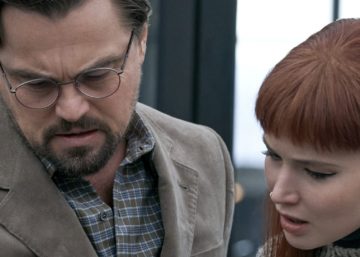
If you’re wondering whether we’ll do anything about global warming before it destroys civilization, think about this ominous fact: It occupies barely any space in popular culture.
This contrasts with the gusher of movies and books in the 1960s, ’70s, and ’80s about nuclear war. Anyone old will remember “The Day After,” “War Games,” “The Planet of the Apes,” “99 Luftballons,” and many, many more in which nuclear terror was the central subject or background.

All of this helped generate a worldwide anti-nuclear movement, which in turn generated a larger audience for anti-nuclear culture, which in turn strengthened the movement — all in a virtuous circle. In other words, we avoided atomic Armageddon in part because we spent lots of time imagining it and so were motivated not to experience it in reality. But with global warming, there are few indications that we’re imagining it at all. We’re blithely stumbling forward in a fog, with little comprehension of the catastrophe we’re stumbling toward.

More here.

A massive 8-year effort finds that much cancer research can’t be replicated

Tara Haelle in Science News:

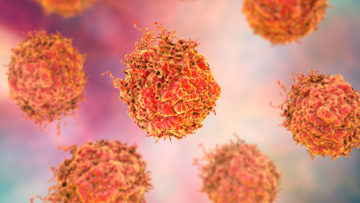
Researchers with the Reproducibility Project: Cancer Biology aimed to replicate 193 experiments from 53 top cancer papers published from 2010 to 2012. But only a quarter of those experiments were able to be reproduced, the team reports in two papers published December 7 in eLife.

The researchers couldn’t complete the majority of experiments because the team couldn’t gather enough information from the original papers or their authors about methods used, or obtain the necessary materials needed to attempt replication.

What’s more, of the 50 experiments from 23 papers that were reproduced, effect sizes were, on average, 85 percent lower than those reported in the original experiments.

More here.

An Ode to America: You’re better than this, sweet land of liberty

James Parker in The Atlantic:

“Pretty good nose you got there! You do much fighting with that nose?”

New Orleans, 1989. I’m standing on a balcony south of the Garden District, and a man—a stranger—is hailing me from the street. He looks like Paul Newman, if Paul Newman were an alcoholic housepainter. I don’t, as it happens, do much fighting with this nose, but that’s not the point. The point is that something about me, the particular young-man way I’m jutting into the world—physically, attitudinally, beak first—is being recognized. The actual contour of me, or so I feel, is being saluted. For the first time.

America, this is personal. I came to you as a cramped and nervous Brit, an overwound piece of English clockwork, and you laid your cities before me. The alcoholic housepainter gave me a job, and it worked out pretty much as you might expect, given that I had never painted houses before and he was an alcoholic. Nonetheless, I was at large. I was in American space. I could feel it spreading away unsteadily on either side of me: raw innocence, potential harm, beckoning peaks, buzzing ions of possibility, and threading through it, in and out of range, fantastic, dry-bones laughter. No safety net anywhere, but rather—if I could only adjust myself to it, if I could be worthy of it—a crackling, sustaining buoyancy.

I blinked, and the baggage of history fell off me. Neurosis rolled down the hill. (It rolled back up later, but that’s another story.) America, it’s true what they say about you—all the good stuff. I’d be allowed to do something here. I’d be encouraged to do something here. It would be demanded of me, in the end, that I do something here.

Later that year I’m in San Francisco, ripping up the carpets in someone’s house. Sweaty work. Fun work, if you don’t have to do it all the time: I love the unzipping sound of a row of carpet tacks popping out of a hardwood floor.

More here.

Is parenting scarier than ever?

Kate Morgan in BBC:

The global birth rate is falling. That’s not necessarily news; it’s been on the decline since 1950, according to data collected by Washington, DC-based non-profit Population Reference Bureau. But the decline in more recent years has been especially stark: in 2021, the global fertility rate is 2.3 births per woman; in 1990, it was 3.2. A new Pew Research Center survey found that a growing percentage of childless US adults ages 18 to 49 intend to remain that way. In every single European nation, fertility in 2021 was below the 2.1 births per woman generally considered the “rate of replacement” for a population. In a number of those countries, birth rates hit record lows.

It’s not hard to imagine why young people are hesitating to have large families. Financial stability is more difficult to achieve than ever. One in 10 non-retired Americans say their finances may never recover from the pandemic, and significant inflation could be looming in Europe. In many places, home ownership is all but a pipe dream. Political and civil unrest is rampant across the world, and climate is in crisis. It’s easy to adopt a dismal view of the future.

“The central explanation is the rise of uncertainty,” Daniele Vignoli, professor of demography at the University of Florence, said in his keynote address at a research workshop hosted on Zoom by the European University Institute. “The increasing speed, dynamics and volatility” of change on numerous fronts, he explains, “make it increasingly difficult for individuals to predict their future”.

More here.

Why the US Is a Failed Democratic State

Lawrence Lessig in the New York Review of Books:

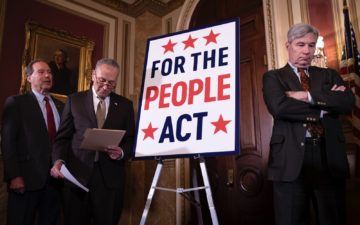
At every level, the institutions that the US has evolved for implementing our democracy betray the basic commitment of a representative democracy: that it be, at its core, fair and majoritarian. Instead, that commitment is now corrupted in America. And every aspiring democracy around the world should understand the specifics of that corruption—if only to avoid the same in its own land.

The corruption of our majoritarian representative democracy begins at the state legislatures. Because the Supreme Court has declared that partisan gerrymandering is beyond the ken of our Constitution, states have radically manipulated legislative districts.

More here.

Friday Poem

A World Created by the Powerful

They say “come here! go there!”
with a gun
to emphasize their words
“just drive me, please!” they say
mixing polite and threatening
because they like to blur distinctions –
……..              the powerful
yes, life itself is a cold draught
but once upon a time our earth was ours
one unit, whole
not cut up in a thousand pieces
not spoiled like she is now
before things got so messed up
she was just herself
and hugged us all no matter
if our skin was black or white

by Seifu Metaferia
from: Songs We Learn From Trees
publisher: Carcanet Classics, Manchester, 2020
Translation (original here): 2020, Chris Beckett and Alemu Tebeje


Thursday, December 16, 2021

Did Don Quixote Long For Muslim Spain?

Jeffrey Herlihy-Mera in Public Books:

Don Quixote is the Saturday Night Live of the Spanish Inquisition. Cervantes roasts everybody, including the Catholic Church and even the reader. This magnum opus—called by many the first Western novel—is really a book about reading: Carlos Fuentes famously said of Quixote: “Su lectura es su locura.” [“His reading is his madness.”] Quixote reads too much (if that’s possible) and wants to become the literary heroes of his books. But just who are those heroes?

Quixote lauds Amadís de Gaula, El Cid, and Roland, among others. But he also venerates figures—ostensibly enemies of Christian Spain—from the Qur’an as well as Spaniards who were exiled for Muslim ancestry.

The Reconquest described in Quixote’s books ended a century before, in 1492, when the final independent Muslim kingdom in Western Europe (in Granada) was expelled. By Quixote’s day, there were apparently no more Moors in Iberia. Still, Quixote lights out in search of heroic battles to sanctify Spain, in the guise of El Cid. (The historical Cid—Rodrigo Díaz de Vivar—served many years on the court of the Taifa de Saraqusta, but, in the epic poem about his exploits, he fights exclusively against Muslims.)

On his great quest, Quixote finds only madness and Manchegan windmills, mistaking the latter for giants (i.e., Moors). Between the lines, however, Cervantes concealed a story that literary critics are only beginning to resolve. It’s a biting satire of the Catholic Church—but also a nostalgic and painful account of the systematic destruction of Islamic culture in Spain.

More here.