
 Henry Farrell and Glen Weyl in Boston Review:
Two new books about technology and the fate of democracy begin by describing the storming of the U.S. Capitol on January 6, 2021. They are right to see that fateful day as a turning point and a benchmark for debates about the course of U.S. society, and hint at important questions: Can democracy survive in its current form? What role did information technology play in encouraging a violent mob to tear through Congress? And what do we do now?
Both books see January 6 as the product of systematic misinformation and fraud, and argue that the solution is more participatory democracy. Though we agree for the most part, neither book offers a comprehensive theory of change or a particularly persuasive vision of an aspirational digital democracy. Solving Public Problems, by Beth Simone Noveck—director of Northeastern University’s Governance Lab and New Jersey’s inaugural Chief Innovation Officer—suggests that better government will produce a better public. System Error—by political theorist Rob Reich, computer scientist Mehran Sahami, and political scientist Jeremy M. Weinstein —explains how government might come to understand and perhaps constrain big tech more effectively. Each makes important contributions. System Error breaks new ground in explaining why Silicon Valley (SV) is wreaking havoc on U.S. politics and offers uniformly thoughtful reforms. Solving Public Problems, on the other hand, offers possibly the most detailed and serious treatment of how digital tools help enhance democratic governance around the world. Neither, however, answers the question implicitly posed by opening their books with a description of U.S. democracy’s failure: What happens now, after January 6?
More here.
 Ian McEwan in New Statesman:
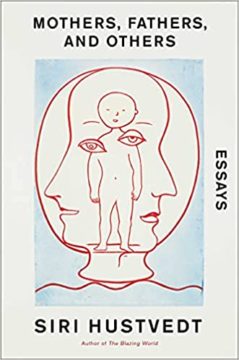 When Hustvedt returns to the idea of what’s missing, her writing takes off. In “Both-And,” an essay on Bourgeois, she offers the concept of intercorporeality from French philosopher Maurice Merleau-Ponty: “that human relations take place between and among bodies, that we perceive and understand others in embodied ways that are not conscious.” What could be more loaded than the mother’s body, a body that is not one, but two? A body that is no longer hers alone? “The artist sees the object unfold, a thing that rises out of you, is related to you, but is not you either,” Hustvedt writes about Bourgeois’ work. But this easily applies to birth and mothering.
 One Friday begins on a Friday in April 2006, when the forty-seven-year-old Antrim, having just had a spat with his girlfriend, is clinging to the fire escape of his four-story apartment building in Brooklyn, considering jumping to his death. (Although one wonders if falling from this height might have resulted in serious injury rather than death.) “I didn’t know why I had to fall from the roof,” he writes, “why that was mine to do.” He goes on to tell us that depression is a “misleading term,” that he prefers to call his depression “suicide” because he sees it “as a long illness, an illness with origins in trauma and isolation” rather than “the death, the fall from a height or the trigger pulled.” Although Antrim offers this explanation as an original take on an enigmatic condition, I found it befuddling rather than clarifying: suicide is sudden and immediate while depression is a long and often recurrent illness. There is no getting around it: the former is a decision, however impulsive and catastrophic; the latter is a passively endured condition, the result of our chemistry and psychological vulnerabilities.
 Donald Trump, however, will not say this. He has spent the year since he lost insisting that he won. His supporters believe the same.
 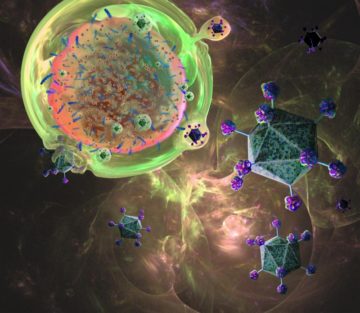 It seemed like a very promising cancer immunotherapy lead. CHO Pharma, in Taiwan, had discovered that it was possible to target solid tumours with an antibody against a cell-surface glycolipid called SSEA-4.
 The detonation of the
  Jean Luc remembers how, when he was very young, his parents would leave their house in Kimihurura, a neighborhood of Kigali, once a month in a good mood. He didn’t know what they were smiling about.
 Purgatory seems to be on people’s minds this year – we have several new translations of Dante’s canticle to consider in time for Christmas. Fortunately, we have Dantista
  Today in 1982, Gabriel García Márquez
  “An argument without end” is how Joseph J. Ellis characterizes history in “The Cause: The American Revolution and Its Discontents, 1773-1783,” one of several notable fall releases on America’s Revolutionary War era. Like “The Cause,” new works by historians H.W. Brands and Woody Holton and novelist Matthew Pearl, making his nonfiction debut, are evidence that when it comes to the story of America’s origins, the argument continues to evolve. These books look beyond the Founding Fathers to consider early American history from a fascinating range of perspectives.
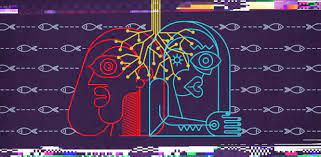 What do economics, biological evolution, and democracy have in common? They are all complex adaptive systems. This realization reflects one of the core strengths of a diverse intellectual background – there are meaningful commonalities underlying different systems and areas of knowledge. In fact, science and academia themselves are complex adaptive systems that benefit from diversity of knowledge and perspective. All such systems benefit from diversity, and suffer when that diversity is narrowed, possibly even fatally.
 For Ghosh, our insistence on carrying on as normal in the face of the unthinkable is the enabling madness at the centre of modernity’s addiction to extraction and consumption. At a time in which ‘the wild has become the norm,’ and ‘freak’ events such as tornadoes are becoming more common, he wrote, we are suffering in the ‘West’ from a ‘crisis of imagination’.
 The bicycle, as we know it today, was not invented until the late 1800s. Yet it was a simple mechanical invention. It would seem to require no brilliant inventive insight, and certainly no scientific background.