Fads are more than a cultural phenomenon — they’re part of our brain chemistry

Efi Chalikopoulou in Vox:
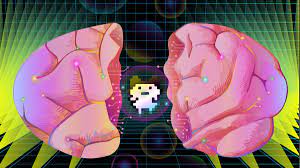
The smooth, plastic egg fits in your palm. Brightly colored shell. Gray screen the size of a postage stamp. Below that, three buttons. Pull a thin plastic tab on the side, and the screen lights up. An 8-bit egg appears onscreen. It quivers and rolls and shakes until, finally, your Tamagotchi is born. Inside your head, the squishy, enigmatic organ known as the brain begins firing — not only to process the visual and sensory stimuli, but to generate curiosity in this new object. In fact, the spark of this fixation likely began before you even held this toy, when you heard friends feverishly speak about it and saw it in the clutches of popular kids at school.

Obsession is more than a cultural phenomenon — it’s part of our brain chemistry, and part of what it means to be human. For hundreds of thousands of years, we evolved in environments of scarcity, where social structures were required for survival, and seeking and curiosity were imperative. In the modern era, the same brain chemistry that lured us to the sweetness of fruit and alerted us to the presence of danger now draws us to fads like the Tamagotchi.

“People are born stupid,” says Paul Silvia, a psychologist at the University of North Carolina Greensboro and author of Exploring the Psychology of Interest. Many newborn animals already have instincts about their environment and quickly gain mobility. Sea turtles, for example, emerge from eggs ready to seek the sea. Human babies, meanwhile, are notably helpless. “We can’t really move, we can’t feed ourselves, we don’t have a lot of innate behaviors,” Silvia says. “But there’s an epic learning period that happens. You can be born knowing how to take care of yourself, or you could be born knowing how to learn.” That’s where interest comes in.

More here.
Tuesday, December 21, 2021

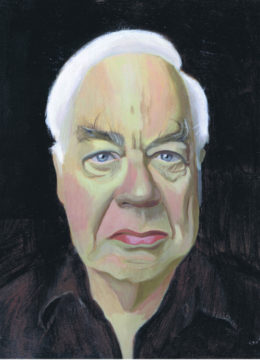
Daniel C. Dennett on the Richard Rorty Factor

Daniel C. Dennett in Philosophy Now:

In a paper published in Synthese (#53) in 1982, ‘Contemporary Philosophy of Mind’, Richard Rorty wrote an enthusiastic account of the revolutionary ‘Ryle-Dennett tradition’. Was I really as radical a revolutionary as he said I was? I responded mischievously, perhaps rudely:
“Since I, as an irremediably narrow-minded and unhistorical analytic philosopher, am always looking for a good excuse not to have to read Hegel or Heidegger or Derrida or those other chaps who don’t have the decency to think in English, I am tempted by Rorty’s performance on this occasion to enunciate a useful hermeneutical principle, the Rorty Factor:

Take whatever Rorty says about anyone’s views and multiply it by .742.

After all, if Rorty can find so much more in my own writing than I put there, he’s probably done the same or better for Heidegger – which means I can save myself the trouble of reading Heidegger; I can just read [Rorty’s book] Philosophy and the Mirror of Nature (Princeton University Press, 1979) and come out about 40% ahead while enjoying my reading at the same time.”

Rorty took this in good spirits and continued his amiable practice of highlighting the connections he saw between analytic philosophers’ arguments and the grand march of isms that constitute Western philosophy. Part of his optimistic genius was seeing how other people’s hard work in the trenches might be seen as major steps of genuine philosophical progress. This collection of previously unpublished works, most of them lectures delivered on multiple occasions, shows his power, his insight, his constructive spirit throughout. It is indeed enjoyable and enlightening philosophical reading, although I now believe that philosophers really shouldn’t rely on Rorty and other like-minded scholars of the field to frame our projects.

More here.

Here’s what to do if you get Omicron

Yasmin Tayag in The Atlantic:

My breakthrough infection started with a scratchy throat just a few days before Thanksgiving. Because I’m vaccinated, and had just tested negative for COVID-19 two days earlier, I initially brushed off the symptoms as merely a cold. Just to be sure, I got checked again a few days later. Positive. The result felt like a betrayal after 18 months of reporting on the pandemic. And as I walked home from the testing center, I realized that I had no clue what to do next.

I had so many questions: How would I isolate myself in a shared apartment? And why for 10 days, like the doctor at the testing site had advised? Should I get tested again?

More here.

Hindu Nationalism: A Movement, Not A Mandate

Alf Gunvald Nilsen in Public Books:

We know by now that authoritarian populists have handled the Covid-19 pandemic badly. Both Donald Trump and Jair Bolsonaro presided over spiraling death rates, fueled by a disregard for medical science and neglect of public health imperatives.
But India’s Narendra Modi appeared to buck this trend. After the first wave of the pandemic dissipated in September 2020, both national and international media echoed the government narrative that India, with Modi at its helm, had vanquished the coronavirus.

This public image, however, was revealed to be a mirage when a deadly second wave ripped through the country from late March to early June 2021. Millions of lives were lost. And it was a direct consequence of the failure of Modi and his party—the right-wing Hindu nationalist Bharatiya Janata Party (BJP)—to expand medical infrastructure and roll out vaccinations effectively.

The BJP government, in short, chose to privilege Modi’s appearance as a strongman and heroic protector of the nation.

More here.

Still I Rise

You may write me down in history
With your bitter, twisted lies,
You may tread me in the very dirt
But still, like dust, I’ll rise.

Does my sassiness upset you?
Why are you beset with gloom?
‘Cause I walk like I’ve got oil wells
Pumping in my living room.

Just like moons and like suns,
With the certainty of tides,
Just like hopes springing high,
Still I’ll rise.

Did you want to see me broken?
Bowed head and lowered eyes?
Shoulders falling down like teardrops.
Weakened by my soulful cries.

Does my haughtiness offend you?
Don’t you take it awful hard
‘Cause I laugh like I’ve got gold mines
Diggin’ in my own back yard.

You may shoot me with your words,
You may cut me with your eyes,
You may kill me with your hatefulness,
But still, like air, I’ll rise.

Does my sexiness upset you?
Does it come as a surprise
That I dance like I’ve got diamonds
At the meeting of my thighs?

Out of the huts of history’s shame
I rise
Up from a past that’s rooted in pain
I rise
I’m a black ocean, leaping and wide,
Welling and swelling I bear in the tide.
Leaving behind nights of terror and fear
I rise
Into a daybreak that’s wondrously clear
I rise
Bringing the gifts that my ancestors gave,
I am the dream and the hope of the slave.
I rise
I rise
I rise.

by Maya Angelou

What Can People Do To Maintain Brain Health As They Age?

From Harvard Magazine:

Harvard Medical School professor of neurology Rudolph Tanzi discusses how lifestyle choices can help maintain brain health during a person’s lifespan. Topics include Alzheimer’s disease and other kinds of dementia, the role of genetics and environment in health, and the importance of sleep, exercise, and diet in controlling neuroinflammation.
Jonathan Shaw: And how much of age-related cognitive decline is attributable to genetics, and how much to things that we could control potentially?

Rudolph Tanzi: It’s interesting, you know, this is what I wrote about in “Super Genes.” And I actually did congressional testimony on it, based on the books that I wrote, which was kind of interesting. And what I told them was, look, if you look at age-related diseases, like heart disease, Alzheimer’s, etc., you see a similar pattern. About 5 percent of the genes involved have very hard-hitting mutations—mutations that guarantee the disease, and usually with early onset. And usually those disease genes where you can’t do anything about them—they’re you know, they’re the rare ones—also tell you about the events that pathologically happen earliest in the disease. So, for example, you know, Brown and Goldstein won the Nobel Prize for finding a family with a rare mutation that gave them high cholesterol. And based on that, they proposed cholesterol had something to do with heart disease. And the first genes we found, you know, when I was a student at Harvard, for my doctoral thesis, I found the first Alzheimer’s gene. I named it amyloid precursor protein, APP, because it makes amyloid. And the mutations in that gene cause a rare form of early-onset Alzheimer’s with certainty, by making too much amyloid in the brain. And just like cholesterol, now we know amyloid is something that occurs in the brain a decade or two or three before symptoms. That’s when you have to hit it, just like cholesterol, you can’t wait to need to bypass to hit it. You have to hit it earlier. So it’s very analogous. Now, if you look at the other genetics of age-related diseases, the other 95 percent, you have genes with variations and mutations that predispose you to the disease, others that actually protect you from the disease, but none of them with certainty, at least not within a normal lifespan. So, you know, if you look at the early-onset Alzheimer genes we found that, you know, have mutations that guarantee the disease by 60 years old. Well, when lifespan was 50, those didn’t guarantee disease because you didn’t live long enough. And so some of the mutations we know now that predispose you to increased risk for late-onset Alzheimer’s, like the APOE4 variant is most common, you know, maybe when lifespan is 120 years old, that will be called completely penetrant. It’s going to guarantee the disease because you live long enough. So whenever you think about, does a gene mutation guarantee a disease? You have to think about how long you live, because some might just take longer to give you the disease. But based on how long we live right now, only 5 percent of Alzheimer’s genes guarantee the disease, 95 percent only predispose, which means lifestyle has a lot to do with avoiding this disease, which is why I wrote my books, which is why we have the McCance Center, because we want to teach people how to do their best to try to avoid this disease with lifestyle.

More here.

We Are Beast Machines

Anil Seth in Nautilus:

I have a childhood memory of looking in the bathroom mirror, and for the first time realizing that my experience at that precise moment—the experience of being me—would at some point come to an end, and that “I” would die. I must have been about 8 or 9 years old, and like all early memories this one too is unreliable. But perhaps it was at this moment that I also realized that if my consciousness could end, then it must depend in some way on the stuff I was made of—on the physical materiality of my body and my brain. It seems to me that I’ve been grappling with this mystery, in one way or another, ever since.
Consciousness won’t be solved in the same way that the human genome was decoded, or the reality of climate change established. Nor will its mysteries suddenly yield to a single Eureka-like insight—a pleasant but usually inaccurate myth about scientific progress. A science of consciousness should explain how the various properties of consciousness depend on, and relate to, the operations of the neuronal wetware inside our heads. I say wetware to underline brains are not just computers made of meat. They are chemical machines as much as they are electrical networks. Every brain that has ever existed has been part of a living body, embedded in and interacting with its environment—an environment which in many cases contains other embodied brains. Explaining the properties of consciousness in terms of biophysical mechanisms requires understanding brains—and conscious minds—as embodied and embedded systems.

This way of thinking leads us to a new conception of what it is to be a self—that aspect of consciousness which for each of us is probably the most meaningful. An influential tradition, dating back at least as far as Descartes, held that non-human animals lacked conscious selfhood because they did not have rational minds to guide their behavior. They were “beast machines”: flesh automatons without the ability to reflect on their own existence.

More here.

Sunday, December 19, 2021

Annus constrictivus

Justin E. H. Smith in his Substack newsletter, Hinternet:

Only two of the following three cultures are, as far as we know, real. In 2022, perhaps, I will reveal which of them I made up.

Let us start with Culture X, whose members will tell you that the roofs of their mouths are “blue”. Even if you shine a light in there, take a picture, and show them that their own palate is only the ordinary color of skin (whatever color that may be; in any case probably not blue), they will continue to insist that it is blue all the same. They will tell you that the roof of the mouth is “the same as” the dome of the cloudless sky, and that from early on children pass their time running their tongues from back to front. The soft palate for them is the sun on the horizon; what we call its “softness” is felt by the tongue as its heat. The hard palate is the great expanse of the sky; what we call its “hardness” is felt as crisp, open, and blue. As the tongue continues its journey forward, it eventually hits the back of the front teeth. Those are the dolomite cliffs on the horizon opposite the sun, dark and cold. Now give it a try. Imagine that your palate too is the dome of the sky. Imagine that, for as long as you can remember, in your idle time, or as you work, or as you lie sleepless, you have been running through this tour of the known world inside your mouth. Are you starting to see, now, how a palate might be “blue”, even if not “empirically” so?

More here.

How effective are vaccines against omicron?

Melissa Hawkins in The Conversation:

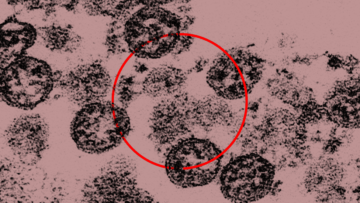
The preliminary data about omicron and vaccines is coming in quickly and is revealing lower vaccine effectiveness. Best estimates suggest vaccines are around 30%-40% effective at preventing infections and 70% effective at preventing severe disease.

preprint study – one not formally reviewed by other scientists yet – that was conducted in Germany found that antibodies in blood collected from people fully vaccinated with Moderna and Pfizer showed reduced efficacy in neutralizing the omicron variant. Other small preprint studies in South Africa and England showed a significant decrease in how well antibodies target the omicron variant. More breakthough infections are expected, with decreased immune system ability to recognize omicron compared with other variants.

More here.

France’s Éric Zemmour Has Already Transformed America’s Far Right

Martin Gelin in The American Prospect:

French far-right pundit Éric Zemmour recently launched his presidential campaign with a rally that descended into brutal violence between his supporters and anti-racist protesters. Zemmour has become the star of French nationalism by courting controversy. In his books and TV commentaries, he has defended the Vichy regime, supported the death penalty, advocated for strict limits on immigration, and suggested that only “French” first names should be legal.
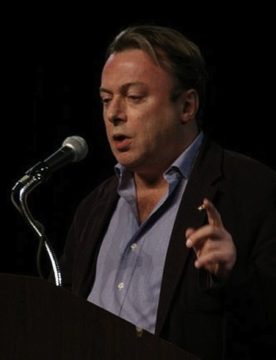
Unsurprisingly, Zemmour has been called a “French Tucker Carlson” by U.S. media. The two do have a lot in common. They are both influential nationalist pundits and fierce culture warriors. But it might be more accurate to see Tucker Carlson as an American Zemmour.

Long before Zemmour announced his run for president this fall, he was an influential voice among U.S. nationalists. His books and essays have been discussed on far-right websites, such as Counter-Currents, VDARE, and American Renaissance, over the past decade. His ideas have changed both the rhetoric and substance of nationalism in the U.S.

More here.

The Afterlife of Christopher Hitchens

Clint Margrave in the Los Angeles Review of Books:

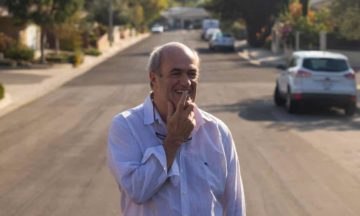
On December 15, 2011, Comet Lovejoy plunged through the sun’s corona “coming within only 87,000 miles of the star’s surface.” Everyone had expected it to perish. Scientists who had been following the comet believed it would burn up. Meanwhile, at the same time, in a hospital in Texas, Christopher Hitchens was dying. For months, Hitchens had been public about his stage IV cancer diagnosis, preparing us and himself for this moment, as he liked to remark, “The thing about Stage Four is that there is no such thing as Stage Five.” It didn’t mean we wanted to believe it. But as Hitchens would have been the first to point out, belief and reality don’t always coincide. Still, we hoped for a miracle, of the scientific kind anyway. After all, Hitch had very publicly talked about the experimental cancer treatments he’d been given, which united many of his fans, most of us atheists, by a sort of reality-based faith, or was it just secular denial?
More here.

Colm Tóibín: ‘Boris Johnson would be a blood clot … Angela Merkel the cancer’

Lisa Allardice in The Guardian:

In June 2018, Colm Tóibín was four chapters into writing his most recent novel The Magician, an epic fictional biography of Thomas Mann that he had put off for decades, when he was diagnosed with cancer. “It all started with my balls,” he begins a blisteringly witty essay about his months in hospital; cancer of the testicles had spread to his lungs and liver. In bed he amuses himself by identifying the difference between blood clots (a new emergency) and cancer: “Boris Johnson would be a blood clot … Angela Merkel the cancer.”

He has seen off both Johnson and Merkel. In the month when he hopes he will have a final scan, he has just been awarded the David Cohen prize (dubbed “the UK Nobel”) for a lifetime achievement in literature. The author of 10 novels, two short story collections, three plays, several nonfiction books and countless essays, Tóibín has been shortlisted for the Booker prize three times and won the Costa novel award in 2009 for Brooklyn, about a young Irish woman who emigrates to New York in the 1950s, made into an award-winning film in 2015. He is surely Ireland’s most prolific and prestigious living writer.

Broodingly striking in appearance – in a movie he would be the gangster with a kind heart – he is animated, gracious and gossipy in conversation: we are on a video call from Los Angeles, where he spends part of the year with his boyfriend, editor Hedi El Kholti. He is very much alive (he played tennis yesterday). Meeting Tóibín in person (in more normal times) is to be struck by the disconnect between this ebullient, expansive raconteur and the spare, mournful fictional worlds for which he is famous. His short stories, in particular, are as steeped in gentle misery as his native Wexford is in rain.

More here.

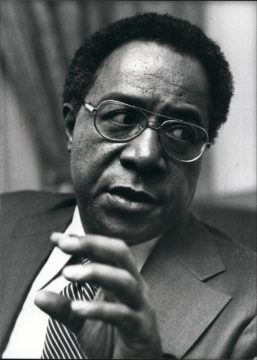
Alex Haley Taught America About Race — and a Young Man How to Write

Michael Patrick Hearn in The New York Times:

In 1959, long before his books “The Autobiography of Malcolm X” and “Roots” made him famous, an aspiring writer named Alex Haley, fresh out of the Coast Guard, wrote to six prominent Black writers in Greenwich Village for pointers on how to break into publishing. Only James Baldwin replied, showing up at Haley’s place unannounced one afternoon and chatting with him. Haley was eternally grateful for such generous encouragement from the distinguished author.

Alex Haley, whose centenary we mark this year, was my James Baldwin. When I entered Hamilton College in the fall of 1968, I was determined to be a writer, so I signed up for Haley’s writing course, not knowing what to expect. I was already familiar with “The Autobiography of Malcolm X,” his collaboration with the Black leader, which had become an instant best seller when it was published three years earlier; my sister had read it at Skidmore College and wrote to me about how powerful it was. (She signed her letter “Cindy X.”) The book blew me away, just as Ralph Ellison’s “Invisible Man” and Eldridge Cleaver’s “Soul on Ice” did later. Attending Haley’s class allowed me to observe him in action for nearly a year while he was working on his magnum opus, “Roots.”

The class was rather free-form — not exactly what Hamilton students were used to. Haley seemed to be making it up as we went along. Stylistically, he was old school, precise and a bit formal. He was always “Mr. Haley” to us; he called me “Hearn.” He enjoyed the conviviality of college life and had enormous faith in young people, but his class was not the place for moody poets or budding novelists. It was a no-nonsense course about the nuts and bolts of being a professional journalist — as Haley was at the time — and he often peppered his lectures with vivid anecdotes from his early days as a writer.

He proudly described how he started out in the Coast Guard during World War II, as the Black Cyrano de Bergerac of the South Pacific, writing letters for his lovesick shipmates to send to their sweethearts. He had dropped out of college to sign up as a mess boy and, after an article he wrote about his experiences aboard ship caught an admiral’s eye, was eventually promoted to the position — created just for him — of chief journalist for the service. He confessed that he was most productive writing at night at sea and often booked passage on freighters to meet deadlines. There were no distractions on a ship, in particular no telephones.

More here.

Sunday Poem

Diana

‘I, too, dislike it: there are things that are important
beyond all this fiddle,’ Marianne Moore said about
poetry. In any case, she was able
to see mitochondria and all the other
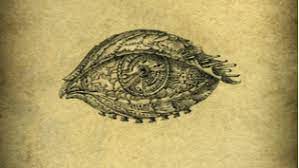
tiny lives – eye fixed
on the minute blotch of watercolor
compressed between two glass slides
the pupil round with wonder
just before mystery: to know what it was.

Is it more important to observe or to designate?
I fear sometimes I look askew
forget the tree where I left my keys
and my notebook, then I don’t know what to call
what, kind or relation, though I find
tranquility in the arcane language of the plane trees
behind the plaques in the botanical garden.
So I serve badly, I’m other, the odd one
out, a tourist here in so much

that pleases me and is work.
But it’s still not said (or is) if I insist
on my small scale in this myself
it’s because I don’t disconnect and touch and fail
at what’s in plain sight, raw
language clear in brute sky

by Margarida Vale de Gato
from: 
Lançamento
publisher: Douda Correria, Lisboa, 2016

translation (original here): Martin Earl, 2017

Saturday, December 18, 2021

Workers Are Risk-Takers Too

Raphaële Chappe in Late Light:

In 1976, Michael Jensen and William Meckling published “Theory of the Firm,” an article that became one of the most-cited economic articles ever written. In the article, Jensen and Meckling presented a theory of the firm that revolved around the goal of reducing agency costs by aligning the interests of executives with those of shareholders through incentive compensation structures such as stock options. Rooted in principal–agent considerations, this framework launched a new regime of corporate governance—the set of processes, institutions, and legal frameworks that determine how a corporation is run—that came to be known as “shareholder value maximization.” The Business Roundtable, a nonprofit association whose members are chief executive officers of major US companies, has recently issued a statement on the purpose of the corporation, professing a commitment to all stakeholders, and not just shareholders. If we take this statement at face value, the shareholder value maximization paradigm is being challenged.

As the research of William Lazonick has shown, the maximization of shareholder value was used—in the United States alone—to justify the extraction of some $3.4 trillion between 2004 and 2013 via dividends and share buy-backs, dollars that could have been spent on capital expenditures or to fund research and development activities. It should come as no surprise, then, that over the past decades increased corporate profitability has resulted neither in increased investment in labor nor in capital—a real “investment paradox” for both!

More here.

Vampires at the Gate?

Herman Mark Schwartz in American Affairs Journal:

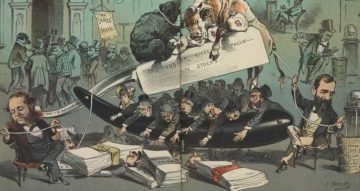
What exactly is financialization? How does it relate to what’s happening in the rest of the economy? Does it hinder growth, and if so, how? At the end of the nineteenth century, many on both the left and right regarded finance as a vampire sucking the lifeblood out of “real” businesses, workers, and, in Britain’s settler colonies, local econo­mies. Indeed, Stanford literature professor Franco Moretti has argued that the classic 1897 Bram Stoker novel Dracula, which birthed the modern vampire mythos, reflected British manufacturers’ fears of com­petition from new American and central European firms (primarily German) backed by powerful banks. Contemporaneous and more prosaic American and German economists also observed how finance encompassed and encumbered nonfinancial firms. The final third of Thorstein Veblen’s still relevant Theory of the Business Enterprise (1904) dissects how U.S. financial elites used the stock market to consolidate and control industry. Shortly after, in 1910, the Marxist and later Wei­mar-era finance minister Rudolf Hilferding comprehensively analyzed banks’ preeminent power in the German economy.

One century later, the same debate and language has resurfaced. Matt Taibbi famously called Goldman Sachs “a great vampire squid wrapped around the face of humanity.” But with Hollywood totally dependent on financial firms to capitalize its increasingly expensive and risky gambles, the focus in popular culture has shifted from vampires to the zombie firms they leave behind—bloodless, battered, neither bank­rupt nor bountiful, shuffling around aimlessly in search of better corpo­rate governance that might restore them to their prior profitable state.

More here.