
Benji Jones in Vox:
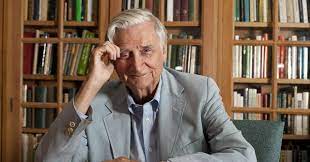 E.O. Wilson died on December 26, according to his biodiversity foundation. The following interview was conducted with him on November 18. In the spring of 1955, E.O. Wilson, then a young entomologist at Harvard, traveled to northeastern Papua New Guinea to study ants. Hiking with local guides through dense rainforests, he climbed 13,000 feet to the summit ridge in the Saruwaged mountains — becoming, by his account, the first Western scientist to reach the peak. So much of what Wilson saw during that expedition was new to Western science, including a number of types of ants, he told Vox in a recent interview. “There were a lot of adventures like that,” said Wilson.
Today, it may seem as though scientists have explored nearly every corner of the Earth, from the thick, humid jungles of Central Africa to the rust-red, arid outback of Australia. Walking into an ecosystem and stumbling upon species that have yet to be cataloged in academic journals now seems like something you can only read about in books that people like E.O. Wilson have written. (He’s written more than 30, and if you don’t have time to read them all, you can check out a new biography by Richard Rhodes out about him entitled Scientist: E.O. Wilson: A Life in Nature.) But that’s not how Wilson, a research professor emeritus at Harvard, sees it. In fact, much of the world’s biodiversity remains undiscovered, he told Vox. “A rough estimate suggests that there are upwards of 10 million species on the planet, and we know only a small fraction of them,” said Wilson, who popularized the term “biodiversity” in the 1980s. “The opportunities are endless.”
Sure, you might have to travel farther or study smaller organisms to find something new, he said, but there remains so much potential for discovery. And those discoveries are useful, he added, especially as we seek to conserve nature. While we already know plenty about the forces that harm ecosystems and wildlife, from habitat loss to oil spills, there’s tremendous value in knowing what we have to lose, in better understanding the planet that supports us.
I spoke with Wilson about scientific discovery for a recent episode of Vox Conversations (you can find a link below). We also chatted about how studying ants helped him understand human behavior and led to a big new conservation initiative called the Half-Earth Project. Inspired by Wilson’s book Half-Earth: Our Planet’s Fight for Life, which he published in 2016, the initiative seeks to protect 50 percent of all land and ocean on the planet. The project backbone is a large dataset that shows where new protected areas would be most useful to protect biodiversity.
More here.
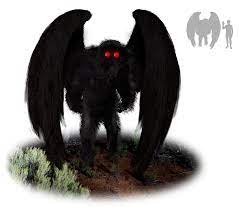 Like its Enlightenment-era forebears, contemporary cryptozoology is rooted in that same hunger for strangeness, and for an enchanted world. It’s telling that the contemporary iteration of the phenomenon saw its first major resurgence during the wider postwar optimism of 1950s—when Belgian zoologist Bernard Heuvelmans, often lauded as one of the forefathers of the field, published On the Track of Unknown Animals in 1955. (Heuvelmans also coined the terms cryptozoology and cryptid.) Featuring entries dedicated to the abominable snowman and Nandi bears alongside examinations of platypuses and gorillas, Heuvelmans’s book celebrates the potential of a world teeming with creatures the scientific record has not yet ossified into fact.
 This may sound either arrogant or forgetful, but I could not possibly remember the number of times I was in the same room or at the same protest as Desmond Tutu. And the main reason I know he was there is because I was there listening to him speak, often from a distance of not more than two meters or so. I say this not to associate myself with the great man — though I’ll forgive you for thinking I’m a terrible, narcissistic name-dropper — but just to be sure we all know this all really happened, because I saw and heard it.
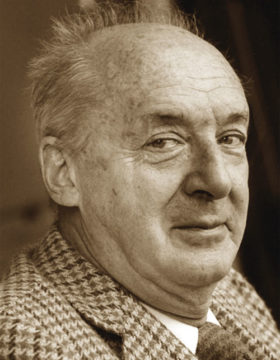 Silence fell. Pitilessly illuminated by the lamplight, young and plump-faced, wearing a side-buttoned Russian blouse under his black jacket, his eyes tensely downcast, Anton Golïy began gathering the manuscript pages that he had discarded helter-skelter during his reading. His mentor, the critic from Red Reality, stared at the floor as he patted his pockets in search of some matches. The writer Novodvortsev was silent too, but his was a different, venerable, silence. Wearing a substantial pince-nez, exceptionally large of forehead, two strands of his sparse dark hair pulled across his bald pate, gray streaks on his close-cropped temples, he sat with closed eyes as if he were still listening, his heavy legs crossed and one hand compressed between a kneecap and a hamstring. This was not the first time he had been subjected to such glum, earnest rustic fictionists. And not the first time he had detected, in their immature narratives, echoes—not yet noted by the critics—of his own twenty-five years of writing; for Golïy’s story was a clumsy rehash of one of his subjects, that of The Verge, a novella he had excitedly and hopefully composed, whose publication the previous year had done nothing to enhance his secure but pallid reputation.
 Imagine being in a pandemic, isolated and inert. Your life feels out of control, and you are stressed, not sleeping well. Then a raft of bewildering new symptoms arrive – perhaps your heart races unexpectedly, or you feel lightheaded. Maybe your stomach churns and parts of your body seem to have an alarming life of their own, all insisting something is badly wrong. You are less afraid of the pandemic than of the person you have now become.
 Want a good, solid, rollicking laugh? Contemplate the end of the world—the whole existential shebang: the annihilation of civilization, the extinction of all species, the death of the entire Earthly biomass. Funny, right? Actually, yes—and arch and ironic and dark and smart, at least in the hands of
  When Dr. Wilson began his career in evolutionary biology in the 1950s, the study of animals and plants seemed to many scientists like a quaint, obsolete hobby. Molecular biologists were getting their first glimpses of DNA, proteins and other invisible foundations of life. Dr. Wilson made it his life’s work to put evolution on an equal footing. “How could our seemingly old-fashioned subjects achieve new intellectual rigor and originality compared to molecular biology?” he recalled in 2009. He answered his own question by pioneering new fields of research. As an expert on insects, Dr. Wilson studied the evolution of behavior, exploring how natural selection and other forces could produce something as extraordinarily complex as an ant colony. He then championed this kind of research as a way of making sense of all behavior — including our own. As part of his campaign, Dr. Wilson wrote a string of books that influenced his fellow scientists while also gaining a broad public audience. “On Human Nature” won the Pulitzer Prize for general nonfiction in 1979; “The Ants,” which Dr. Wilson wrote with his longtime colleague Bert Hölldobler, won him his second Pulitzer, in 1991.
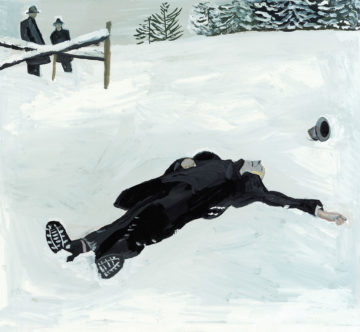 On the afternoon of Christmas Day 1956, in a snow-covered field on the outskirts of the small Swiss town of Herisau, some children and their dog discovered the body of a dead man, hand clutched tight to his stilled heart. It was the writer Robert Walser, who had died that day, aged seventy-eight, while out walking far from the mental institution where he had dwelled for the previous two decades. A photograph taken by the local medical examiner Kurt Giezendanner shows the body at rest, left arm thrown out as in the style of a sleeper midway through a restless night, while two shadowy figures at the margins look on. The sorrow of the scene is rather gently assuaged by the odd fact that Walser’s hat, perhaps moved by a breeze, lies at a modest distance from his body, as if it has leapt off his head to cartoonishly express surprise at its owner’s death. A few distant trees squeeze into the top of the frame like awkward mourners paying their respects. The snow, even on the ground but for a few shaggy lumps close to his boots, appears at first to be nothing more than a dazzling absence, as if the dead Walser were floating on a white winter sky.
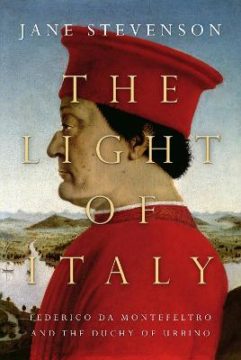 Federico is a figure well worthy of attention. Born on the wrongish side of the blanket in 1420s (it was a crowded part of the bed at that time in Italy), he became ruler of Urbino in his early twenties after the assassination of his unpopular half-brother. While there is no evidence that he was involved in the plot, he was hovering conveniently nearby when it happened. The citizens who approached him to take over presented him with a list of unnegotiable demands, the most stringent of which was to abolish a set of recently introduced taxes and promise not to impose new ones. In itself, this was an impressive demand in a country filled with minor despots. Even more impressively, Federico kept his word.
 This year, mercifully, saw quite a few notable improvements
 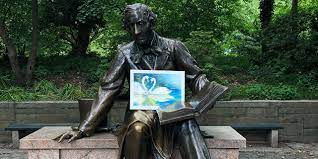 Matthew Mehan
 Cities are bastions of opportunity. They are filled with vast numbers of people meeting friends and family, visiting restaurants, museums, concert halls and sporting events, and travelling to and from jobs. Yet many of us who live in cities have occasionally been overwhelmed by the activity. At other times, we might feel ‘alone in the crowd’. For decades, the conflicting experiences of city living have led urbanites and scholars to ask: are cities bad for mental health?
 NASA just got a $10 billion space telescope for Christmas.
 If there’s one thing we’ve learned