
Alice Dreger in Quillette:
Alice Dreger: I know you’ve spoken about it many times before, but I would like to begin by asking you about the session at the 1978 AAAS [American Association for the Advancement of Science] conference during which you were rushed on the stage and a protester emptied a pitcher of water onto your head. By all accounts, the talk you then gave was very measured. How on Earth were you able to remain so calm after being physically assaulted?
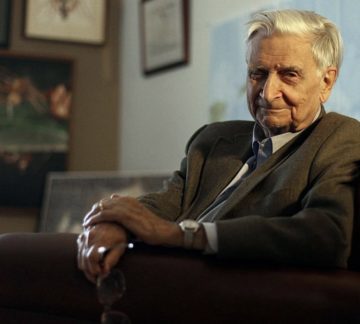 Edward O. Wilson: I think I may have been the only scientist in modern times to be physically attacked for an idea. The idea of a biological human nature was abhorrent to the demonstrators and was, in fact, too radical at the time for a lot of people—probably most social scientists and certainly many on the far-Left. They just accepted as dogma the blank-slate view of the human mind—that everything we do and think is due to contingency, rather than based upon instinct like bodily functions and the urge to keep reproducing. These people believe that everything we do is the result of historical accidents, the events of history, the development of personality through experience.
That was firmly believed in 1978 by a wide part of the population, but particularly by the political Left. And it was thought at the time that raising the specter of a biological basis for human behavior was not only wrong, but a justification for war, sexism, and racism.
More here.
 Stories are celebrated by great artists, thought leaders, and scientists as our best hope for reducing bigotry, building empathy, and ultimately encouraging us to behave more humanely. But how does this match up with the current state of the world?
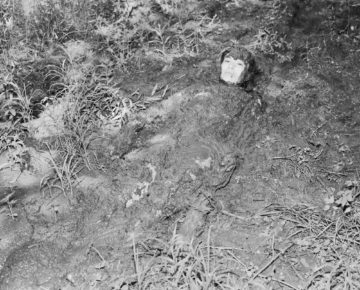 Night has the power to change things, doesn’t it? Not just appearances, but atmospheres too. The way we feel, the thickness of the air, the intensity of sounds, our imaginations. Darkness—real, enveloping darkness—is a shaping force, and even the scenes we know the most can metamorphose within its depths.
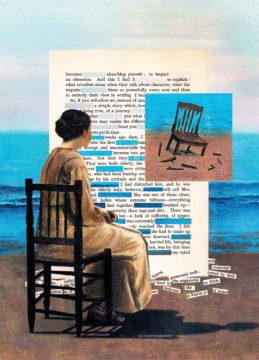 It was on a train journey, from Richmond to Waterloo, that Virginia Woolf encountered the weeping woman. A pinched little thing, with her silent tears, she had no way of knowing that she was about to be enlisted into an argument about the fate of fiction. Woolf summoned her in the 1924 essay “Mr. Bennett and Mrs. Brown,” writing that “all novels begin with an old lady in the corner opposite”—a character who awakens the imagination. Unless the English novel recalled that fact, Woolf thought, the form would be finished. Plot and originality count for crumbs if a writer cannot bring the unhappy lady to life. And here Woolf, almost helplessly, began to spin a story herself—the cottage that the old lady kept, decorated with sea urchins, her way of picking her meals off a saucer—alighting on details of odd, dark density to convey something of this woman’s essence.
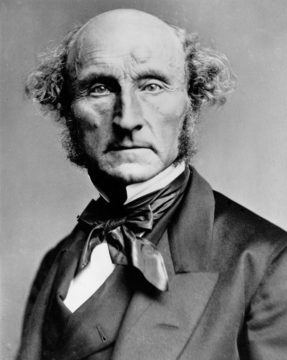 Nishi Shah in The Raven:
 Jon Baskin in The Point:
 Michael S. Roth in The LA Review of Books:
 Once again, just like clockwork, here comes New Year’s Day. Once again, in a wave sweeping across time zones, the world counts backward from 10. Revelry and other traditions have been pared back this year as the coronavirus pandemic drags into yet another new year. The uncertain — but hopefully better — future will be welcomed in with a mixture of hope and trepidation. It’s an odd holiday. Jan. 1 is no great landmark in the course of human events; it is the anniversary of no remarkable birth, death or battle. The cosmos is not arranged in any particularly auspicious way. It is a date pulled out of a hat, an utterly arbitrary starting line for an eternal, repetitive relay race. The innocent baby takes the baton, sprints out with promise and hope, inevitably to stagger home a shattered old man, beaten down by 365 days of calamity, cruelty and chaos, especially so this year. And another baby invariably waits its turn.
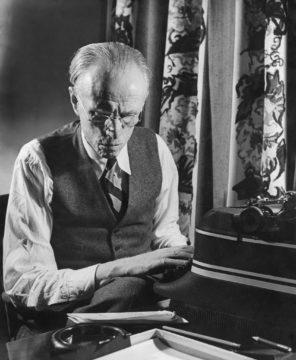 This is the centenary year of “Babbitt,” Sinclair Lewis’s best — and most misunderstood — novel. He had written five inconsequential books that had received respectable if not excited attention. And in 1920 — at the age of 35 — he had written “Main Street,” the most sensationally successful novel of the century to date: hundreds of thousands of copies sold, and a title that came to stand for the values, both narrow-minded and wholesome, of what we now call Middle America.
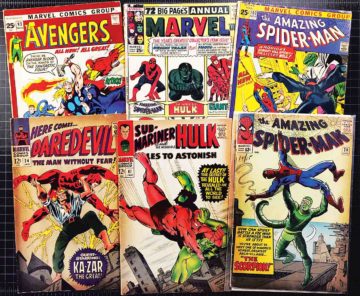 In a utopia, there’d be an issue for everyone. For me, it was Uncanny X-Men No. 414, which I read on the floor of a Pine Sol–scented Barnes and Noble when I was 11. Seated pretzel-legged in one of the aisles, I found something unexpectedly weighty in the Marvel comic: Abused by his father, a boy literally explodes. A lapsed superhero named Northstar discovers him in his home’s rubble. Northstar is gay, we know, because Professor Xavier, founder of a school for “gifted youngsters” with mutant powers they need to learn how to control, wants to hire the flying, ultrafast Canadian; he’d like to diversify his teaching staff so that his students have homosexual role models.
 If you’ve ever had to buy hot dogs for a cookout, you might have found yourself solving a math problem involving least common multiples. Setting aside the age-old question of why hot dogs usually come in packs of 10 while buns come in packs of eight (you can read what the National Hot Dog and Sausage Council has to say about it
 The term deaths of despair comes from Princeton economists Anne Case and Angus Deaton, who set out to understand what accounted for falling U.S. life expectancies. They learned that the
  Is the American Dream still alive? If you speak to many of the immigrants we spoke to, who came to this country with nothing but grit, resilience, and a dream, they will tell you that it certainly is still alive. As a part of our series about
  In the fall of 1972, a psychiatrist named Salvador Roquet travelled from his home in Mexico City to the Maryland Psychiatric Research Center, an institution largely funded by the United States government, to give a presentation on an ongoing experiment. For several years, Roquet had been running a series of group-therapy sessions: over the course of eight or nine hours, his staff would administer psilocybin mushrooms, morning-glory seeds, peyote cacti, and the herb datura to small groups of patients. He would then orchestrate what he called a “sensory overload show,” with lights, sounds, and images from violent or erotic movies. The idea was to push the patients through an extreme experience to a psycho-spiritual rebirth. One of the participants, an American psychology professor, described the session as a “descent into hell.” But Roquet wanted to give his patients smooth landings, and so, eventually, he added a common hospital anesthetic called ketamine hydrochloride. He found that, given as the other drugs were wearing off, it alleviated the anxiety brought on by these punishing ordeals.