
Nigel Crisp in Prospect:
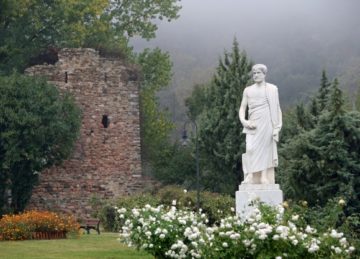 More than 2,300 years ago, Aristotle wrote about eudaimonia—commonly translated as human flourishing—and discussed how we can best live our lives. It is a concept that has influenced philosophers through the ages, from Thomas Aquinas to Martha Nussbaum, who have in different ways developed theories about how we can live the good life and fulfil our true capability and potential as human beings.
The Covid-19 pandemic has reminded us all just how important these ideas are and shown the interconnection of every aspect of our lives, from health to the economy, the environment and education. As we build for the future, we need to think again about the well-lived life and the values—or virtues, in Aristotle’s terms—by which we live it.
In the 10 manuscripts that make up the Nichomachean Ethics Aristotle also describes the concept of phronesis—practical wisdom—which means, in broad terms, understanding ends and means and the differences between them. Or as we might say today, knowing what is the right thing to do and knowing how to do it.
More here.
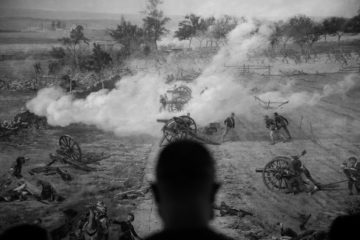 Barbara F. Walter, a political scientist at the University of California, San Diego, has interviewed many people who’ve lived through civil wars, and she told me they all say they didn’t see it coming. “They’re all surprised,” she said. “Even when, to somebody who studies it, it’s obvious years beforehand.”
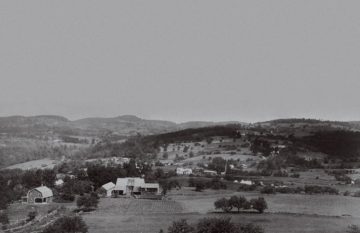 I meet Bob Leverett in a small gravel parking lot at the end of a quiet residential road in Stockbridge, Massachusetts. We are at the Ice Glen trailhead, half a mile from a Mobil station, and Leverett, along with his wife, Monica Jakuc Leverett, is going to show me one of New England’s rare pockets of old-growth forest. For most of the 20th century, it was a matter of settled wisdom that the ancient forests of New England had long ago fallen to the ax and saw. How, after all, could such old trees have survived the settlers’ endless need for fuel to burn, fields to farm and timber to build with? Indeed, ramping up at the end of the 17th century, the colonial frontier subsisted on its logging operations stretching from Maine to the Carolinas. But the loggers and settlers missed a few spots over 300 years, which is why we’re at Ice Glen on this hot, humid August day.
 If
If 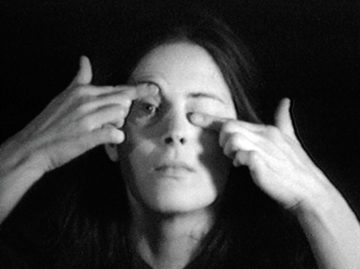 WRITER CHRIS KRAUS devotes a long section of her 1997 book I Love Dick to artist Hannah Wilke, who had passed away from lymphoma a few years earlier. Identifying with Wilke’s reputation as a “female monster,” Kraus glimpsed what few other writers at the time could see. Over a career spanning more than three decades, from the late 1950s until her last days in the cancer ward, where she died at age fifty-two, Wilke treated her art as a vector of her desire, “continuously exposing [herself] to whatever situation occurs,” as she put it in a 1976 statement. Rejected as a shameless exhibitionist, she carried on unhindered, refusing to place her sexuality—or her body—under wraps. Her striptease was relentless and ruthless, never more so than in her final body of work, “Intra-Venus,” 1992–93, a series of large-scale color photographs and videos in which the artist, sick with cancer, stunts for the camera in the costume of illness, still every bit the goddess in bandages and with an IV drip.
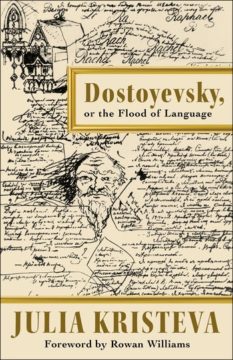 The initiated had been familiar with the first edition for a long time, but with this new one, Bakhtin’s Dostoyevsky became a social phenomenon, a political symptom. At the center of this new furor was my friend and mentor, Tzvetan Stoyanov, well-known literary critic, anglophone, francophone, and obviously russophone. He had already introduced me to Shakespeare and Joyce, Cervantes and Kafka, the Russian formalists and the breakthrough postformalism of a certain Bakhtin. Now we could reimmerse ourselves, day and night, out loud and in Russian, Bakhtin’s book in hand, in the novels of Dostoyevsky. I heard the vocal power of tragic laughter, the farce within the force of evil, and that contagious, drunken flow of dialogues composed as story that Bakhtin calls slovo, translated as mot (word) in French. Through the vocabulary and syntax, I heard, as Logos incarnate, the Word stirring biblical deliverance into a new multivocal, multiversal narration…
 Are numbers real? What does that even mean? You can’t kick a number. But you can talk about numbers in useful ways, and we use numbers to talk about the real world. There’s surely a kind of reality there. On the other hand, Luke Skywalker isn’t a real person, but we talk about him all the time. Maybe we can talk about unreal things in useful ways. Jody Azzouni is one of the leading contemporary advocates of
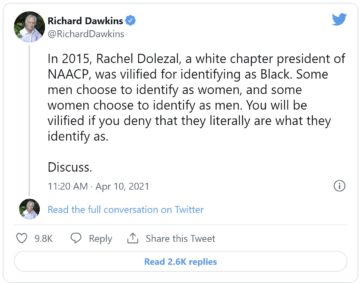 A lifetime as an Oxford tutor has ingrained in me the Socratic habit of raising questions for discussion, often topics with a mildly paradoxical flavour, conundrums, apparent contradictions or inconsistencies that seem to need a bit of sorting out. I have continued the habit on Twitter, often ending my tweets with the word, “Discuss.” That tweet was one such.
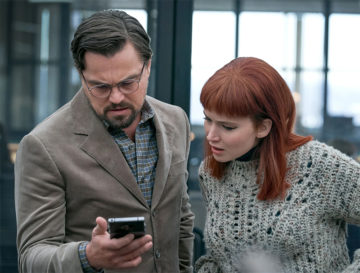 DON’T LOOK UP
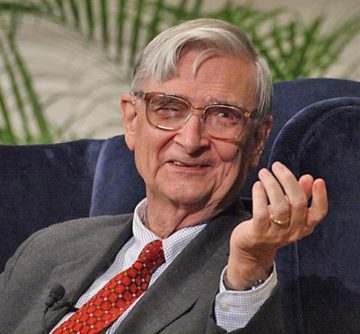
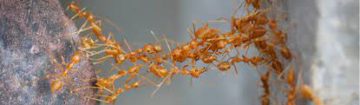 I first met Edward O. Wilson in 1971 when I was a student in an ecology course at the Marine Biological Laboratory in Woods Hole, Massachusetts. Wilson, a famous Harvard professor, was sitting in on the student project reports. After I reported my experiments on food size selection in zooplankton, Wilson remarked, “That’s new, isn’t it?” I was so proud to have impressed the great E.O. Wilson that I have remembered his comment ever since!
 The question that defined 2021 was perhaps the one Pontius Pilate, procurator of Judea, famously posed to Jesus in the Gospel of John: what is truth? Indeed, all the most debated issues of this dire year from vaccines to fake news were in the end about “verity”. Far beyond postmodernity, we appeared to have lost the shared set of values that constituted the mainframe of our societies in the past. This is not necessarily wrong. Philosophers Friedrich Nietzsche and Martin Heidegger pointed out how traditional values systems are undermined by too-rigid structures for history. These structures, whether scientific or economical, are always shaped by epochs and societies that determine their outcomes. So as we enter a new year, the question about truth becomes: who can we trust in 2022?
 One week ago,