Justin E. H. Smith in his Substack newsletter, The Hinternet:
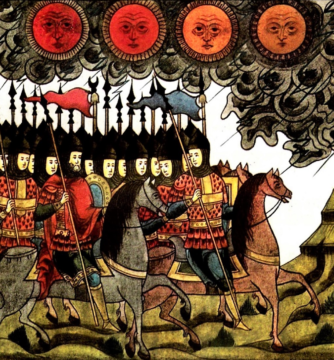 On at least a few occasions in my adult life, I have conducted myself with what may have looked to an outside observer like courage. I have for example put myself between a raving junkie, with a broken bottle in his hand, and the girlfriend he intended to slash with it, thus interrupting my routine evening stroll across the Place de Stalingrad. Such scenes of violence are not uncommon there, as if there were something about Stalingrads in general, and I confess I have let many similar scenes continue without my intervention.
The broken man slinked away with his broken bottle, presumably because I appeared to present to him a credible threat of force. The meaning of this phrase, so often heard in the context of great-power politics, does not entail a demonstrable threat of force, and indeed had the man with the bottle tried to strike me with it, I really don’t know what I would have done. The truth is I have no idea how to “fight”, just like I have no idea how to dance ballet: I can see that there is some distinct human capacity that fighters and dancers are deploying, but I don’t know what it is.
More here.
 How are so many animals catching the coronavirus? And what does this mean for human and animal health?
 A great river encircles the world. It rises in the heartland of the United States and carries more water than the Mississippi and Yangtze rivers combined. One branch, its oldest, streams over the Atlantic, heading for Europe and the Middle East. Another crosses the Pacific, flowing towards China. Countless tributaries join along the way, draining the plains and forests of Latin America, Europe and Asia.
 M
M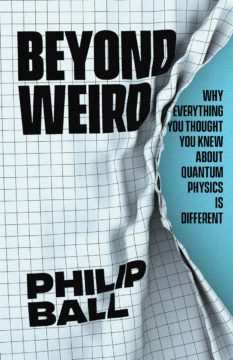 If you’ve read any of Ball’s remarkable books, you might have noticed something I found extraordinary, which led to the question that began our conversation. Ball has written books on subjects as diverse as the history of China (The Water Kingdom), physics, chemistry, biology, music (The Music Instinct) and Chartres Cathedral (Universe of Stone). In all of his books, he brings the highest quality scientific and scholarly research, often from vastly different fields, into a coherent, intellectually original, and exciting story. Besides writing popular books, he actively publishes peer-reviewed research, and his written scientific articles in fields as diverse as astrobiology, physics, chemistry, and biology. It is a remarkable and uncommon combination of breadth and depth, even among the many brilliant writers in the world of science.
 T
T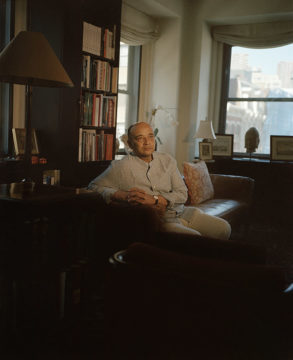 Please use the sharing tools found via the share button at the top or side of articles. Copying articles to share with others is a breach of
  What did the sensitivity readers say? And did I care? Of all the aspects of the
  Masayuki Nakahata has been waiting 35 years for a nearby star to explode.
 An increasing number of politicians and media analysts claim Putin may be mentally unstable, or that he is isolated in a bubble of yes-men who don’t warn him of dangers ahead. Many commentators say he is trying to restore the Soviet Union or recreate a Russian sphere of influence on his country’s borders, and that this week’s intrusion into eastern
 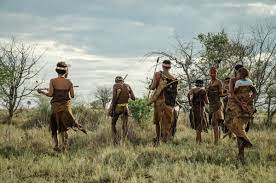 Two hundred thousand years ago, the earliest shared ancestors of every living human on Earth rested their feet at a verdant oasis in the middle of Africa’s
  “I’m just trying to get authentically to that,” the actress Stephanie Berry told her director, Whitney White, as they stood in a spacious rehearsal room in the East Village in mid-January. They were working out a bit of business that might or might not end up in “On Sugarland,” Aleshea Harris’s third full-length play, which premières at New York Theatre Workshop on March 3rd. “On Sugarland” was inspired by “Philoctetes,” Sophocles’ play about an expert archer plagued by chronic pain and exiled because of the smell of a wound on his foot. (A snake bit him while he was walking on sacred ground; so much for hubris.) Sophocles’ character may be powerful and gifted, but he is also set apart by the stench of his difference. Eventually, the god Heracles promises to heal Philoctetes’ foot if he returns to Troy to fight in the Trojan War. This is the mythology that jump-starts Harris’s new play, which is itself about mythology: one myth being that, by serving your country, you are protecting your community and yourself; another being that love can vanquish pain.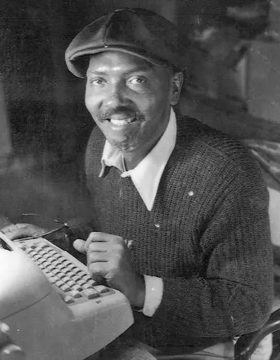
 Since the Yale cognitive scientist Laurie Santos began teaching her class Psychology and the Good Life in 2018, it has become one of the school’s most popular courses. The first year the class was offered, nearly a quarter of the undergraduate student body enrolled. You could see that as a positive: all these young high-achievers looking to learn scientifically corroborated techniques for living a happier life. But you could also see something melancholy in the course’s popularity: all these young high-achievers looking for something they’ve lost, or never found. Either way, the desire to lead a more fulfilled life is hardly limited to young Ivy Leaguers, and Santos turned her course into a popular podcast series
 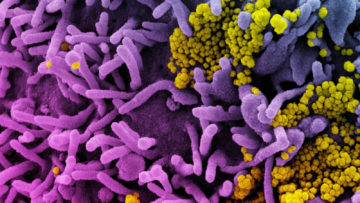 In the ongoing struggle of SARS-CoV-2’s genes versus our wits, the virus that causes Covid-19 relentlessly probes human defenses with new genetic gambits. New variants of this coronavirus with increasing transmissibility have sprung up every few months, a scenario that is likely to continue.