
Natalie Wolchover in Quanta:
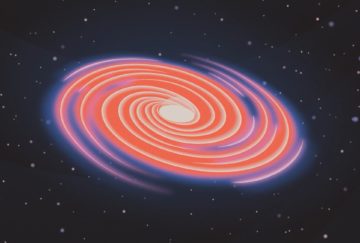 In The Structure of Scientific Revolutions, the philosopher of science Thomas Kuhn observed that scientists spend long periods taking small steps. They pose and solve puzzles while collectively interpreting all data within a fixed worldview or theoretical framework, which Kuhn called a paradigm. Sooner or later, though, facts crop up that clash with the reigning paradigm. Crisis ensues. The scientists wring their hands, reexamine their assumptions and eventually make a revolutionary shift to a new paradigm, a radically different and truer understanding of nature. Then incremental progress resumes.
For several years, the particle physicists who study nature’s fundamental building blocks have been in a textbook Kuhnian crisis.
The crisis became undeniable in 2016, when, despite a major upgrade, the Large Hadron Collider in Geneva still hadn’t conjured up any of the new elementary particles that theorists had been expecting for decades. The swarm of additional particles would have solved a major puzzle about an already known one, the famed Higgs boson. The hierarchy problem, as the puzzle is called, asks why the Higgs boson is so lightweight — a hundred million billion times less massive than the highest energy scales that exist in nature.
More here.
 For many people, watching the Russian invasion of Ukraine has felt like a series of “He can’t be doing this” moments. Russia’s Vladimir Putin has launched the largest ground war in Europe since the Second World War. It is, quite literally, mind-boggling.
 H
H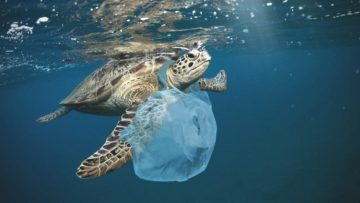 Nearly 200 countries have agreed to start negotiations on an international agreement to take action on the “plastic crisis”. UN members are tasked with developing an over-arching framework for reducing plastic waste across the world. There is growing concern that discarded plastic is destroying habitats, harming wildlife and contaminating the food chain. Supporters describe the move as one of the world’s most ambitious environmental actions since the 1989 Montreal Protocol, which phased out ozone-depleting substances.
 Some philosophical ideas have a bad reputation: until a few centuries ago, for example, in Christian Europe it was quite dangerous to profess atheism. Present-day forbidden ideas put you at risk of a shit-storm rather than the stake, but it’s still interesting to explore the philosophical taboos of our era.
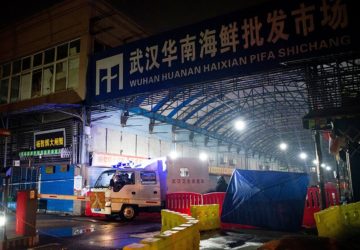 Scientists have released three studies that reveal intriguing new clues about how the COVID-19 pandemic started. Two of the reports trace the outbreak back to a massive market that sold live animals, among other goods, in Wuhan, China
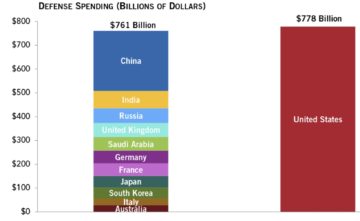 The state of U.S. defense spending is often boiled down to eye-catching but incomplete statistics. On one side, the U.S. spends more than the next
 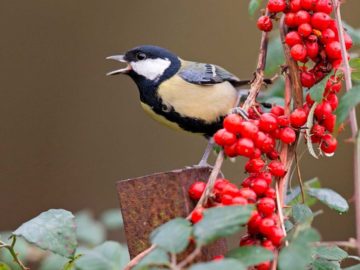 In our quest to find what makes humans unique, we often compare ourselves with our closest relatives: the great apes. But when it comes to understanding the quintessentially human capacity for language, scientists are finding that the most tantalizing clues lay farther afield.
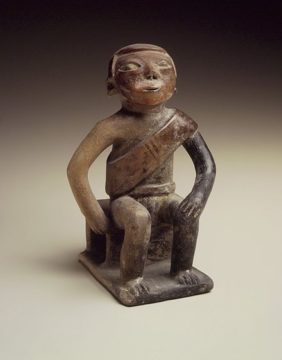 “Cocaine is an alkaloid found in the leaves of the coca plant, Erythroxylum coca, which is native to South America. For centuries, the leaves have been chewed by South American people as a mild stimulant and appetite suppressant. Coca was brought back to Europe by the Spanish in the 16th century. Cocaine itself was first isolated by Friedrich Gaedcke in 1855, and an improved purification process was developed by Albert Niemann in 1860. Later, it came to be incorporated into tonic drinks, such as Coca-Cola in 1866, and was available over the counter at Harrods in London until as late as 1916.
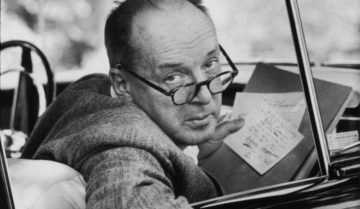 In 1999, Nina Khrushcheva met William F. Buckley at the offices of National Review. Then a fellow at the New School’s World Policy Institute (and now a professor of international affairs at the university) Khrushcheva had much to discuss with Buckley, whom she’d first met a few months earlier at an event commemorating the tenth anniversary of the fall of the Berlin Wall. Buckley had been a panelist along with her uncle Sergey, son of the Cold War-era Soviet premier Nikita Khrushchev, one of Buckley’s sworn enemies in his, and the conservative movement’s, ferocious fight against Communism.
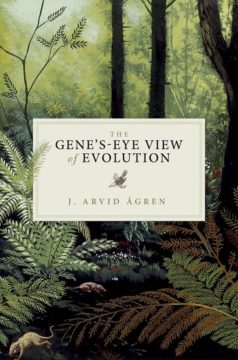 An Oxford undergraduate once wrote a brilliant answer to an exam question about the logic of natural selection, ending with the statement: “And here I rely heavily on the words of Richard Dawkins.” When the exam marker, one Marian Stamp Dawkins, noticed this, she wrote in the margin of the paper: “Yes. Don’t we all?”
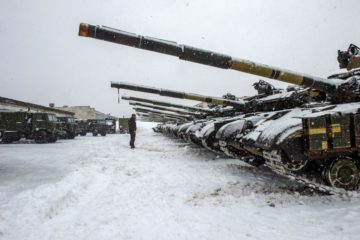 So much is being written about the Russian invasion of Ukraine that more on the situation on the ground is unnecessary. Certainly, it is premature for a post-mortem on causes and responsibilities of a conflict that came on so quickly and unexpectedly. But it is not a bad time to think about medium- and long-term consequences of Putin’s dramatic action, and how the West can recover its equilibrium and face up to a new global challenge.
 A
A 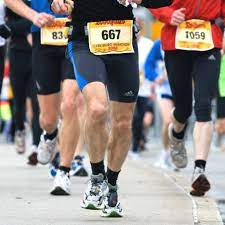 It’s not just their ability to run 42 kilometres that separates marathon runners from the rest of us. They’ve got a secret energy source hidden deep inside: a special bacteria in their gut turns a painful waste material into energy. No doping scandal required!