
Jag Bhalla in Undark:
 The misleadingly presented climate pledges coming out of Davos are but one act in a much larger, intricately choreographed ballet of baloney about carbon removal. The Intergovernmental Panel on Climate Change, for instance, has proposed several climate scenarios that could potentially limit global warming to the target of 1.5 degree Celsius, but every one of them assumes that vast amounts of carbon — between 100 billion and 1 trillion metric tons — will be removed from the atmosphere over the course of the 21st century. Much of that carbon removal is expected to come by way of trees and other forms of biomass through a process called bioenergy with carbon capture and storage, or BECCS.
But research suggests that the planet’s capacity for reforestation is only large enough to remove about 2.4 billion metric tons of carbon dioxide per year. (We currently produce around 40 billion metric tons of global carbon emissions annually, including emissions due to land-use change.) To achieve the lofty IPCC goals, not only would humanity need to rapidly max out the planet’s tree capacity using fast-growth monoculture — potentially jeopardizing biodiversity, current agriculture, and the 7,000 trillion extra calories per year that forecasters think will be needed to feed the growing world population by 2050 — we would also need to augment that tree planting with substantial artificial carbon removal technologies.
More here.
 Every woman should have the legal right safely to terminate a pregnancy that she does not wish to continue, at least until the very late stage of pregnancy when the fetus may be sufficiently developed to feel pain. That has been my firm view since I began thinking about the topic as an undergraduate in the 1960s. None of the extensive reading, writing, and debating I have subsequently done on the topic has given me sufficient reason to change my mind.
 When drafting legislation, vocabulary counts for everything. Opposing viewpoints were passionately aired over seemingly minute details. Within this group, there were two sides: One believes that death is best described as permanent, and the other believes death is irreversible. The distinction is subtle, but critical. Fans of the latter definition argue that describing death as “permanent” doesn’t go far enough—death is only permanent if no medical action is taken, but irreversible means that nothing can be done. A North Dakota doctor by the name of Christopher DeCock, who opted for the bridge of the original Starship Enterprise as his background, used another fantasy tale to make his fandom of Team Irreversible known. “This isn’t Princess Bride, where you’re mostly dead,” he says, paraphrasing Billy Crystal’s comedic relief healer Miracle Max from the 1987 classic. “Either you’re dead or you’re not dead.”
 It may be time
 Leonard Benardo in Dissent:
 Raymond Geuss in The New Statesman:
 Jewellord T. Nem Singh in Phenomenal World:
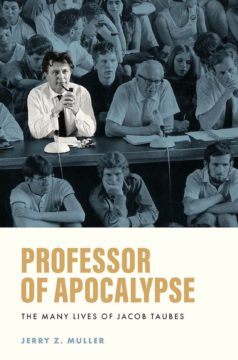 MANY READERS OF LARB and other literary journals may very well never even have heard the name — let alone be aware of the thought and personality — of the idiosyncratic philosopher and religious thinker Jacob Taubes (1923–1987). Why, then, would the distinguished intellectual historian Jerry Z. Muller dedicate many years to writing a highly detailed, nuanced biography of this apparently obscure figure? It would be sufficient to show that, in the second half of the 20th century, Taubes was an immensely well-connected and putatively brilliant man, an exotic, animating presence in the Western intellectual firmament, restlessly traversing Europe, the United States, and Israel. But what gives this study its special flavor is the fascinating, quasi-erotic, well-nigh demonic nature of the man’s personality and Muller’s tantalizing connection of these features to Taubes’s philosophical ruminations and religious and historical pursuits. Given his intensity and radicalism, his wildly vacillating moods and relationships, his unending contempt for cozy and settled bourgeois liberalism, and his search for some kind of messianic universal future, the title Muller has chosen for his biography, Professor of Apocalypse: The Many Lives of Jacob Taubes, could not be more apt.
 What linked these loosely connected scholars, the book suggests, was their interest in using the study of exotic cultures to illuminate the peculiarities of the “civilised” world. As Malinowski put it, “in grasping the essential outlook of others, with reverence and real understanding, due even to savages, we cannot help widening our own”.
  THE SUMMERS ARE ALWAYS HOT
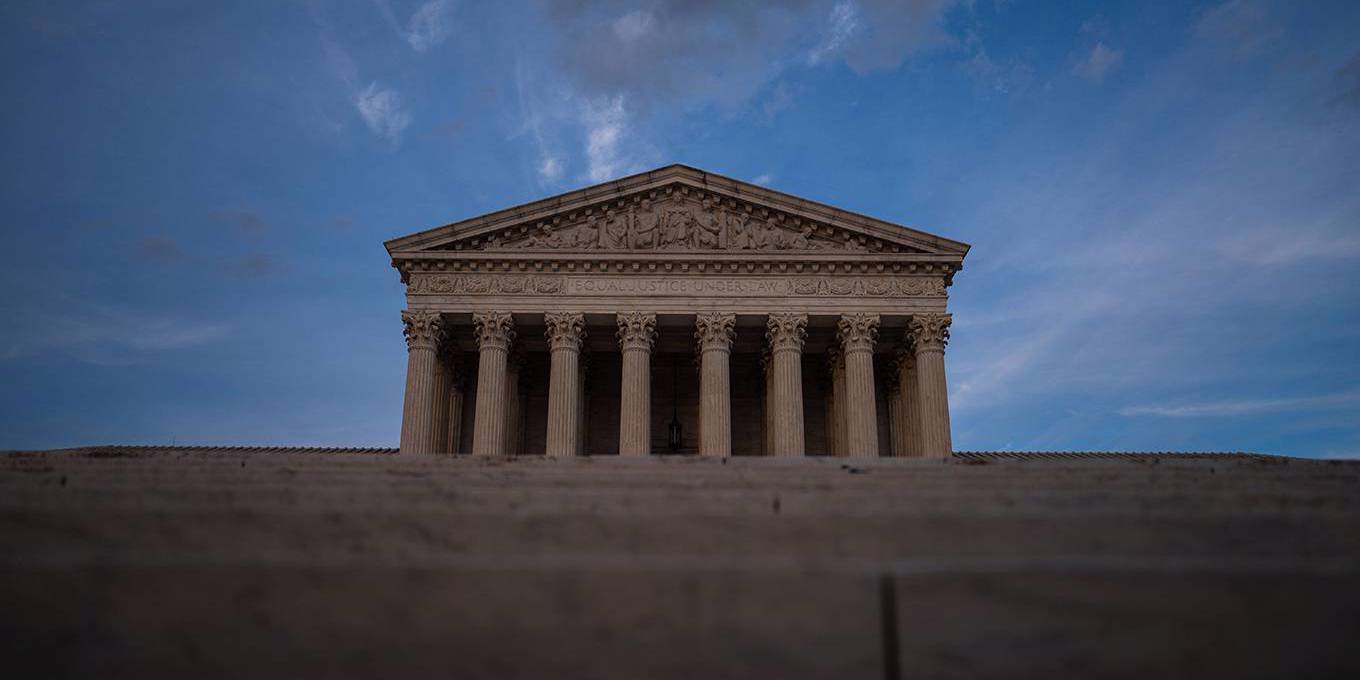
 Though the 1973 decision in Roe established a constitutionally protected right to abortion, it never guaranteed abortion access. The Supreme Court held only that state criminal laws banning abortion were an infringement of the constitutional right to privacy. Patients, in consultation with their physicians, could elect to have an abortion for any reason during the first trimester of pregnancy. In the second trimester states could regulate abortions in order to protect the pregnant person’s health or the dignity of potential life, but after the second trimester, a state was permitted to ban abortion unless terminating the pregnancy was necessary to preserve the patient’s life or health. This trimester system was abandoned in 1992, when the Court held that states could restrict abortion before viability—around twenty-four weeks of gestation—so long as the regulation did not place a “substantial obstacle in the path of a woman seeking an abortion of a nonviable fetus.” The Court’s decision to reject Roe’s trimester framework nevertheless claimed to preserve “the essential holding of Roe.”
 Philosophers have seldom lived up to the ideal of radical doubt that they often claim as the prime directive of their tradition. They insist on questioning everything, while nonetheless holding onto many pieties. Foremost among these, perhaps, is the commandment handed down from the Oracle at Delphi and characterised by Plato as a life-motto of his master Socrates: “Know thyself.”
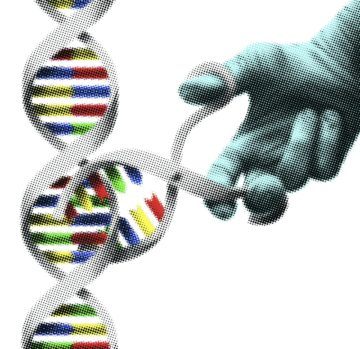 Ten years ago this week, Jennifer Doudna and her colleagues
 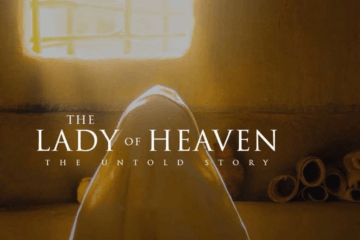 “Birmingham will not tolerate the disrespect of our Prophet… You will have repercussions for your actions.” So