
 Zachary Manfredi in Boston Review:
In 2017 Senator Bernie Sanders made the Republicans’ tax bill a human rights issue by connecting it to UN Special Rapporteur Philip Alston’s investigation of “extreme poverty” in the United States. Following a meeting with Sanders, Alston castigated the legislation for its potential to exacerbate already historic levels of economic inequality and social immiseration. “Tax policy is human rights policy,” Alston had declared, and the Republican bill represented “America’s bid to become the most unequal society in the world.” In the wake of the finalization of the tax law—arguably one of the greatest tax transfers of wealth to the rich in modern times—activists took up this framing, decrying the human rights implications of the law in creating radical economic disparities.
In the years since the Trump tax legislation took effect, major progressive political figures in the United States have continued to draw rhetorical connections among tax policy, extreme inequality, and human rights. Throughout his 2020 primary campaign, Sanders offered proposals to guarantee housing, medical care, and education “as human rights” and explicitly tied funding of these novel social programs to a wealth tax. Senator Elizabeth Warren and Representative Pramila Jayapal have similarly introduced the Ultra-Millionaire Tax Act aimed at providing funding for public services. And Representative Alexandria Ocasio-Cortez has called for the United States to ratify the International Covenant on Economic, Social, and Cultural Rights as part of her legislative package for “A Just Society.” In making the case for legislative proposals addressing housing justice, immigrant and workers’ rights, and the federal poverty line, Ocasio-Cortez has frequently framed progressive taxation policy as a means to fund programs that would guarantee the rights elaborated in the covenant.
What is at stake in couching these visions of tax policy—a domain often sealed off from larger debates about values—in the language of human rights?
More here.
 For the first time in history,
  “P
“P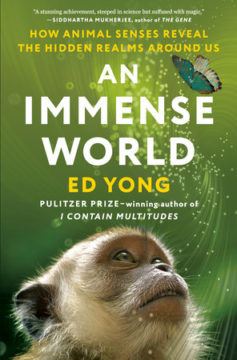 That I found myself surprised at so many moments while reading “An Immense World,” Ed Yong’s new book about animal senses, speaks to his exceptional gifts as a storyteller — though perhaps it also says something regrettable about me. I was marveling at those details because I found them weird; but it turns out, if I try to expand my perspective just a bit, they aren’t so weird after all. One of Yong’s themes is that much of what we think of as “extrasensory” is “simply sensory.” A term like “ultrasound” is “an anthropocentric affectation.” The upper frequency limit for the average human ear may be a measly 20 kilohertz, but most mammals can hear well into the ultrasound range.
 “I went to town and photographed non-stop, with literally, vengeance,” William Klein wrote of the book of New York City street photographs that he made in 1954 and 1955. He added, “I saw the book as a tabloid gone berserk, gross, over-inked, brutal layout, bullhorn headlines. This is what New York deserved and would get.” The book in question, “
 I was going to write about mutton biryani, the multi-layered, aromatic, mouth-watering rice preparation of which my grandmother created her own version—I clarify that it’s “her” version because every family has its own biryani recipe.
 T
T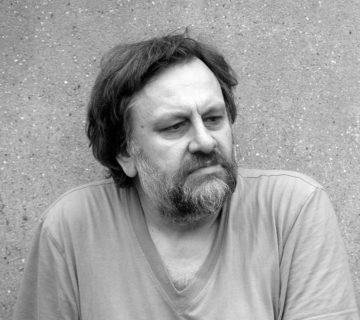 Zizek has been out of the left-leaning limelight for a while. Maybe this inattention to his ego from the media, his fans and detractors is why he penned a piece attacking pacifists and calling for a stronger NATO in the June 21, 2022 edition of the mainstream liberal publication British publication the Guardian. Yes, like a few others mostly in the US/western European Left, Zizek has decided that the only response to the Russia-Ukraine conflict is full-on support for the Kyiv government, no matter what. Going beyond others on the Left who have voiced similar sentiments, but kept their opposition to NATO/US troops and air involvement intact, Zizek has jumped full on board with the “fight to the last Ukrainian” crowd; the liberals, nazis, church patriarchs and every other segment of the pro-war crowd.
 It’s tempting to fixate on the palliative effects of
  A 20-year-old woman who was born with a small and misshapen right ear has received a 3-D printed ear implant made from her own cells, the manufacturer announced on Thursday. Independent experts said that the transplant, part of the first clinical trial of a successful medical application of this technology, was a stunning advance in the field of tissue engineering.
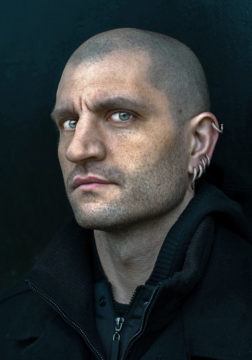 What, I asked Miéville, might a counter-factual history of Marxism-communism look like if instead of “spectre” the opening had always included “hobgoblin”? “The serious answer,” he replied, “is that nothing would have changed. But the hobgoblin is a stranger figure than the ghost. What has always inspired me is the ‘red sublime’ – the unsayable, the beyond-speech, the apophatic; literally unthinkable change. I want a radical movement that understands that there is no ‘right’ way to do things. Maybe the hobgoblin is closer to the sublime than the spectre.” There are few outside academia who are better qualified to write on the Manifesto than Miéville. As a novelist, he is receptive to the “thunderously uncynical” style and expression of its authors – the declamatory tenor through which Marx and Engels literally willed the future. There is also the remarkable shift in voice into the second person, when the Manifesto goes from discussing the bourgeoisie to excoriating it directly, “You reproach us [communists] with intending to do away with your property. Precisely so; that is just what we intend.”
 In Galileo’s Dialogue Concerning the Two Chief World Systems (1632), three Italian gentlemen – one philosopher and two laymen – debate the structure of the Universe. The philosopher, Salviati, argues in support of the Copernican theory, even though it requires a moving Earth – something that strikes his interlocutors as problematic, if not absurd. After all, we don’t feel the ground moving beneath our feet; clouds and birds are not swept backwards as the planet whooshes through space; a ball dropped from a tower does not land far away from the base of that tower.