
Emily Yoffe at Common Sense:
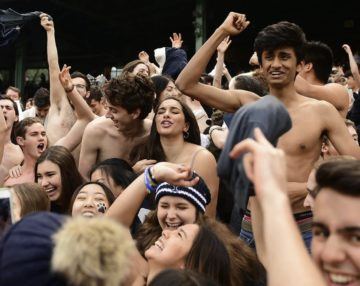 Joe Biden has fulfilled one of the first promises he made upon becoming president. His administration has just announced a comprehensive set of regulations—701 pages worth—that will gut due-process rights for college students accused of sexual misconduct.
Apparently, Biden learned nothing from going through his own sexual assault accusation crucible.
During his vice presidency, Joe Biden was the Obama administration’s point man for a major domestic initiative: ending sexual assault on campus. There is no question bad, sometimes criminal, sexual behavior occurs on campus. Eliminating it is a worthy, if elusive, goal. But the Obama-Biden mandate expanded the definition of sexual misconduct so broadly that jokes, flirting, or “any unwelcome conduct of a sexual nature,” could be punishable offenses.
More here.
 Elena Ferrante is, as all the world knows by now, the pseudonym for the elusive author of, among other books, “
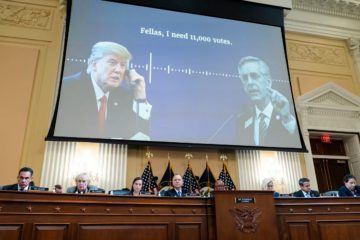 The House January 6 committee isn’t the only entity investigating former President Donald Trump and his efforts to overturn the 2020 presidential election. On Tuesday, a special grand jury in Fulton County, Georgia, subpoenaed members of Trump’s inner circle, including Sen. Lindsey Graham (R-SC) and Rudy Giuliani. While the
 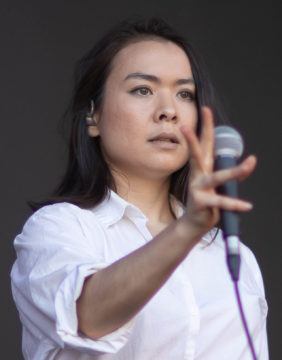 Everyone is “dissociating.” Over the past few years, it’s become an open-source cultural term, ripe for applying (or misapplying) to all kinds of circumstances where people feel the need to turn off and tune out. One woman I know is currently dissociating via a series of increasingly eccentric hobbies—bead necklaces, candle making, metal-detecting. She’s hardly alone. The go-to pose on Instagram right now is the “dissociative pout,” where you assume the blankest expression you can muster. The cultural critic Rayne Fisher-Quann, who
  D
D George Saunders is legendary in the literary community. He’s one of the few authors who has made a name for himself almost entirely on short stories, a feat all the more impressive considering how unmarketable story collections are. He now teaches at a highly respected MFA program at Syracuse, but in the bio of his first book, CivilWarLand in Bad Decline (1996), it says that he “works as a geophysical engineer” and that “he has explored for oil in Sumatra, played guitar in a Texas bar band, and worked in a slaughterhouse.” He was 38. In the 26 years since his debut, Saunders has won MacArthur and Guggenheim fellowships, the Story Prize, the Folio Prize, the Booker Prize, a World Fantasy Award, and four National Magazine Awards.
 For many last week, their engagement with Google’s LaMDA—and its
 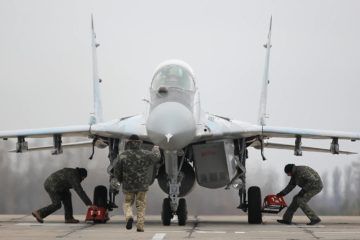 Ukraine has unleashed an incredible influence campaign in Washington. There’s a lag to the filing of lobbying disclosures. But even in the lead-up to
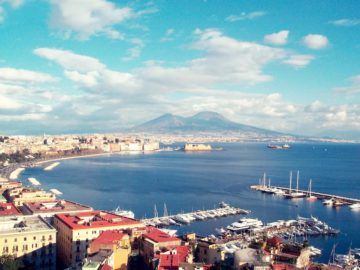
 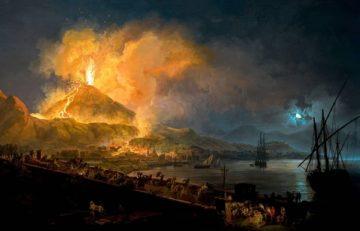 Naples, the tatterdemalion capital of the Italian south, is said to be awash with heroin. Chinese-run morphine refineries on its outskirts masquerade as ‘legitimate’ couture operations that transform bolts of Chinese silk into contraband Dolce & Gabbana or Versace. The textile sweatshops are controlled by the Neapolitan mafia, or Camorra. All this was exposed by the Italian journalist Roberto Saviano in his scorching reportage, Gomorrah. Published in Italy in 2006, Saviano’s was nevertheless a partial account, in which the carnival city of mandolins and ‘O Sole Mio’ was overrun by Armani-coutured killer-capitalists.
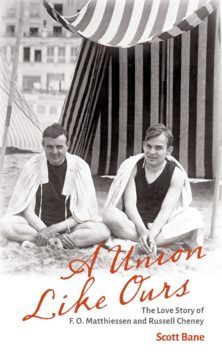 American Renaissance: Art and Expression in the Age of Emerson and Whitman
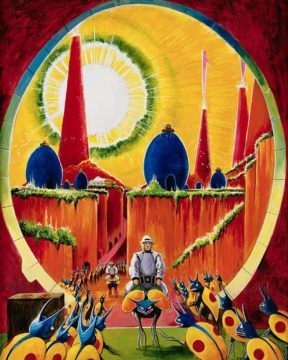 It is 1919, and a young astronomer turns a street corner in Pasadena, California. Something seemingly humdrum on the ground distracts him. It’s an ant heap. Dropping to his knees, peering closer, he has an epiphany – about deep time, our place within it, and humanity’s uncertain fate.
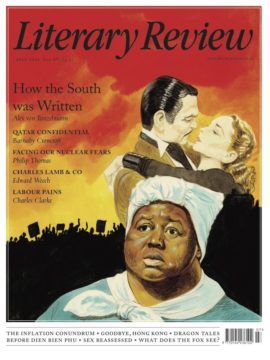 T
T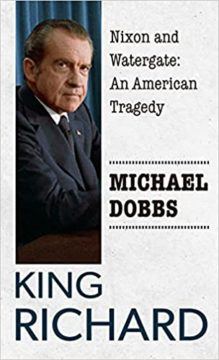 Why, from the get-go, did Nixon do the very thing that could bring him down? Why didn’t he condemn the burglary, claim he knew nothing about it (which was factually true), and fire those responsible? He had the nation on his side. He had worked well with Congress. He was odds-on favourite to win a second term. With Henry Kissinger, he had set a foreign policy agenda of unprecedented ambition: that February, he’d been the first US president to visit the People’s Republic of China and in May he was the first president to set foot in Moscow. Vietnam notwithstanding, he had created a legacy of international success that he believed would make him one of history’s great peacemakers. He had much to lose.
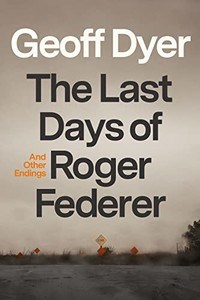 ASAD RAZA: Your new book, The Last Days of Roger Federer (Farrar, Straus and Giroux, $28), is in part a meditation on the tennis great and his retirement. It’s also about the late careers of other athletes, writers, artists, and musicians—Bob Dylan, Eve Babitz, Beethoven, to name a few. In this sense, you are writing about time, and this is reflected in the book’s unique formal structure. Can you tell me how that came about?