
Glenn Greenwald in his Substack newsletter:
 If one wishes to be exposed to news, information or perspective that contravenes the prevailing US/NATO view on the war in Ukraine, a rigorous search is required. And there is no guarantee that search will succeed. That is because the state/corporate censorship regime that has been imposed in the West with regard to this war is stunningly aggressive, rapid and comprehensive.
On a virtually daily basis, any off-key news agency, independent platform or individual citizen is liable to be banished from the internet. In early March, barely a week after Russia’s invasion of Ukraine, the twenty-seven nation European Union — citing “disinformation” and “public order and security” — officially banned the Russian state-news outlets RT and Sputnik from being heard anywhere in Europe. In what Reuters called “an unprecedented move,” all television and online platforms were barred by force of law from airing content from those two outlets. Even prior to that censorship order from the state, Facebook and Google were already banning those outlets, and Twitter immediately announced they would as well, in compliance with the new EU law.
But what was “unprecedented” just six weeks ago has now become commonplace, even normalized.
More here.
 Haven draws on a compendious knowledge of her subject, having mused on and written about Miłosz for more than 20 years. She met with the man himself on two occasions in early 2000, visits that turned out to be his last interviews in the United States, and since then she has talked with his translators, including Robert Hass, Lillian Vallee, and Peter Dale Scott; his family, including his son, Anthony, and his brother-in-law, Bill Thigpen; and his friends, including Mark Danner, who purchased Miłosz’s longtime home on Grizzly Peak. She has also edited two prior volumes on Miłosz, one collection of interviews and one of essays; has penned dozens of blog posts relating to him on her fecund
  In 1968, Yvonne Rainer wrote an essay criticizing “much of the western dancing we are familiar with” for the way in which, in any given “phrase,” the “focus of attention” is “the part that is the most still” and that registers “like a photograph.”
 The metaverse leapt into popular awareness in 2021, in a world all too prepared for virtual sociality thanks to a year and counting of pandemic social distancing and Zoom Christmases. Last April, Epic Games announced $1 billion in investment to build “revolutionary” connected social experiences. In June, Facebook announced itself as “a metaverse company”, with 10,000 employees working on virtual reality products and experiences, and by October, it had rebranded itself as Meta, driving a flurry of commentary as people scrambled to work out what that might actually mean.
 The history of economics owes many of its greatest contributions to the philosophers. Like Adam Smith, John Stuart Mill, Karl Marx and Friedrich von Hayek, Amartya Sen, who won the Nobel Prize for Economics in 1998, has a formidable reputation both as a world authority on development, welfare and famine, and as a distinguished theorist and moral philosopher. Born in Bengal in 1933, Sen’s life has been one of border-crossings – geographic and intellectual – as well as the rejection of narrow identities. He is, as he once put it:
 What caught your eye the last time you looked out of your airplane window? It might have been the winglet, a now ubiquitous appendage at the end of each wing, often used by airlines to display their logo and put their branding in your travel pictures.
 Each year, researchers from around the world gather at Neural Information Processing Systems, an artificial-intelligence conference, to discuss automated translation software, self-driving cars, and abstract mathematical questions. It was odd, therefore, when Michael Levin, a developmental biologist at Tufts University, gave a presentation at the 2018 conference, which was held in Montreal. Fifty-one, with light-green eyes and a dark beard that lend him a mischievous air, Levin studies how bodies grow, heal, and, in some cases, regenerate. He waited onstage while one of Facebook’s A.I. researchers introduced him, to a packed exhibition hall, as a specialist in “computation in the medium of living systems.”
 The first study to compare the accumulation of mutations across many animal species has shed new light on decades-old questions about the role of these genetic changes in aging and cancer. Researchers from the Wellcome Sanger Institute found that despite huge variation in lifespan and size, different animal species end their natural life with similar numbers of genetic changes. The study, published today in Nature, analyzed genomes from 16
  D
D I’m not convinced by moralizing, I’m not convinced by “Amazon is terrible and Netflix is terrible and you should all read more, because movies are stupid.” I don’t believe any of that anyway, and even if I did, it’s not persuasive. We live a completely meaningful life without ever reading a book, full stop. You don’t need books to live a meaningful life. And yet, many people will live a more enhanced life if they read even just a couple more books. And some won’t—I mean, it’s not for everyone. So the work became articulating the pleasures and the purpose and meaning of these spaces, and hopefully doing it in a somewhat entertaining way.
 Many people, even in France, have by now forgotten a small detail of the fateful day of Jan. 7, 2015, when members of a Paris al Qaeda cell stormed the offices of the satirical newspaper Charlie Hebdo and murdered 12 cartoonists, writers, and editors. A new issue of the publication had just hit the newsstands, and all over the city, on its cover, was the caricatured image of a sickly, haggard Michel Houellebecq with a pointed magician’s cap, smoking a cigarette, looking like some untouchable warlock. “Predictions of the Magus Houellebecq”, the cover read.
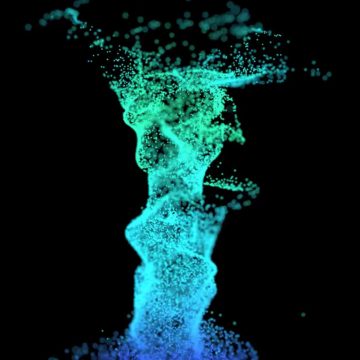 For more than 250 years, mathematicians have been trying to “blow up” some of the most important equations in physics: those that describe how fluids flow. If they succeed, then they will have discovered a scenario in which those equations break down — a vortex that spins infinitely fast, perhaps, or a current that abruptly stops and starts, or a particle that whips past its neighbors infinitely quickly. Beyond that point of blowup — the “singularity” — the equations will no longer have solutions. They will fail to describe even an idealized version of the world we live in, and mathematicians will have reason to wonder just how universally dependable they are as models of fluid behavior.