
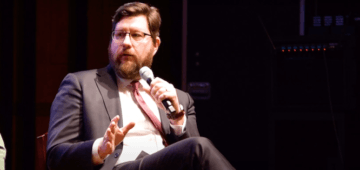
 Patrick Iber interviews Matt Duss in Dissent:
Since 2017, Matt Duss has served as the foreign policy advisor to Senator Bernie Sanders. From that position, Duss, who has a background in U.S.–Middle East policy, has been able to draw attention to issues—such as how U.S.-supplied arms to Saudi Arabia are contributing to humanitarian catastrophe in Yemen—that often go unchallenged. But his path to his current position was an unusual one. In this interview, which has been edited for length and clarity, we talk about how his background informs his thinking, what the Biden administration is doing well and where it should be doing better, and how to build a more robust infrastructure for progressive foreign policy.
Patrick Iber: Why did you become interested in foreign policy?
Matt Duss: A few reasons. First, my father’s family are refugees from Ukraine. He was born in a [displaced persons] camp in Germany after the Second World War and came as a young child to the promised land of Greenpoint, Brooklyn. I grew up in Nyack, New York, but I spent a lot of time down in Brooklyn with my grandparents. Interacting with the community of Polish and Ukrainian and Russian immigrants in Greenpoint, hearing the conversations that took place around the table even if I wasn’t aware of their full political scope, gave me an awareness and interest in the wider world. Then, when I was ten years old, our family spent a year living in the Philippines while my parents both worked in a processing center in Bataan for Vietnamese and Cambodian refugees, who were fleeing in the wake of the Vietnam War. It was a very interesting time to be in the Philippines. It was the Ferdinand Marcos era; I was there when [opposition leader Benigno] Aquino was assassinated. It was also interesting to observe the Cold War from that vantage point. Korean Air Lines Flight 007 was shot down [by the Soviet Air Forces] when I was there. Two global superpowers eyeing each other with their hands on their guns certainly feels different when you aren’t behind them. I think those experiences planted an interest in international affairs.
More here.
 N
N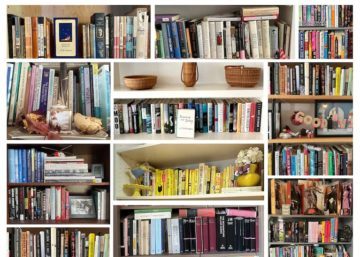 My bookshelves are a mess. It’s not just that I have too many books and too little space. I’m also simply disorganized. It wasn’t always so. Shelves I put together years ago, pre-children, remain generally intact: a full bookcase of poetry, alphabetized by author, and several jam-packed bookcases of fiction, also by authors’ last names. These shelves now serve primarily as decoration or reference or as a lending library for guests. But there’s more, much more: the tumbling pile on my desk — propping up the computer I am typing on — and the volumes stuffed frantically in the bookcase in my bedroom and stacked in towers on and around my nightstand. These are the books that are part of my daily life — for work, for pleasure, sometimes both. There is no rhyme or reason to how I arrange them, but as I read in
 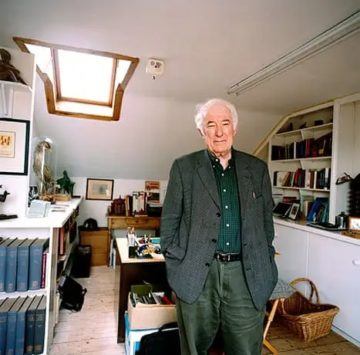 In the summer of 2012 Seamus Heaney wrote to me on some questions I had sent him about dictionaries and words and etymologies. Bits of what he had to say made it into a couple of talks I did around that time, but I recently rediscovered the original text, and thought it should see the light of day. So here’s a very lightly edited rendition of our exchange:
 In a recent
  Pretexts:
 Researchers in the Biomedical Engineering Department at UConn have developed a new cardiac cell-derived platform that closely mimics the human heart, unlocking potential for more thorough preclinical drug development and testing, and model for cardiac diseases. The research, published in Cell Reports by Assistant Professor Kshitiz in collaboration with Dr. Junaid Afzal in the cardiology department at the University of California San Francisco, presents a method that accelerates maturation of human cardiac cells towards a state suitable enough to be a surrogate for preclinical drug testing.
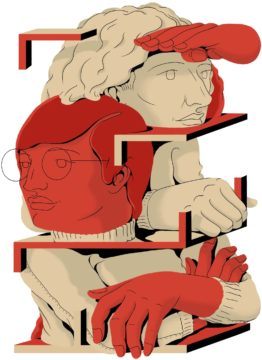 Around you, there is piracy and chaos. But you’re enterprising, and keep to your path. At university, you hardly sleep, and you eat what you can afford. Why do you work yourself this way? It’s not as if you’re getting paid for it. Another version of yourself, in another time, though, is. Now, living in the California sun with some success, you reflect on your poor, wan, sleepless younger self and feel a wave of gratitude, and then of prickly regret. The kid you were had different dreams; it strikes you as unfair that you sit pretty on the spoils of that person’s efforts. If you could take some of your wealth and send it backward in time, to your younger self, you would.
 Intellectual histories of recent American public life typically foreground disintegration in order to capture the mood of a country on the brink. These moments are not only about the United States’s ongoing culture wars or its “
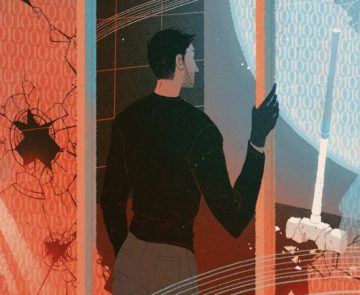 In 1868, the mathematician Charles Dodgson (better known as Lewis Carroll) proclaimed that an encryption scheme called the Vigenère cipher was “unbreakable.” He had no proof, but he had compelling reasons for his belief, since mathematicians had been trying unsuccessfully to break the cipher for more than three centuries.
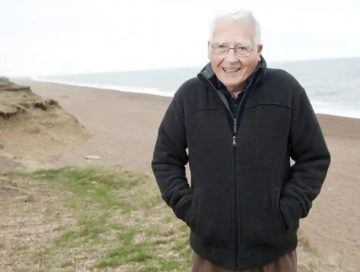 The scientist James Lovelock’s discoveries had an immense influence on our understanding of the global impact of humankind, and on the search for extraterrestrial life. A vigorous writer and speaker, he became a hero to the green movement, although he was one of its most formidable critics.