
Guy Gunartne in The Guardian:
 “One morning Anders, a white man, woke up to find he had turned a deep and undeniable brown.” So begins Mohsin Hamid’s inventive new novel, The Last White Man. Anders, as it turns out, is not an isolated case. More people in an unnamed town begin to change, including Oona, a yoga instructor and a friend of Anders. Violence inevitably erupts around them. White vigilante gangs terrorise the transformed, while some doggedly refuse to accept an end to whiteness. At its heart, this is a novel about seeing, being seen, loss and letting go. The loss of privilege that comes from being perceived as white, and no longer being able to view the world from within whiteness, are some of the anxieties examined here.
The immediacy of the novel’s opening may evoke Franz Kafka’s Metamorphosis, but Hamid’s prose style is much more akin to José Saramago. His often paragraph-long sentences are set to an unbroken rhythm. At times, it reads like a parable. We move briskly from hypnotic early depictions of social rupture to the tenderness of the closing stages. Hamid’s decision to foreground the themes of loss and mourning allows the novel to speak most incisively to the condition of whiteness itself.
More here.
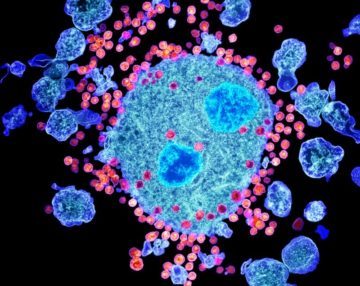 An injectable drug that protects people at high risk of HIV infection has been recommended for use by the World Health Organization (WHO). Cabotegravir (also known as CAB-LA), which is given every two months, was initially approved by the United States Food and Drug Administration in December 2021.
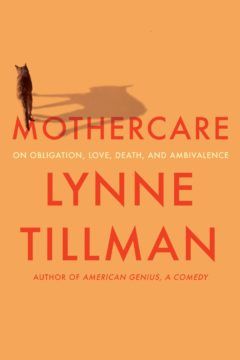 Care work — tending to the sick, the very young or the very old — has long been denied the kind of recognition (and remuneration) that
  Ever since ancient Uruk, the world’s first major city, founded around 4000
 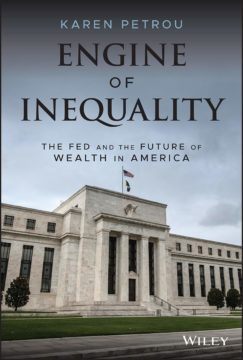 Melinda Cooper in Phenomenal World:
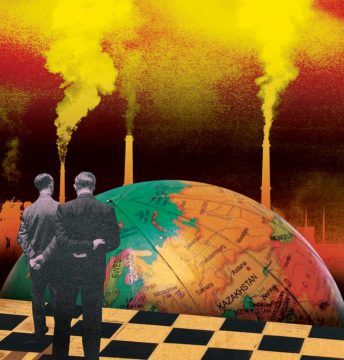 Thea Riofrancos in The Nation (illustration by Tim Robinson):
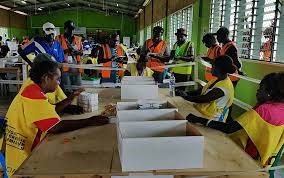 Gordon Peake and Miranda Forsyth in Aeon:
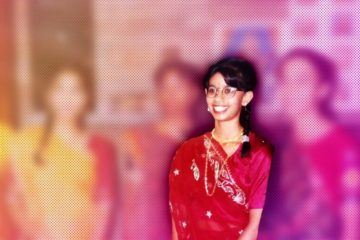 When my parents first told me I was going to Hindu camp, I was not happy. And, to be honest, I was more than a little scared. My parents claimed they knew what was best for me, vom. Most of my summer vacations were spent back in India with family, so it was almost a treat to be able to stay home for once. I’d miss swimming at Park N Pool, riding bikes to Dairy Queen and picnicking at Idlewild Park. Why would I want my perfect summer in the ‘burbs to be interrupted by some stupid camp where I wouldn’t know anyone? Would there be bears? And even more terrifying, would there be cute boys?
 Steven Preister’s house in Washington, D.C. is a piece of American history, a gorgeous 110-year-old colonial with wooden columns and a front porch, perfect for relaxing in the summer. But Preister, who has owned it for almost four decades, is deeply concerned about the environment, so in 2014 he added something very modern: solar panels. First, he mounted panels on the back of the house, and they worked nicely. Then he decided to add more on the front, facing the street, and applied to the city for a permit.
 Marina Herlop
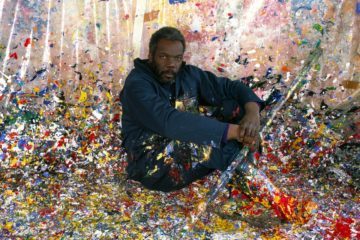 His huge Technicolor paintings, draped without frames, crossed over into sculpture — tabernacles to fearlessness and radicality. Hung from the ceilings or tacked to the walls, they looked like canvas mountain ranges or gigantic tents and huts, marching cities on the plain.
 By the end of the twentieth century, a small number of international institutions had come to wield great influence over the domestic economic policies of many states around the world. The International Monetary Fund (IMF) and World Bank, in particular, made assistance to member states conditional on a broad suite of reforms, often with far-reaching political and social consequences. From Africa to Latin America to Asia, loans were tied to the balancing of government budgets, the privatization of state-owned industries, the removal of regulations, and the lowering of tariffs.
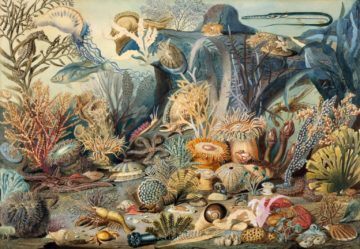 Despite thousands of years of research and an unending fascination with marine creatures, humans have explored only