
A Room
Hello? If you can hear me, give a sign, a call,
enclose a tone. I want to know if there’s a meaning.
Bark during sleep, wake up the neighbors, swing a bell,
let glass fly from the windows, let the singing
of mermaids prompt an erection. Let the host go hoarse
and let the radio shut up, let silence rise
above the street like a mountain peak, like forty floors
of editors accepting slender volumes of complaints and gripes.
I’m waiting for a sign. There’s time. By now, I’m well
regarded here as a nutcase who blabbers on,
who sends letters to his own address. I myself
created you, it’s clear, but what about the future tense
left for me at some point in a penultimate verse,
from where I took it, where else? Summer is a room,
its window open on the night, and anyone who enters
will see how particles of darkness conjugate.
by Tomasz Różycki
from Plume Magazine
translated from Polish by Mira Rosenthal
Original Polish at READ MORE
 By this point, the enlightened reader may well be wondering whether anything of value can be salvaged from this full-blooded reactionary. The answer is surely affirmative. For one thing, Eliot’s elitism, demeaning estimate of humanity, and indiscriminate distaste for modern civilization are the stock in trade of the so-called Kulturkritik tradition that he inherited. Many an eminent twentieth-century intellectual held views of this kind, and so did a sizeable proportion of the Western population of the time. This doesn’t excuse their attitudes, but it helps explain them. For another thing, such attitudes put Eliot at loggerheads with the liberal-capitalist ideology of his age. He is, in short, a radical of the right, like a large number of his fellow modernists. He believes in the importance of communal bonds, as much liberal ideology does not; he also rejects capitalism’s greed, selfish individualism, and pursuit of material self-interest. “The organization of society on the principle of private profit,” he writes in The Idea of a Christian Society, “as well as public destruction, is leading both to the deformation of humanity by unregulated industrialism, and so to the exhaustion of natural resources…a good deal of our material progress is a progress for which succeeding generations may have to pay dearly.”
 When do writers find the time to do any actual writing? It sometimes seems as though they are always speaking — delivering lectures, pontificating in bookshops, opining on talk shows. If they are lucky enough to win awards, they clear their throats and make grateful remarks; when the books they have somehow secreted between their speaking engagements are at last released, they discuss their “inspirations” and their “process” on podcasts or radio shows. More and more, the life of a professional author involves not writing but talking.
 In recent years, there has been an intense public debate about whether and, if so, to what extent investments in nuclear energy should be part of strategies to mitigate climate change. Here, we address this question from an ethical perspective, evaluating different strategies of energy system development in terms of three ethical criteria, which will differentially appeal to proponents of different normative ethical frameworks. Starting from a standard analysis of climate change as arising from an intergenerational collective action problem, we evaluate whether contributions from nuclear energy will, on expectation, increase the likelihood of successfully phasing out fossil fuels in time to avert dangerous global warming. For many socio-economic and geographic contexts, our review of the energy system modeling literature suggests the answer to this question is “yes.” We conclude that, from the point of view of climate change mitigation, investments in nuclear energy as part of a broader energy portfolio will be ethically required to minimize the risks of decarbonization failure, and thus the tail risks of catastrophic global warming. Finally, using a sensitivity analysis, we consider which other aspects of nuclear energy deployment, apart from climate change, have the potential to overturn the ultimate ethical verdict on investments in nuclear energy. Out of several potential considerations (e.g., nuclear waste, accidents, safety), we suggest that its potential interplay — whether beneficial or adverse — with the proliferation of nuclear weapons is the most plausible candidate.
 When the tomato started to circulate throughout Italy, Giulia [Marinelli, a guide at the Museo del Pompodoro, the world’s only museum dedicated to the tomato] says, it was so foreign that Italians weren’t even sure which part of the plant was meant to be eaten. Some gourmands pronounced it inedible after munching on the leaves. And, Giulia adds, “It was considered poisonous by many.” (The leaves, in large quantities, are.)
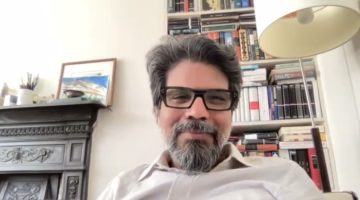 The big divide today on these matters is indeed between people who were around when the Berlin Wall fell and younger people who only saw the Twin Towers fall. After 9/11, there was a moment of unity in the United States — and a moment of international sympathy — which was quickly shattered by the actions of the Bush administration and its open-ended war on terror, which ended up essentially destroying large parts of the world. For people who were born in the 1990s, it’s been a nonstop experience of political trauma, beginning with 9/11, then the horrific insurgency in Iraq, then the failures of the Bush administration during Hurricane Katrina, then the corruption of the financial elites being revealed by the crash of 2008, and then the deception of the Obama years, which was revealed when Trump suddenly emerged ‘out of nowhere.’ It’s been very difficult, I imagine, for people in your generation to adopt a moralizing position vis-a-vis the world, or to think that after everything that has happened we can simply assume leadership of the free world.
 It never for a moment crossed Donald Trump’s mind that an American president committing sedition would be a debilitating, corrosive thing for the country. It was just another way for the Emperor of Chaos to burnish his title. We listened Thursday night to the frightful catalogue of Trump’s deeds. They are so beyond the pale, so hard to fathom, that in some ways, it’s all still sinking in. The House Jan. 6 committee’s prime-time hearing was not about Trump as a bloviating buffoon who stumbled into the presidency. It was about Trump as a callous monster, and many will come away convinced that he should be criminally charged and put in jail. Lock him up!
 Alice Crary in Boston Review:
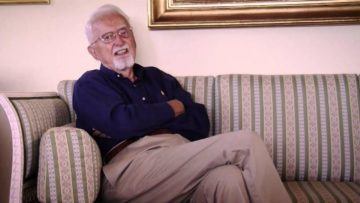 Lance Taylor over at INET:
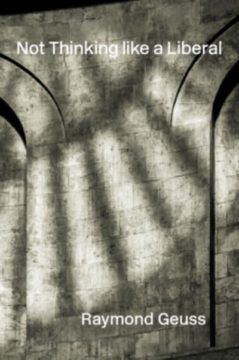 Robert Paul Wolff over at his website [h/t: Leonard Benardo]:
 1982 isn’t your typical war film.
 H
H O’Dwyer had a great sense of humor,