
Steven Novella in Neurologica Blog:
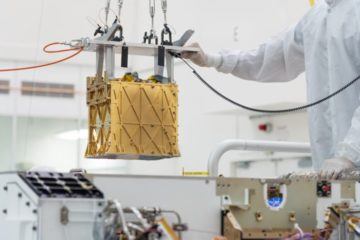 One of the major challenges of space travel is that there are no ready-made resources there. Mars, for example, has no food, shelter, oxygen, fuel, or power. It likely has water, but it’s not certain how much and how accessible. So for now any human mission to Mars will have to bring all recourses from Earth. Getting stuff to Mars is massively expensive, and resupply can take 6-9 months, during optimal launch windows. Keeping humans alive on Mars for any length of time is therefore a very tenuous and expensive endeavor.
One obvious solution is what NASA calls “in-situ resource utilization,” – using stuff that is already there. The Perseverance rover on Mars contains an experiment called MOXIE (Mars Oxygen In-Situ Resource Utilization Experiment) that has taken the first step toward the goal of in-situ resource use. MOXIE was developed by engineers at MIT, it is a lunch-box sized experiment onboard the Perseverance that makes oxygen from the Martian atmosphere. It is essentially a proof-of-concept, and if it works may be the forerunner of far larger machines in the future.
More here.
 If all the criminal investigations into former President Donald Trump end in conviction, then Trump will be a true renaissance man of crime.
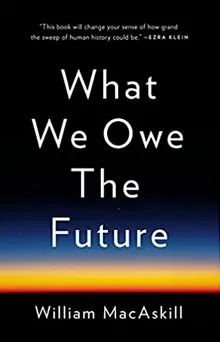 If the point of publishing a book is to have a public relations campaign, Will MacAskill is the greatest English writer since Shakespeare. He and his book
 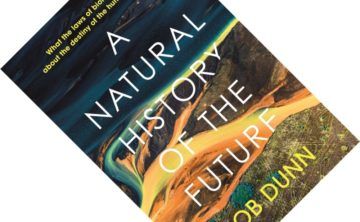 When considering environmental issues, the usual rallying cry is that of “saving the planet”. Rarely do people acknowledge that, rather, it is us who need saving from ourselves. We have appropriated ever-larger parts of Earth for our use while trying to separate ourselves from it, ensconced in cities. But we cannot keep the forces of life at bay forever. In A Natural History of the Future, ecologist and evolutionary biologist Rob Dunn considers some of the rules and laws that underlie biology to ask what is in store for us as a species, and how we might survive without destroying the very fabric on which we depend.
 Mikhail S. Gorbachev, whose rise to power in the Soviet Union set in motion a series of revolutionary changes that transformed the map of Europe and ended the Cold War that had threatened the world with nuclear annihilation, has died in Moscow. He was 91.
 Much
Much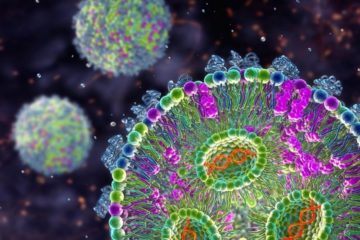 Can messenger RNA (mRNA) train the immune system to attack cancers that resist conventional treatments? To find out, researchers at Atlantic Health System are conducting
 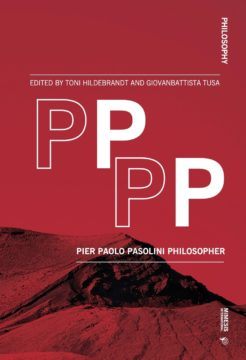 There are some artists, scientists, and economists whose oeuvre is significant for philosophers even though we generally overlook them. This occurs because too often we deem worthy of philosophical interpretation only other philosophers and their investigations. But there are figures who have provided philosophers with new cultural, scientific, and political paradigms who are absent from our philosophical traditions. Although we could say they were philosophers without defining themselves as such, their works have often presented innovative concepts, meanings, and truths that give them the same ontological status as the work of other philosophers. For most continental thinkers—as analytic philosophers still believe our discipline is circumscribed exclusively to logical problems derived from mathematics and science—these figures are vital to understanding our past, present, and also future.
 David Ferrucci, who led the team that built IBM’s famed Watson computer, was elated when it beat the best-ever human “Jeopardy!” players in 2011, in a televised triumph for artificial intelligence.
 The sixth-richest country in the world faces a winter of humanitarian crisis. Unless the government acts now, millions of Britons will be unable to keep their homes warm. Some will die while, as the NHS warns, many more will fall seriously ill. Schools, hospitals and care homes across the country must choose between busting their budgets or freezing. Countless shops and businesses will close, never to open again. More than
  In October 1943, Henrich Himmler gave two speeches in Posen, Poland. The Posen speeches, as they have come to be known, represent the first time a member of Hitler’s Cabinet had publicly articulated the Nazi policy of the extermination of the Jews. Himmler, the head of the SS, acknowledged that the task was not without personal difficulty—to see 1,000 corpses and remain “decent” was hard, he said, but the experience made those who carried out the exterminations “tough.” What about the killing of women and children? According to Himmler, they needed to be exterminated because they might become—or give birth to—avengers of their fathers. In the end, he said, “the difficult decision had to be made to have this people disappear from the earth.” Empathy, while a natural human response, needed to be set aside.
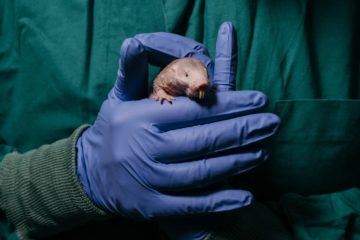 The naked mole rat may not be much to look at, but it has much to say. The wrinkled, whiskered rodents, which live, like many ants do, in large, underground colonies, have an elaborate vocal repertoire. They whistle, trill and twitter; grunt, hiccup and hiss. And when two of the voluble rats meet in a dark tunnel, they exchange a standard salutation. “They’ll make a soft chirp, and then a repeating soft chirp,” said Alison Barker, a neuroscientist at the Max Planck Institute for Brain Research, in Germany. “They have a little conversation.” Hidden in this everyday exchange is a wealth of social information, Dr. Barker and her colleagues discovered when they used machine-learning algorithms to analyze 36,000 soft chirps recorded in seven mole rat colonies.
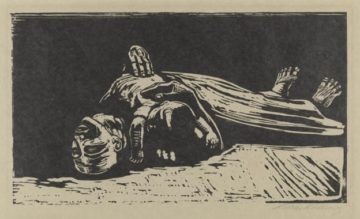 Betroffenheitskitsch. It is not an easy word to say. That’s because it is German and Germans love to make compound words. The core of the word is the adjective betroffen, which means ‘affected’, but also ‘concerned’, and even ‘shocked’ or ‘stricken’. Betroffenheit is the noun and can be translated as ‘shock’, ‘consternation’, ‘concern’. Finally, we add the word kitsch, which makes the whole thing, well, kitschy. Betroffenheitskitsch is shock or deep concern that has been taken to the level of kitsch.
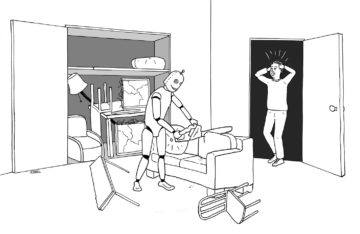 From a showmanship standpoint, Google’s new robot project
  There is no human endeavor that does not have a theory of it — a set of ideas about what makes it work and how to do it well. Music is no exception, popular music included — there are reasons why certain keys, chord changes, and rhythmic structures have proven successful over the years. Nobody has done more to help people understand the theoretical underpinnings of popular music than today’s guest, Rick Beato. His YouTube videos dig into how songs work and what makes them great. We talk about music theory and how it contributes to our appreciation of all kinds of music.