
Charles Blattberg in The Hedgehog Review:
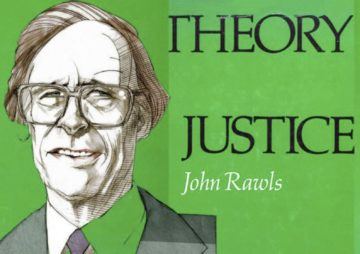 Imagine someone told you that politics is a “great game,” that when citizens respect just principles, they do so “in much the same way that players have the shared end to execute a good and fair play of the game.” You would probably wonder if they meant it, if they really believed that civic duties resemble those acquired when “we join a game, namely, the obligations to play by the rules and to be a good sport.” You would because, for most people, politics is a serious business.
No doubt, this is because the stakes are so high: Political decisions can affect how millions live or die. That is why we also take war so seriously. Today, it seems astonishing that nineteenth-century Prussian military theorist Carl von Clausewitz felt it necessary to insist, in his canonical work On War (1832), that “war is no pastime; it is no mere joy in daring and winning, no place for irresponsible enthusiasts. It is a serious means to a serious end.” Especially since the devastations of the twentieth century, we have had no need of such an admonition.
Then why have so few objected to the Rawlsian metaphors that I just quoted? John Rawls (1921–2002) was the most important political philosopher of the previous century, and perhaps even of this one. Yet he was also someone for whom the good of justice was “no more mysterious than that members of an orchestra, or players on a team, or even both teams in a game, should take pleasure and a certain (proper) pride in a good performance, or in a good play of the game, one that they will want to remember.” How can this be?
More here.
 Isaac Newton was not known for his generosity of spirit, and his disdain for his rivals was legendary. But in one letter to his competitor Gottfried Leibniz, now known as the Epistola Posterior, Newton comes off as nostalgic and almost friendly. In it, he tells a story from his student days, when he was just beginning to learn mathematics. He recounts how he made a major discovery equating areas under curves with infinite sums by a process of guessing and checking. His reasoning in the letter is so charming and accessible, it reminds me of the pattern-guessing games little kids like to play.
 AP: So, it’s not just the presence of English loanwords, but also how much of the original German novel is about who speaks in English and how that is a marker [of identity]. Nivedita grew up in Germany; her cousin Priti grew up in England. They meet because Priti comes to Germany to study the language for several summers in their youth. In the original, you see her command of German develop: she speaks a lot of English at first, and then, as the novel progresses, she’s speaking more and more German. Nivedita comments, “Wow, you know, Priti’s German was really getting good.” Basically, Priti is marked as the most “English” or British—the most not German character starting out. This couldn’t be replicated exactly in English, so I had to look for other little ways to solve it (like Priti mixing German into her speech in the English translation). That was one of the tricky things, and I never know how successfully I’ve solved a challenge. Beyond the character of Priti, I wanted to find ways to make it clear that Identitti originates in another language and then was brought into English. Some novels are inherently built that way because they’re constantly mentioning places or names. There are markers such that the reader never forgets that it’s happening where it’s happening. I didn’t want the North American reader to forget that the story they’re reading is taking place in Dusseldorf, Germany. But I also didn’t want to weigh the translation down with these unnecessary reminders. It was a fine line to walk.
 I
I In 2010, Brad St. Pierre and his wife, Christine, moved from California to Fairbanks, Alaska, to work as farmers. “People thought we were crazy,” Brad said. “They were, like, ‘You can grow things in Alaska?’ ” Their new home, not far from where Christine grew up, was as far north as Reykjavík, Iceland, and receives about sixty inches of snow each year. It routinely experiences winter temperatures below minus ten degrees Fahrenheit. In the summer, however, the sun shines for twenty-one hours a day and the weather resembles San Francisco’s. Sturdy cabbages and carrots thrive in the ground, while fussier tomatoes and cucumbers flourish in greenhouses.
 Pranab Bardhan in New Left Review:
 Nell Minnow in response to 19 Republican state attorneys general’s letter to Blackrock:
 Dag Herbjørnsrud in Aeon:
 I am 81 years old, my partner 92. On my 70th birthday, I woke from a dream in which I had rounded a corner and seen the end. This disturbing dream moved me to begin photographing the two of us, chronicling our time together, growing old.
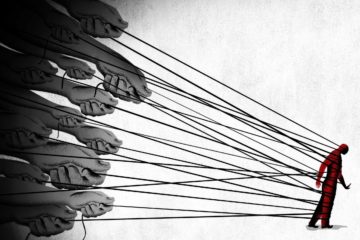 During the 2012 presidential election, there occurred one of those remarkably rare moments when campaign rhetoric actually clarified a large issue. It happened when Barack Obama, speaking without a written text,
  A
A  In 1793 Caroline Böhmer paid for her support for the French Revolution with arrest by the Prussians and three months of incarceration in a damp, dark, overcrowded, vermin-infested cell in the fortress of Königstein. It was made doubly painful by her having to share her suffering with her seven-year-old daughter. Intelligent, well educated, physically attractive, articulate and with a strong personality (‘I never flatter, I say what I think and feel’), Böhmer liked to be in charge. She was also unconventional when it came to sexual morality. Her spell in prison was complicated by the discovery that she was pregnant, the result of a one-night stand with a teenage French soldier. It was not to be the last of her extramarital adventures.