
Michael Le Page in New Scientist:
 Low rainfall and record-breaking heat across much of China are having widespread impacts on people, industry and farming. River and reservoir levels have fallen, factories have shut because of electricity shortages and huge areas of crops have been damaged. The situation could have worldwide repercussions, causing further disruption to supply chains and exacerbating the global food crisis.
People in large parts of China have been experiencing two months of extreme heat. Hundreds of places have reported temperatures of more than 40°C (104°F), and many records have been broken. Subway stations have set up rest areas where people can recover from the heat.
On 18 August, the temperature in Chongqing in Sichuan province reached 45°C (113°F), the highest ever recorded in China outside the desert-dominated region of Xinjiang.
More here.
 Rumors of the death of neoliberalism are indeed
  Tucker Carlson, a political commentator on Fox News, has long assailed Anthony Fauci for his role in the U.S. government’s response to the COVID-19 pandemic during both former President Donald Trump’s and President Joe Biden’s administrations. But on 22 August, when Fauci announced he would be retiring from his jobs as director of the U.S. National Institute of Allergy and Infectious Diseases (NIAID) and chief medical adviser to the president at the end of year, the Tucker Carlson Tonight host laid into him like never before. Carlson asserted Fauci had committed “very serious crimes” and said he “apparently engineered the single most devastating event in modern American history.” Carlson, infamous for assailing people’s looks, also called Fauci a “an even tinier version of the Dalai Lama” and a “Stalinist midget.”
 Up until the mid-thirteenth century, you would be fortunate if you were to be tried by a jury of your peers in the king’s court. Throughout the early Middle Ages, this particular court preferred trial by ordeal. The idea was that God favored the innocent, so the defendant would be put through an ordeal in which God would either help him prove his innocence or clarify his guilt. Commonly used methods were trial by cold water, in which the accused would have his hands and feet bound and be thrown into a body of water; if he floated, he was innocent, but if he sank, he was assumed guilty.
 Located on the bank of the Miljacka river in the city’s old Turkish quarter, the beautiful pseudo-Moorish structure, known to locals as Vijećnica (City Hall), was a beloved symbol of the multiethnic, multicultural capital of Bosnia before the entire building, along with two million of the books it housed, went up in flames.
 “It feels like we’re going from spring to summer,” said Jack Clark, a co-chair of Stanford University’s annual A.I. Index Report. “In spring, you have these vague suggestions of progress, and little green shoots everywhere. Now, everything’s in bloom.”
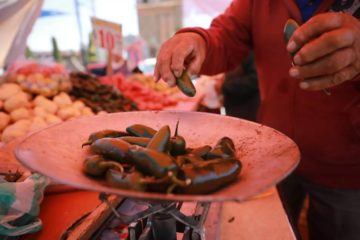 In fact, all of the world’s chili peppers—including the labuyo peppers that we typically use in the Philippines—likely came from the
  It is Viktor Orbán’s worst nightmare: “One morning Anders, a white man, woke up to find he had turned a deep and undeniable brown.” It is the opening line to Mohsin Hamid’s new novel
  Researchers are
  The main argument against prosecuting Donald Trump — or investigating him with an eye toward criminal prosecution — is that it will worsen an already volatile fracture in American society between Republicans and Democrats. If, before an indictment, we could contain the forces of political chaos and social dissolution, the argument goes, in the aftermath of such a move we would be at their mercy. American democracy might not survive the stress.
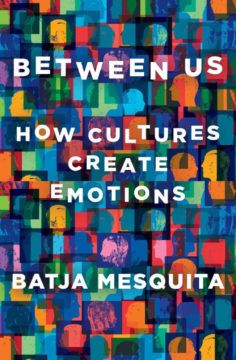 For many years, psychologists and other scientists believed that deep down, all of humankind experienced the same set of evolutionarily hard-wired emotions. Under this schema, anger, for example, was a concrete, immutable experience that happens deep inside all human beings, the same for a White American sipping coffee in Manhattan as for native Siberian herding reindeer. When Batja Mesquita, a key figure in the development of the field of cultural psychology, started researching emotion more than 30 years ago, she was confident that this model was correct. But Mesquita, who is today a distinguished professor at the University of Leuven in Belgium, has come to view emotions through a completely different lens. In her new book, “
 This time a year ago,
 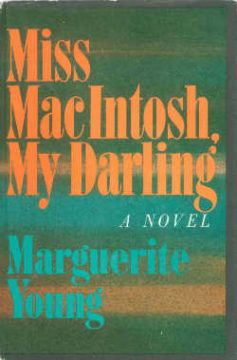 MARGUERITE YOUNG SPENT EIGHTEEN YEARS
 I am against August. When I try to explain this position, some people instinctively want to argue. These people seem to love the beach beyond all reason, to have never suffered a yellowed pit stain on a favorite white T-shirt in their life, and to eagerly welcome all thirty-one days of August as though they are a reward for a year well-lived rather than a final trial before the beginning of another. These are people who vacation with peace of mind. To them, I say: Go away. To the people who agree with me, I say: Go on.