
 Camila Vergara in Sidecar:
Pinochet and his legacy have proven hard to kill. The 2022 draft constitution – the most progressive constitution ever written in terms of socio-economic rights, gender equality, indigenous rights and the protection of nature – was rejected by almost 62% of voters in a national plebiscite on 4 September. How could Chileans, after rising up in October 2019 to demand a new constitution, then voting by an overwhelming majority to initiate the constituent process, reject the proposed draft? Why would they align with right-wing forces seeking to preserve the Pinochet constitution? This astonishing result surely demands a multi-causal explanation. Here I will focus on two of the most prominent ones: the right-wing disinformation campaign across traditional and social media, and the exclusion of the popular sectors from the constituent process, which I have highlighted in previous analyses.
Support for Rechazo (‘Reject’) was strongest in low-income municipalities, where turnout was also higher than in upper-class neighbourhoods. While in the 2020 plebiscite the opposition to the constituent process was led by the three wealthiest municipalities, this time around the poorest neighbourhoods turned out en masse to vote against the proposed draft. Also in contrast to 2020, voting was mandatory – with fines for non-compliance – which forced the popular sectors to cast a vote for fear of the pecuniary costs of abstention. Turnout increased substantially from 50% to 86%; and of the 5.4 million new votes cast, 96% opted to reject. In total, the draft constitution received only 4.8 million votes – one million less than voted in favour of redrafting two years earlier. This was not only a vote against the new constitutional text, however. It was also a rejection of Gabriel Boric’s administration and its parties: the ‘new left’ coalition including Frente Amplio, the Communist Party and the parties of the old Concertación. Apruebo (‘Approve’) was supported by roughly the same number of people that voted for Boric in the runoff against the far-right candidate José Antonio Kast in December 2021 – suggesting that he has been unable to expand his constituency since taking office.
More here.
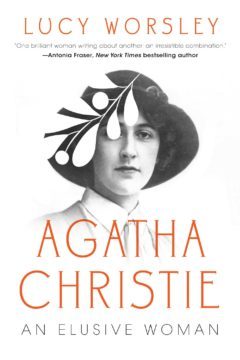 Agatha Christie’s best books have crisp dialogue and high-velocity plots. The bad ones have a Mad Libs quality: feeble prose studded with blank spots into which you can picture the prolific Christie plugging a random “BODY PART” or “WEAPON.” In a 1971 study of English crime fiction, Colin Watson snickered that Christie “seems to have been well aware that intelligence and readership-potential are quite unrelated.”
 For as long as she can remember, Kay Tye has wondered why she feels the way she does. Rather than just dabble in theories of the mind, however, Tye has long wanted to know what was happening in the brain. In college in the early 2000s, she could not find a class that spelled out how electrical impulses coursing through the brain’s trillions of connections could
 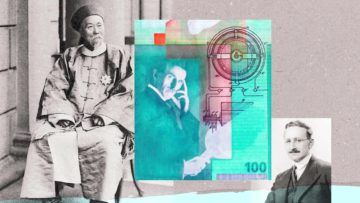 “The 140 years from 1870 to 2010 of the long twentieth century were, I strongly believe, the most consequential years of all humanity’s centuries.” So argues
  Over the past five years, I have studied the phenomenon of what I call “political overconfidence.” My work, in tandem with other researchers’ studies, reveals the ways it thwarts democratic politics.
 Gorbachev was born in 1931, on the other side of the revolutionary chasm. Though famine and terror made their appearances in his childhood, he entered adulthood after the most traumatic periods of Soviet history had already passed. Graduating from university two years after Stalin’s death, Gorbachev became part of a generation of starry-eyed young utopians. As their elders began to make their peace with the indefinite deferral of communism, young people were determined to see it in their lifetimes. In 1967, a group of youth in the city of Novorossiisk sank a time capsule into the Black Sea filled with letters addressed to the anticipated space-faring communist future of 2017. A schoolgirl named Olga wrote, “We dream of communism, of a time when you can eat ice cream and go to the movies for free, when machines will do our homework while our teachers will be patient robots. You live under communism, and I will live under communism too, with the only difference being that you will be as old as I was fifty years ago.” Gorbachev, on the older end of this generation, was then just beginning his rapid political ascent in the nearby city of Stavropol.
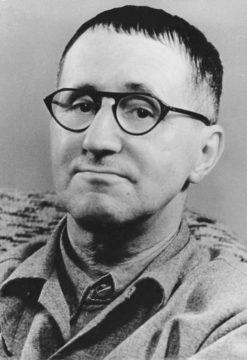 T
T Democracy is the worst form of government,”
 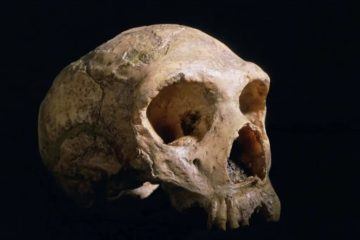 Scientists have discovered a glitch in our DNA that may have helped set the minds of our ancestors apart from those of Neanderthals and other extinct relatives. The mutation, which arose in the past few hundred thousand years, spurs the development of more neurons in the part of the brain that we use for our most complex forms of thought, according to a new
  Unlike most modern European languages, English designates book-length works of prose fiction with the term “novel”. Imported sometime in the mid-16th century from Italy – where novella had been coined to describe the short stories collected in Boccaccio’s Decameron 200 years before – and extended to its more or less current sense in the 17th century, the word retains a semantic filiation to that other child of the age of print, the newspaper, and thus to the concepts of information and modernity itself. Until the Austenite revolution of 1811 the novel often cloaked itself in the trappings of genres later classified as
  An artificial intelligence model built by Harvard Medical School and Massachusetts Eye and Ear scientists was shown to be significantly more accurate than doctors at diagnosing pediatric ear infections in the first head-to-head evaluation of its kind, the research team working to develop the model for clinical use reported.
 A sizable literature tracing back to Richard Hofstadter’s The Paranoid Style (1964) argues that Republicans and conservatives are more likely to believe conspiracy theories than Democrats and liberals. However, the evidence for this proposition is mixed. Since conspiracy theory beliefs are associated with dangerous orientations and behaviors, it is imperative that social scientists better understand the connection between conspiracy theories and political orientations. Employing 20 surveys of Americans from 2012 to 2021 (total n = 37,776), as well as surveys of 20 additional countries spanning six continents (total n = 26,416), we undertake an expansive investigation of the asymmetry thesis. First, we examine the relationship between beliefs in 52 conspiracy theories and both partisanship and ideology in the U.S.; this analysis is buttressed by an examination of beliefs in 11 conspiracy theories across 20 more countries. In our second test, we hold constant the content of the conspiracy theories investigated—manipulating only the partisanship of the theorized villains—to decipher whether those on the left or right are more likely to accuse political out-groups of conspiring. Finally, we inspect correlations between political orientations and the general predisposition to believe in conspiracy theories over the span of a decade.
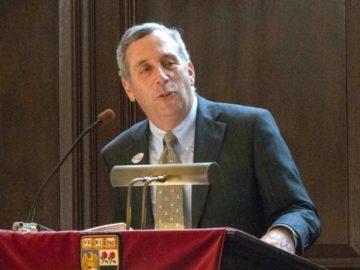 PRESIDENT LAWRENCE S. BACOW
 Terri Apter, a psychologist, still remembers the time she explained to an 18-year-old how the teenage brain works: “So that’s why I feel like my head’s exploding!” the teen replied, with pleasure. Parents and teachers of teens may recognise that sensation of dealing with a highly combustible mind. The teenage years can feel like a shocking transformation – a turning inside out of the mind and soul that renders the person unrecognisable from the child they once were. There’s the hard-to-control mood swings, identity crises and the hunger for social approval, a newfound taste for risk and adventure, and a seemingly complete inability to think about the future repercussions of their actions.