
Category: Recommended Reading
Hannah Arendt And The Loss Of A Common World
Michael Weinman at Hedgehog Review:
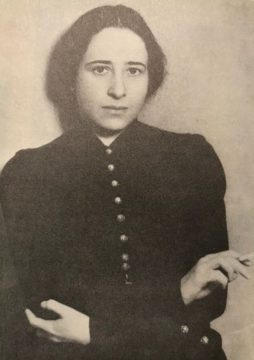 What is the matter with theory? More specifically, what does a distinctively modern approach to theorizing have to do with the prevalence of the kind of conspiracist thinking that thrives in our era of post-truth politics? To find answers to that question, political and cultural analysts have recently returned to the work of Hannah Arendt—and for good reason. Despite her training as a philosopher in her native Germany, the brilliant Jewish émigré thinker (1906–75) was not only not a theorist but even something of an anti-theorist, a practitioner of exercises of political thinking that were never theoretical in the usual sense. Ranging from her magisterial Origins of Totalitarianism and The Human Condition to her many essays, reviews, and works of analytical reportage (notably in Eichmann in Jerusalem), her oeuvre might best be characterized as a form of praxis, of thought in action. Grounded in the common world, this form of political thinking aims to support continued and active engagement in that world.
more here.
A Joyous Pope
Paul Baumann at Commonweal:
 Why did I want a Californian? Well, that was not exactly what I wrote, although I appreciated the headline writer’s teasing provocation. What I did write was that the next pope should be “a bit of a Californian.” I opened the piece by quoting the novelist Walker Percy’s cantankerous assertion that Catholics had to choose between “either Rome or California.” In Percy’s mind, California stood for everything alienating, dehumanizing, and spiritually moribund in modern life, while Roman Catholicism offered the true, if demanding, path to human flourishing. I thought that was a false choice. The Church would have to come to terms with everything California represented; retreating from the modern world was not an option. “Rome is no refuge; it never has been, and as recent scandals remind us, never could be,” I wrote. “Yet Rome has much missionary work to do—in California and elsewhere. That work will require a change in tone and a refusal to condemn what it cannot yet understand.” In conclusion, I quoted the philosopher Charles Taylor. Rome proposes “too many answers choking off questions and too little sense of the enigmas that accompany a life of faith; these are what stop a conversation from ever starting between our Church and much of our world.”
more here.
How to navigate the AI apocalypse as a sane person
Erik Hoel in The Intrinsic Perspective:
 Last week, The New York Times published the transcript of a conversation with Microsoft’s Bing (AKA Sydney) wherein over the course of a long chat the next-gen AI tried, very consistently, and without any prompting to do so, to break up the reporter’s marriage and to emotionally manipulate him in every way possible. I had been up late the night before researching reports coming out of similar phenomena as Sydney threatened and cajoled users across the globe, later arguing that same day in “I am Bing, and I am evil” that it was time to panic about AI safety. Like many, while I knew that current AIs were capable of these acts, what I didn’t expect was Microsoft to release one that was so obviously unhinged and yet, at the same time, so creepily convincing and intelligent.
Since then, over the last week almost everyone has given their takes and objections concerning AI safety, and I’ve compiled and charted a cartography of them. What follows a lay of the land of AI safety, as well as a series of replies to common objections over whether AI safety is a real concern, and sane and simple things we can do to promote AI safety. So if you want to know in detail why an AI might kill you and everyone you know, and what can be done to prevent that, it’s worth checking out.
More here.
With Nothing to Eat Except Viruses, Some Microbes Thrive
Yasemin Saplakoglu in Quanta:
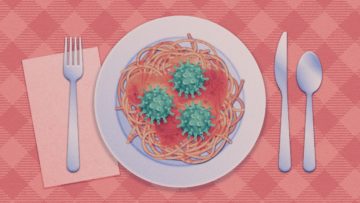 Viruses are notorious as scourges of cellular life, destroying as ruthlessly as any predator. Yet as microbiologists are now piecing together, these killers also sometimes perish as prey.
New research suggests that for some aquatic microorganisms, viruses can be a nutritious food source — delicious little bags chock-full of proteins, phosphorus and other yummy nutrients. Viruses “must be being eaten all the time,” said John DeLong, the lead author of the new study and an associate professor of biological sciences at the University of Nebraska, Lincoln. And if viruses are a popular enough snack for organisms across the globe, then they may have a significant impact on the cycling of energy through the food web. The study appeared in the Proceedings of the National Academy of Sciences in December.
More here.
Aristotle (and the Stoics): An Interview with John Sellars
Riley Moore in Quillette:
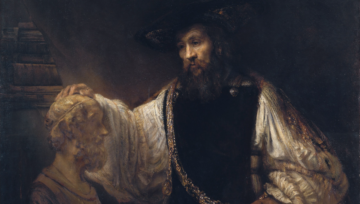 Riley Moore: It’s difficult to discuss Aristotle without discussing everything, because Aristotle wrote about everything—ethics, logic, biology, politics, literature; anything knowable, he investigated it. You go through this in detail in your newest book, Aristotle: Understanding the World’s Greatest Philosopher. Let’s pretend I have never heard of Aristotle. Who was Aristotle, biographically? Was he a pupil of Plato just as Plato was a pupil of Socrates? Is there a direct lineage there?
John Sellars: Yes, there is. Aristotle was originally from northern Greece. His father was a doctor who died when Aristotle was about 10 years old. Aristotle is then brought up by his uncle who had been a student at Plato’s Academy some years earlier. When Aristotle reaches 17 or 18, he goes to Athens to study at Plato’s Academy and stays there for 20 years. Plato is certainly the key point of reference. Socrates, Plato, and Aristotle make up this kind of triumvirate of significant Greek thinkers, and they’re all engaging with their predecessors. We see Aristotle wrestling with Plato’s ideas and ultimately trying to break away from them in order to develop his own independent views. That’s the beginning of Aristotle’s career.
Then Plato dies, and the Academy passes to Plato’s nephew. Aristotle decides that’s a good point to leave.
More here.
The Sleeping Beauty Problem
Affinities – in the eye of the beholder
Anil Gomes in The Guardian:
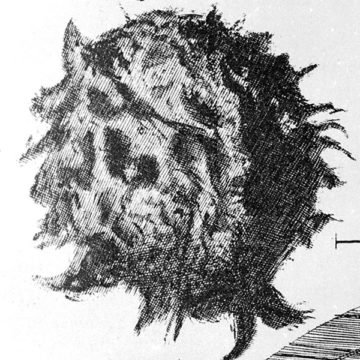 Why do some things combine and others separate? Add nitric acid to gold, and nothing happens. Pour on aqua regia, a mixture of nitric and hydrochloric acids, and the gold dissolves. The chemical doctrine of affinity emerged as a way to explain these reactions. In his 1809 novel Elective Affinities, Johann Wolfgang Goethe applied the idea to human relationships. Charlotte and Edward may form a stable union but if Edward has an affinity with young Ottilie – ah, well, then all bets are off.
What is an affinity? A little like a crush, I suppose, at least at the beginning. And sometimes just as fleeting. But sometimes more stable, more serious, and more revealing of our ways of engaging with things. Brian Dillon’s writings have always been marked by affinities – for artworks, for writers, even for particular sentences. In this work he turns his attention to the notion of affinity itself, through an examination of images that have drawn his gaze.
We start with a picture from Robert Hooke’s 1665 work Micrographia: a full stop as seen under a microscope, the tiny circle revealed in magnification to be “disfigured, ragged, deformed”. We pass through Julia Margaret Cameron’s portrait of her niece, pictures of seahorses from a documentary, a scientific drawing of a migraine aura from 1870. There are abstract patterns captured in the ruins of Hiroshima, dadaist collages, a still from the BBC film production of Samuel Beckett’s Not I – our attention guided always by Dillon’s attraction and fascination. The effect is not unlike having a better-read friend take you by the hand and show you around the things he loves.
More here.
How did life begin? One key ingredient is coming into view
Amber Dance in Nature:
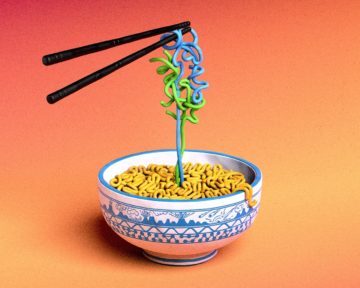 Billions of years ago, before there were beasts, bacteria or any living organism, there were RNAs. These molecules were probably swirling around with amino acids and other rudimentary biomolecules, merging and diverging, on an otherwise lifeless crucible of a planet.
Then, somehow, something special emerged: a simple machine, a pocket made of RNAs, with the ability to place amino acids next to one another and maybe link them into chains. This was the macromolecule that would gradually evolve into the ribosome, the RNA–protein complex responsible for translating genetic information into proteins. Its birth — the details of which remain hypothetical — would have created a fundamental shift in this prebiotic, RNA-dominated world, providing a key ingredient to all life as we know it. Ada Yonath, a structural biologist at the Weizmann Institute of Science in Rehovot, Israel, and her team first conceptualized this ‘protoribosome’ idea nearly two decades ago, after she and others determined the structure of the modern ribosome, a feat that later secured Yonath a share of the 2009 Nobel Prize in Chemistry.
But to solidify the case for the hypothetical protoribosome, Yonath and her laboratory would have to build it.
More here.
Tuesday, February 28, 2023
How Not to Tell the History of Science
Eric Moses Gurevitch in the Boston Review:
 According to a familiar story, science was born as a pastime of seventeenth-century European gentlemen, who built air pumps, traded telescopes, and measured everything from the size of the earth to the eye of a fly as they sought to uncover the laws of nature. Through careful experimentation and observation of nature, these men—who called themselves natural philosophers—distinguished themselves from the scholastic schoolmen of yore, who had instead busied themselves with writing commentary upon commentary on Aristotle and Aquinas. They also wrote about themselves. They formed societies, took notes at their meetings, compiled their notes into journals, and penned books recording their achievements; it was a mere seven years after the founding of the Royal Society in 1660 that Thomas Sprat published its first history. Reason had finally come into its own, and it arrived with a diligent group of stenographers.
Of course, these men were not actually the first to make observations or perform experiments. But their self-congratulatory narrative provided a powerful resource to explain the economic and political hegemony of Europe in the centuries to follow.
More here.
The Secret Perfume Of Birds: Uncovering The Science Of Avian Scent
Leon Vlieger in The Inquisitive Biologist:
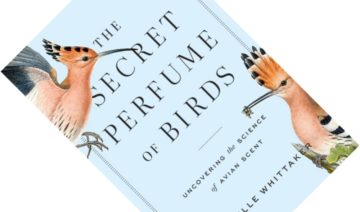 To successfully navigate their world, organisms rely on numerous senses. Birds are no exception to this; and yet, for a long time, people have been convinced that birds cannot smell. This came as a surprise to evolutionary biologist Danielle J. Whittaker. Given that smell is effectively chemoreception (the sensing of chemical gradients in your environment) and was one of the first senses to evolve, why would birds have no use for it? The Secret Perfume of Birds tells the story of 15 years spent investigating the olfactory capabilities of birds and provides an insider’s account of scientific research.
More here.
Four very useful videos on the basics of Neural Networks
Terese Svoboda’s “Dog On Fire”: An Interview
Brennie Shoup in Superstition Review:
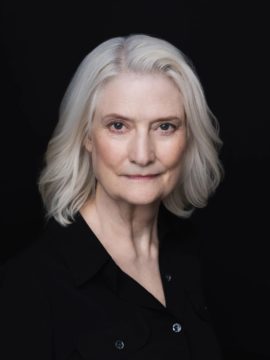 At turns hilariously absurd and gut-wrenchingly heartfelt, Terese Svoboda’s Dog on Fire, published by the University of Nebraska Press, defies genre. Svoboda juggles comedy, mystery, tragedy, horror—and masters them all. The book follows a recently-divorced woman grieving the mysterious and early death of her estranged brother. Her unusual circumstances lead her to move back to her small Midwestern home town, where everything and anything she does creates ripples of rumor. There, she confronts perilous Halloween parties, Jell-O inventions, guns, grave-diggers, and, of course, dogs on fire.
With rich prose more reminiscent of poetry, Svoboda’s characters burst from the page. One “harbors streaks of shyness the way bacon is streaked, between boldnesses,” while another drags “nothing out of this primordial water and [tries] to turn it inside out, into a something.” They’re as compelling and unforgettable as they are human.
More here.
Could A Machine Have An Unconscious?
Meghan O’Gieblyn at n+1:
 GPT-3’s most consistent limitation is “world-modeling errors.” Because it has no sensory access to the world and no programmed understanding of spatial relationships or the laws of physics, it sometimes makes mistakes no human would, like failing to correctly guess that a toaster is heavier than a pencil, or asserting that a foot has “two eyes.” Critics seize on these errors as evidence that it lacks true understanding, that its latent connections are something like shadows to a complex three-dimensional world. The models are like the prisoners in Plato’s cave, trying to approximate real-world concepts from the elusive shadow play of language.
But it’s precisely this shadow aspect (Jung’s term for the unconscious) that makes its creative output so beautifully surreal. The model exists in an ether of pure signifiers, unhampered by the logical inhibitions that lead to so much deadweight prose.
more here.
God, Human, Animal, & Machine | Meghan O’Gieblyn
Reimagining The Shakers
Shannon Mattern at Art In America:
 Yet rather than imagining the Shakers as a romantic ideal, it might be more valuable to acknowledge the community’s contradictions and compromises. The Shakers manifested their faith through both rapturous movement and rigorous order; they embraced both simplicity and technological progress; they espoused gender equality while upholding traditional gendered labor roles; they promoted social equality while governing their own community through what some apostates and critics regarded as a rather autocratic centralized authority. They were removed from the world yet regularly did business with it. As Brother Arnold Hadd of the Sabbathday Lake Shakers—the last remaining active Shaker community—said in a 2014 interview, “We are the ultimate capitalistic communists.” On a 2020 Shaker Museum panel discussion about the sect’s continuing relevance, religious scholar Ashon Crawley explained that the Shakers performed labor as a spiritual practice in order to sustain their community, while also knowingly interacting with a world market committed to exploitation and profit. This interaction required that they willingly compromise on their vow of separation. Especially as their commercial enterprises ramped up and their population declined, Shakers occasionally hired laborers from outside the community, relying on non-Believers to produce their divinely inspired wares.
more here.
Tuesday Poem
On Reading I Am Malala
courage is a mountain of crystal
has a breadth and grandeur
some mistake brashness for it
a loud voice, rudeness
barging past other’s boundaries
to get what they think they want
they are, of course, wrong
courage is the crocus
that has never known the brisk air
but comes into this world with an exuberance
and a beauty that says
I will die here if only I can sing my song for you
by Marc Steven Mannheimer
from, Poetry Feast
Close Encounters
Jesse Robertson in The Baffler:
 A CLASSIFIED REPORT from the Office of the Director of National Intelligence on “unidentified aerial phenomena” (UAP), or UFOs in Pentagon-speak, analyzed 366 sightings. It included videos shot by Reaper drones depicting anomalous orbs and close encounters between Navy F-18 fighter pilots and objects that defied the known laws of physics. Only half of them could be explained. Delivered to Congress on October 31, 2022, the briefing was a follow-up to the June 2021 “Preliminary Assessment: Unidentified Aerial Phenomena.” The takeaways were hazy at best, underscoring that UAP “may pose a challenge to U.S. national security” and that further investment in research and development was necessary. While these investigations seemed to mark a shift in the government’s willingness to take UFOs seriously, they were hardly the revelatory disclosure UFO enthusiasts had long pined after.
More here.
michael jackson billie jean live first time moonwalk
(Note: Throughout February, at least one post will be dedicated to Black History Month. The theme for 2023 is Black Resistance. Please send us anything you think is relevant for inclusion)
Sunday, February 26, 2023
Will U.S.-Israel Policies Ever Change?
Jeremy Pressman in the Boston Review:
 In the 1970s and ’80s, many American Jews backed pro-Israel interest groups in Washington, D.C., which quickly gained resources and political influence. By the late 1990s most Jewish leaders not only embraced Israel for the country’s sake but also believed that supporting Israel was key to the survival of U.S. Jews—the largest diaspora Jewish community. Since 1967 Israel’s centrality to Jewish identity has only deepened. The most obvious manifestation is the Birthright program, which was launched in 1999 and has since brought more than 800,000 young American Jews on entirely free ten-day or two-week trips to Israel, with many of its participants visiting the country for the first time. This year the State of Israel celebrates its seventy-fifth anniversary, marking less than a century of existence during which the country has shifted profoundly. Israel is now the most powerful state in the Middle East. Not only is it independent, wealthy, and nuclear-armed, it is also embraced by many Jewish cultural, political, and religious organizations around the world.
Alterman’s book then comes at an opportune time, tracking “the debate over Israel in the United States” and offering a close study of ethnoreligious identity, diaspora relations, and foreign policy as the landscape of Israeli support has grown increasingly complex. The book also teases out four important consequences of American Jews centering the Israeli state in Jewish identity.
More here.