Thursday Poem

Talking

It can be a way of thinking. Some shy people
Fear it more than flying or heights or dying.
To be all talk is being less than nothing but
“Now you’re talking” is more than you were before.

“I like how when he takes me to the market
He talks to all the packages,” Debbie said
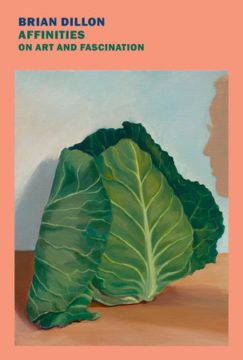
Not long before she died. “He talks to lettuce.”

In the cold queue of grief at Stalin’s prison
The question to Akhmatova: Can you
Describe this? “Yes” the poet answers “I can.”

The child’s hand on her throat can feel her voice
Vibrate. It means to her she is there, inside.
The stammerer finds relief in speaking verses
Because it’s less like talking. More like singing.

I mutter flakes of meaning. Foofaraw,
Shmagegeh. Blah-blah-blah.

A way of thinking a way of avoiding something.
Articulated grunts of grief and rage.
Even the Iliad yacks.

The baby rehearses melodies of speech,
The tunes of chat, of menace. Vocal
Without words Morricone’s music
Speaks for the iron faces of ugly cowboys.

Does her legendary “Yes, I can” exceed
Requiem itself? It is all one meaning. Now you
Really are saying something yes and can you?

Long before Stalin long before everything,
The new lungs learning to breathe.
Her tongue already studying its mission.

by Robert Pinsky
from
The Yale Review

Defeat by Truth is Victory

Jonathan Shaw in Harvard Magazine:

PRESIDENT LAWRENCE S. BACOW delivered a Morning Prayers address on August 31, following a tradition in which the Harvard president speaks in Memorial Church at the beginning of the fall term.

…He expanded on thoughts he’d shared with the freshmen class at their Convocation: “Over time,” he had told them on the previous day, “truth is revealed; it needs to be tested on the anvil of competing ideas. If you really seek the truth, you must engage with those who think differently than you” and “be willing to change your mind.” At Morning Prayers, he shared Rabbi Lord Jonathan Sacks’s argument for healthy debate. “We ought to argue… ‘out of a desire to discover the truth, not out of cantankerousness or a wish to prevail over [our fellows],’ not ‘out of envy and contentiousness and ambition for victory.’ When we argue for the sake of the latter… ‘what is at stake is not truth but power, and the result is that both sides suffer. If you win, I lose. But if I win, I also lose, because in diminishing you, I diminish myself […] The opposite is the case when the argument is for the sake of truth. If I win, I win. But if I lose, I also win—because being defeated by the truth is the only form of defeat that is also a victory.”

More here.

The biggest myths of the teenage brain

David Robson in BBC:

Terri Apter, a psychologist, still remembers the time she explained to an 18-year-old how the teenage brain works: “So that’s why I feel like my head’s exploding!” the teen replied, with pleasure. Parents and teachers of teens may recognise that sensation of dealing with a highly combustible mind. The teenage years can feel like a shocking transformation – a turning inside out of the mind and soul that renders the person unrecognisable from the child they once were. There’s the hard-to-control mood swings, identity crises and the hunger for social approval, a newfound taste for risk and adventure, and a seemingly complete inability to think about the future repercussions of their actions.

In the midst of this confusion, adolescents are consistently assessed for their academic potential – with ramifications that can last a lifetime. No one’s fate is sealed at 18 – but an impeccable school record will certainly make it far easier to find a place at a prestigious university, which will in turn widen your options for employment. Yet the emotional rollercoaster of those years can make it extremely difficult for teens to reach their intellectual potential.

More here.

Wednesday, September 7, 2022

To the Depths and Back With Dostoevsky

Christopher Sandford at The Hedgehog Review:

Dostoevsky’s own fixation on Lacenaire and his crime, which he declared “more exciting than all possible fiction,” is the focus of Birmingham’s consistently immersing The Sinner and the Saint. The Lacenaire who emerges from these pages is a subtle, ambiguous, sometimes insidiously appealing challenger to a corrupt established order. “I come to preach the religion of fear to the elite,” he announced at his trial, sounding a bit like a prototype Charles Manson. Almost anyone could write a gripping account of Lacenaire’s particular offense, but it took a writer of Dostoevsky’s gifts, not to mention of his experience in Semyonovosky Square, to painstakingly lead his readers on a course between the extremes of revulsion and fascination. What really interested Dostoevsky, and interests us, is the morality of crime, and how people can come to rationalize even the most depraved homicidal frenzy. He’s an author who takes risks, makes us both laugh and wince, and (depending on the translator’s art) writes like an angel with a devilish sense of humor.

more here.

How Mathematics Changed Me

Alec Wilkinson at The New Yorker:

I did not expect that studying a childhood discipline would lead me to wonder about divine matters, but the possibility of a divine entity is threaded throughout mathematics, which, in its essence, so far as I can tell, is a mystical pursuit, an attempt to claim territory and define objects seen only in the minds of people doing mathematics. Why do I care about abstract possibilities and especially about God, when I have no idea what such a thing might be? A concept? An actual entity? Something hidden but accessible, or forever out of reach? Something once present and now gone? Something that ancient people appear to have experienced at close hand?

I seem temperamentally drawn to the idea of a divinity. As a child, I sometimes had the feeling of an accompanying presence, usually when I was by myself in the woods, a feeling of something infinite behind everything.

more here.

Embryos with DNA from three people develop normally

Yvaine Ye from Nature:

When the first baby to be conceived using a technique that mixes genetic material from three people was born, in 2016, scientists worried that the procedure had not been studied to show it was safe. Now, scientists in China have conducted the first comprehensive study of the technique in early-stage human embryos, and report that it seems does not seem to affect their development1.

Techniques for using genetic material from three people to make embryos are designed to prevent mothers with defects in their mitochondria — the organelles that provide cells with energy — from passing them on to their children. Mitochondria contain their own DNA, and children inherit all of their mitochondria from their mother.

“Mitochondrial replacement therapy is a controversial field,” says study co-author Wei Shang, an obstetrician and gynaecologist at the Chinese PLA General Hospital in Beijing. “With our research, we hope to provide a foundation for the development of the technique.”

More here.

John Waters on Filmmaking, Felonies, Fox News, and Fucking

Conor Williams in the Los Angeles Review of Books:

While his filmography is now iconic — his mainstream hit Hairspray (1988) has spawned both a remake and an acclaimed musical — the 76-year-old provocateur hasn’t made a picture since 2004. Waters has instead occupied himself with other projects, namely fine art and writing. His more recent books include Carsick: John Waters Hitchhikes Across America (2014) and Mr. Know-It-All: The Tarnished Wisdom of a Filth Elder (2019). The so-called “filth elder” has now written his first novel, Liarmouth: A Feel-Bad Romance, released this May by Macmillan Publishers.

To celebrate this latest endeavor, Waters speaks with me over the phone from his getaway in Provincetown, Massachusetts. Winding down to the end of a whirlwind press tour, he sounds relaxed. Provincetown, after all, has become something of another home to him over the years, his first home being, famously, the city of Baltimore. He speaks softly, but his voice retains its charismatic warmth.

More here.

Making computer chips act more like brain cells

Kurt Kleiner in Knowable Magazine:

The human brain is an amazing computing machine. Weighing only three pounds or so, it can process information a thousand times faster than the fastest supercomputer, store a thousand times more information than a powerful laptop, and do it all using no more energy than a 20-watt lightbulb.

Researchers are trying to replicate this success using soft, flexible organic materials that can operate like biological neurons and someday might even be able to interconnect with them. Eventually, soft “neuromorphic” computer chips could be implanted directly into the brain, allowing people to control an artificial arm or a computer monitor simply by thinking about it.

Like real neurons — but unlike conventional computer chips — these new devices can send and receive both chemical and electrical signals.

More here.

Why virtue signaling isn’t the same as virtue – it actually furthers the partisan divide

Christopher Beem in The Conversation:

In a speech on July 23, 2022, before the Conservative Political Action Committee, or CPAC, Sen. Ted Cruz introduced himself to the audience with the words, “My name is Ted Cruz and my pronoun is kiss my ass.”

In 2019, the Vermont College of Fine Arts appealed to a different group. They replaced the term alumni – which is derived from the Latin masculine plural but traditionally used to refer to all graduates of the school – with alumnx. In its statement, the college said that dropping the traditional term “alumni” was “a clear step toward exercising more intentional language, which we strive to implement in all aspects of college life.”

These statements are very different, of course. One is explicitly inclusive, designed to demonstrate that everyone who graduated from the school, irrespective of their gender, is included and respected. The other crudely denigrates the very attitudes expressed in the second example.

But for all their differences, both are examples of what has come to be called “virtue signaling” – an act that implicitly claims that the speaker has made a determination about some important moral question and wants to signal to others where they come down.

More here.

Empire of The Scalpel

From Delancey Place:

Physics professor Wilhelm Röntgen made an unexpected discovery when he blasted electrons from one electrode to another:

“In the mid-fall of 1895, Wilhelm Röntgen, a physics professor at Wurzburg, Ger­many, was working in a darkened laboratory with an electron tube — a vacuum glass cylinder that blasted electrons from one electrode to another — when he observed a strange phenomenon. An invisible energy that radiated from the tube had pen­etrated layers of surrounding cardboard and produced a faint green glow on a nearby fluorescent screen. Röntgen experimented with other materials (e.g., paper, rubber, and wood) that he wrapped around the tube but found the X-rays (he termed his discovery ‘X-rays’ because their composition was unknown) passed through all sub­stances except for lead. The emissions also darkened photographic plates and, as an experiment, Röntgen had his wife place her hand between the source of the X-rays and a plate. To their amazement, the bones in her hand were distinctly outlined. The findings were so startling that Röntgen’s report on ‘shadow pictures’ soon appeared in a scientific periodical and, by early 1896, was translated and published in the United States.

More here.

Wednesday Poem

Modern Fiction

First book assigned in Modern Fiction
is Joseph Conrad’s The Nigger of the Narcissus.

The professor: dandelion lady
tall & thin, an old head capped

in gray-blonde wisps, spits
the hard R from her chest day one,

then again day two, then switches
to the Conrad novel every other time

like she’s not sure if there’s a max
before graves beneath her feet—below floor

and stair and brick—snap,
reach high, and drag down.

Tour guides say Thomas Jefferson went here,
but none detail the dense

death that shrouds
Williamsburg grounds,

the dead who live well
and those who stay dead.

Thomas Jefferson is a modern fiction.
The students here call him TJ,

his statue fixed to Old Campus like a sundial
telling no time but these, Read more »

Tuesday, September 6, 2022

On Carpets

Dan Handel at Cabinet Magazine:

The most striking thing about this remarkable surface was how easy it was to ignore. It flooded the entire floor surface so perfectly that it just seemed natural that you would glide on this cornucopia of shapes and textures, which made no attempt to reference the space of the hotel or the urban context around it. There was something else. Spending enough time observing the space made it clear that the carpet works in support of the hotel’s organization, in setting an atmosphere, and in moving people in inexplicable ways. “Why does it look like that?” was therefore followed by “What does it do?” during that long afternoon of carpet watching. As it turned out, there were no simple answers. The historians were not alone in their ignorance: front desk clerks and hotel managers, perfectly capable of guiding you through the thickets of the city’s urban history or recommending the right drink at the bar, had no idea who designed the carpet and with what motives.

more here.

On Criticism

Elizabeth Schambelan at Artforum:

Criticism in the broadest sense is a key tactic for maintaining a nonrigid, noncomplacent orientation toward the world. You’re always stepping back and looking at everything afresh, never taking anything for granted, never turning a blind eye to your own complicities and flaws—ideally, anyway. We are committed to criticism not as a way of formulating value judgments but as a literary-artistic-intellectual practice that has a relationship to irony as defined by Friedrich Schlegel: “clear consciousness of an eternal agility.” It’s also related to Adorno’s comment that “it is part of morality not to be at home in one’s home.” The common denominator that links irony with Adorno’s remark is this: Never get too comfortable, never be quite congruent with yourself, and never assume anything else is entirely congruent with itself.

more here.

Ten Questions About the Hard Limits of Human Intelligence

David H Wolpert in Aeon:

Despite his many intellectual achievements, I suspect there are some concepts my dog cannot conceive of, or even contemplate. He can sit on command and fetch a ball, but I suspect that he cannot imagine that the metal can containing his food is made from processed rocks. I suspect he cannot imagine that the slowly lengthening white lines in the sky are produced by machines also made from rocks like his cans of dog food. I suspect he cannot imagine that these flying repurposed dog food cans in the sky look so small only because they are so high up. And I wonder: is there any way that my dog could know that these ideas even exist? It doesn’t take long for this question to spread elsewhere. Soon I start to wonder about concepts that I don’t know exist: concepts whose existence I can never even suspect, let alone contemplate. What can I ever know about that which lies beyond the limits of what I can even imagine?

Attempting to answer this question only leads us to more questions. In this essay, I’m going to run through a sequence of 10 queries that provide insight into how we might begin conceiving of what’s at stake in such a question and how to answer it – and there is much at stake.

More here.

Sean Carroll’s Mindscape Podcast: Brad DeLong on Why the 20th Century Fell Short of Utopia

Sean Carroll in Preposterous Universe:

People throughout history have imagined ideal societies of various sorts. As the twentieth century dawned, advances in manufacturing and communication arguably brought the idea of utopia within our practical reach, at least as far as economic necessities are concerned. But we failed to achieve it, to say the least. Brad DeLong’s new book, Slouching Towards Utopia: An Economic History of the Twentieth Century, investigates why. He compares the competing political and economic systems that dominated the “long 20th century” from 1870 to 2010, and how we managed to create such enormous wealth and still be left with such intractable problems.

More here.

How Mikhail Gorbachev Became the Most Reviled Man in Russia

Jeffrey Sommers in CounterPunch:

Mikhail Gorbachev presented a figure of Greek tragedy proportions. Possessing good intentions and intellectual curiosity, Gorbachev nonetheless became the most reviled man in Russia, following the USSR’s demise. Yet, with Gorbachev, his worst qualities were connected to his best. Gorbachev was the wrong man at the wrong time to resolve the contradictions created by the Stalinist and then Brezhnev bureaucratic model of really-existing socialism in the Soviet Union. Increasingly hated at home, Gorbachev was beloved by world leaders in the “West” as the man who peacefully (at least by the comparative metrics of collapsing empires) unwound the USSR, even if trying to save its all-union character. Meanwhile, for China, Gorbachev delivered lessons in what not to do when reforming a sclerotic post-Stalinist system requiring economic reforms, if not transformation.

What happened when the USSR produced its first post-World War II leader untethered to Joseph Stalin (and those he appointed)?

More here.