
Emily Sohn in Nature:
 It was an uncomfortable moment for people who perform colonoscopies. In October, a massive randomized clinical trial in Europe presented its initial results1, which suggested that, as a screening tool, colonoscopies don’t save as many lives as expected. Researchers were perplexed because the procedure had long been considered a true success story in cancer screening. But after the study results were compared with data from other trials, colonoscopy to be seemed less effective than simpler screening methods that assess only part of the colon. Jason Dominitz, a physician at the Veterans Health Administration in Seattle, Washington, says it was like suggesting that mammography on only one breast was better than scanning both. It didn’t make sense.
A media frenzy followed, and headlines were blunt, declaring that colonoscopies might not be effective or prevent deaths at all. But when Dominitz dug deeper, the trial results reflected where and how the study was conducted and the complexity of the questions it was trying to answer. “It is really important to not just read the headline,” says Dominitz, who is also director of the colorectal-cancer screening programme run by the US Department of Veteran Affairs.
More here.
 My exultant “Ha!” woke the library. I had just read Mihaly Csikszentmihalyi’s definition of “flow”—that magical feeling of getting so caught up in what you are doing that you lose track of where you are, what time it is, who might want something of you. I knew that feeling, and I craved it. Freed from space and time, oblivious to chores and deadlines, I could think and breathe and imagine. These bursts of oblivion drove everybody around me crazy, of course. I re-entered the world in a daze and had to scramble back into task-mind. But I came back refreshed and happy.
 In the four years since an experiment by disgraced scientist He Jiankui resulted in the
  Biologist Paul Ehrlich is one of the most discredited popular intellectuals in America. He’s so discredited that
  Soon after Kenneth Roth announced in April that he planned to step down as the head of Human Rights Watch, he was contacted by
 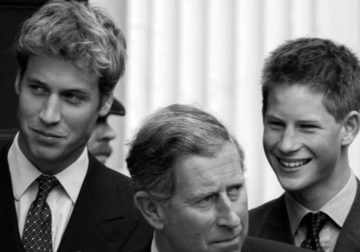 During the early stages of my father’s Alzheimer’s, when he still had lucid moments, I apologized to him for writing an autobiography many years earlier in which I flung open the gates of our troubled family life. He was already talking less at that point, but his eyes told me he understood. I thought of that moment when I read that Prince Harry, in his new memoir, wrote about his father, King Charles, getting between his battling sons and saying, “Please, boys, don’t make my final years a misery.” Time is an unpredictable thing. What will someone’s last memory be? I had the gift of time with my father, which allowed me to apologize, even though a disease hovered between us and clouded our communication. King Charles’s words reveal a man who is aware of his mortality and who would like his offspring to be aware of it as well.
 I belong to that portion of humanity—a minority on the planetary scale but a majority I think among my public—that spends a large part of its waking hours in a special world, a world made up of horizontal lines where the words follow one another one at a time, where every sentence and every paragraph occupies its set place: a world that can be very rich, maybe even richer than the nonwritten one, but that requires me to make a special adjustment to situate myself in it. When I leave the written world to find my place in the other, in what we usually call the world, made up of three dimensions and five senses, populated by billions of our kind, that to me is equivalent every time to repeating the trauma of birth, giving the shape of intelligible reality to a set of confused sensations, and choosing a strategy for confronting the unexpected without being destroyed.
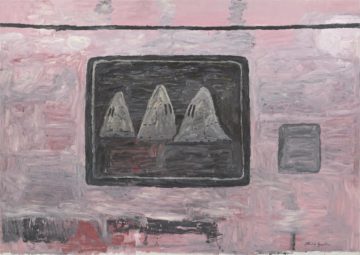 Zoé Samudzi in Jewish Currents:
 A conservative review of Kenan Malik’s Not So Black and White by Sohrab Amarhi in Unherd:
 Daniela Gabor and Ndongo Samba Sylla in Boston Review:
 Herman Mark Schwartz in Phenomenal World:
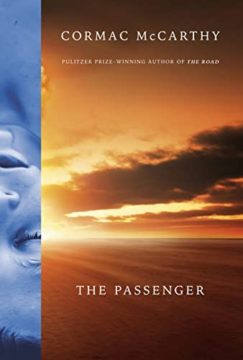 Cormac McCarthy had provided me with a context, even a language, to internalize the things I saw and cannot unsee. Segments of human beings were stacked along the road between the smoking-bombed-out war machines.
 C
C
 HUNTSVILLE, Ala. — It was an unusually chilly Thursday night in December, and a drag queen named Miss Majesty Divine was putting the final touches on her show makeup. She was about to go onstage for her regular gig at a basement tiki bar, one of the last performances before Christmas. Up at street level, two unwelcome guests had arrived. They were not fans. They were men with bushy beards, one holding a bullhorn, the other a placard that depicted a drag queen holding a screaming baby and the hashtag #stopdragqueenstoryhour. “Repent, you filthy dog! You are going to burn in hell!” the one with the bullhorn shouted. “God sent AIDS to deal with people like you!” Madge, as she is known to her friends and adoring fans, was unfazed. “I teach math to middle schoolers,” Madge deadpanned. “You think I haven’t been called some things?”