
Julian Lucas at The New Yorker:

Few have won bigger than Wiley, whose good fortune has taken him from an enfant terrible of the early two-thousands, when he became known for transfiguring hip-hop style into the idiom of the Old Masters, to one of the most influential figures in global Black culture. He was already collected by Alicia Keys and the Smithsonian when his official portrait of Obama, unveiled in 2018, sparked a nationwide pilgrimage. Now, following the success of Black Rock Senegal, a lavish arts residency he’s established in Dakar—soon to be joined by a second location, in Nigeria—Wiley is shifting the art world’s center of gravity toward Africa with a determination that combines the institution-founding fervor of Booker T. Washington and the stagecraft of Willy Wonka. No longer just painting power, he’s building it.
In Brussels, Wiley was searching for models to confect into the image of royalty for a site-specific show proposed by the city’s Oldmasters Museum. The challenge was familiar.
more here.
 IFC Films has released a
 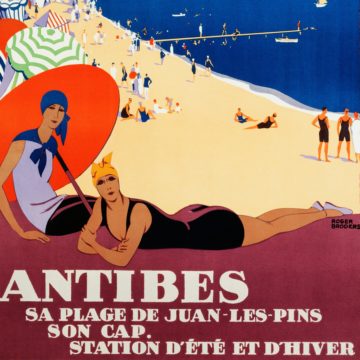 One of the first things I learnt to say in Dutch was ‘we beat them to death with sticks’. Not exactly standard fare for the first week of language classes, but then again this wasn’t an ordinary language class. As a historian working with 16th- and 17th-century documents, I was taking a specialised class to learn to read the Dutch of the period – so, instead of learning how to talk about hobbies or ask directions to the train station, we jumped straight into texts from the so-called Golden Age of the Netherlands.
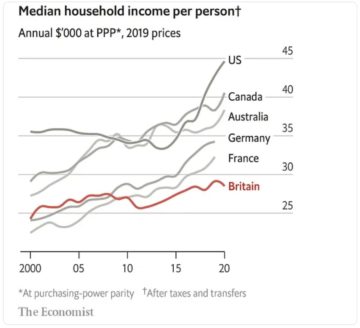 After a year of political turmoil and financial embarrassment, Britain ends 2022 shaken. There is a new spate of talk about national decline. Once again the UK is falling behind. The outlook is uncertain. It is symptomatic that Perry Anderson chose already in 2020, to author yet another gigantic essay for the
 Though never a household name, Bruce Duffy drew rapturous critical praise for his 1987 debut novel,
  This past spring, the philosopher Richard J. Bernstein taught his final two classes at the New School for Social Research, in New York, where he had been a professor since 1989. One was a course on American pragmatism, the tradition to which his own work belongs. The other was a seminar on
  I
I I’m not Michel Foucault, but here’s a history of sexuality, greatly abridged: First came the slut shamers. The traditionalist, patriarchal religious haranguers. Things weren’t great for men in the before times, but they were particularly unpleasant for women. Then came the sexual revolution of the 1960s and ’70s, which involved chucking all the rules. This had some good effects (ambitious women at last permitted to leave their houses and become doctors, lawyers, bosses) and some less good ones (moviemakers permitted to assault underage girls). In the 1990s and early 2000s, following however many backlashes against backlashes, the sexual revolution re-emerged as sex positivity.
 SOMETIME THIS COMING
 One name you don’t hear a lot these days is Thomas Piketty. In 2013, the French economist burst into the popular consciousness with the publication of
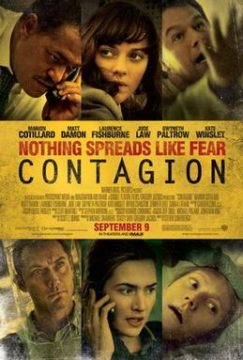 The invisibility of the disaster presents a serious difficulty to the filmmakers, who need their viewers to perceive it as the expert does. Their ingenious solution is found in the technical disaster movie’s pronounced ambience: the bustled score and sweaty palettes of Contagion; Chernobyl’s ghostly clanks and drones; the blare of Bloomberg terminals and pristine skylines of Margin Call. Through these effects, viewers are invited to pretend we know things we manifestly do not. We work through the night with Sullivan as he discovers his financial firm’s impending demise, study his stubbled face as he looks up from his illegible scrawl of equations before a pulsing monotone—and we simply know he’s uncovered something. The camera of Contagion fixates upon “fomites” (common objects that facilitate disease transmission), such that we learn to almost see viruses slithering over bus handles, glassware and casino chips. Chernobyl represents the presence of radiation with the throaty static of dosimeters (audible radiological instruments) that is often so loud and unnerving we forget we don’t exactly know what the sound means. Technical knowledge becomes an artificial sensorium, a collage of abstractions forced onto the nerve endings, always attempting to compensate for its baselessness.
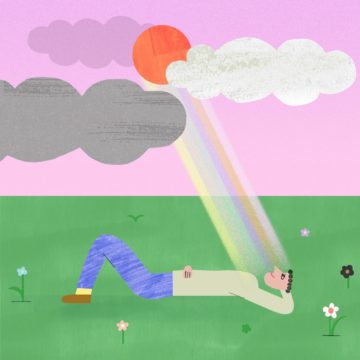 Awe can mean many things. It can be witnessing a total solar eclipse. Or seeing your child take her first steps. Or hearing Lizzo perform live. But, while many of us know it when we feel it, awe is not easy to define. “Awe is the feeling of being in the presence of something vast that transcends your understanding of the world,” said Dacher Keltner, a psychologist at the University of California, Berkeley.