
Yuval Noah Harari at Big Think:
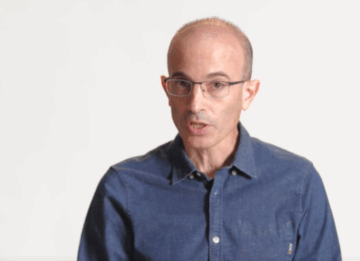 There is so much hype around AI, especially in the market. If you want to sell something to people today, you call it AI. Not every automatic machine is an AI. What makes AI AI is that it is able to learn and change by itself and come up with decisions and ideas that we don’t anticipate, can’t anticipate.
The acronym, AI, it’s more accurate to think about it as an acronym for alien intelligence. With every passing year, AI is becoming less and less artificial and more and more alien in the sense that we can’t predict what kind of new stories and ideas and strategies it will come up with. It thinks, it behaves in a fundamentally alien way. This is AI and this is not just theory, it’s also we are seeing it all around us. I’m Yuval Noah Harari. I’m a professor of history at the Hebrew University of Jerusalem and the author of “Nexus: A History of Information Networks From the Stone Age to AI”.
More here (including video).
Enjoying the content on 3QD? Help keep us going by donating now.
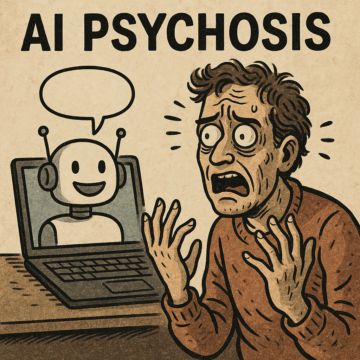 AI psychosis (
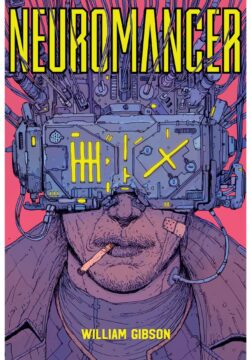 In fact, it is Gibson’s critique of what he calls the “
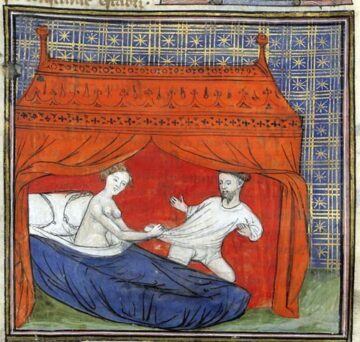 In the popular imagination, the history of sex is a straightforward one. For centuries, the people of the Christian West lived in a state of sexual repression, straitjacketed by an overwhelming fear of sin, combined with a complete lack of knowledge about their own bodies. Those who fell short of the high moral standards that church, state and society demanded of them faced ostracism and punishment. Then in the mid-20th century things changed forever when, in Philip Larkin’s oft-quoted words, ‘Sexual intercourse began in 1963 … between the end of the Chatterley ban and the Beatles’ first LP.’
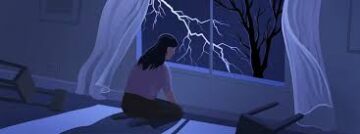 The statistics are staggering — and so is the toll on society. Throughout the world, roughly
 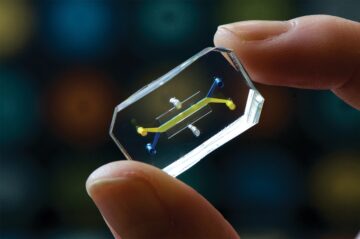 The small plastic chip etched with channels is a synthetic human organ—and one vision of future drug safety testing. Inside, layers of human liver, epithelial, and immune cells line the tiny conduits, which feed them with bloodlike fluid and remove waste. The chip, made by the Boston-based biotech company Emulate Inc., could one day help researchers and pharmaceutical companies screen out candidate drugs that cause a condition known as drug-induced liver injury (DILI)—one of several types of liver toxicity that together
 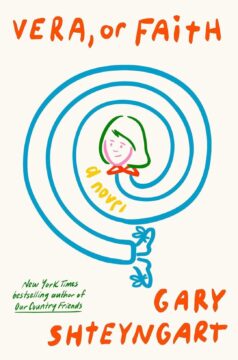 We’ve all heard (some among us have preached) well-meaning sermons about the importance of amplifying marginalized voices in literary spaces. Yet despite good intentions—e.g., tropes of the “perceptive outsider” or “staunch individualist”—there remains a dearth of more fully rendered neurodiverse characters. One of our finest contemporary writers, Gary Shteyngart, is here to remedy that problem. Meet Vera Bradford-Shmulkin, the plucky, if often melancholy, 10-year-old protagonist of Shteyngart’s enchanting new novel, Vera, or Faith. An academic overachiever obsessed with language and a future career as “a woman in STEM,” Vera feels alienated from her classmates at her Manhattan magnet elementary. She struggles to calm her “monkey brain” and control her toe-walking and arm flaps, signature behaviors of mild autism, or what we used to categorize as Asperger’s syndrome. Shteyngart portrays these with compassion; his focus is on the potential of the “outsider” as a gifted truth-teller. Far from a subject of pity, Vera is a wise and feeling guide—like a 10-year-old Virgil, shepherding us through the novel’s netherworld of tormented souls while contending with her own angsts.
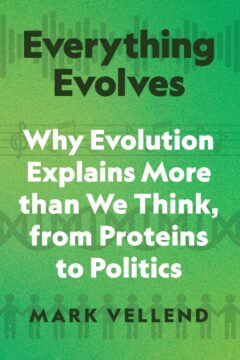 Ecologist Mark Vellend’s thesis is that to understand the world, “physics and evolution are the only two things you need”.
 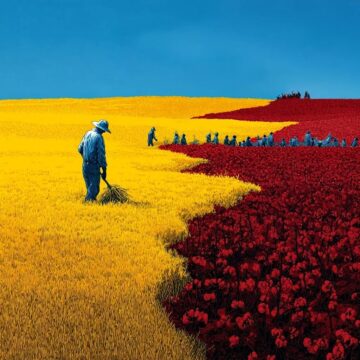 Because of climate, the North farmed crops like wheat and barley that required very little work, and that work was easy to automate. This tended to make farmers independent, incentivize industrialization for the machinery, and push settlers west very fast, as they weren’t as limited by labor needs.
 Kaputt
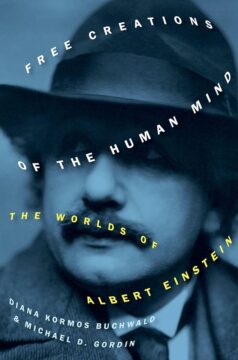 Historians of science have a guilty secret: we don’t particularly enjoy writing about those deemed singular geniuses. The public – or at least publishers – want stories of revolutionaries who stood entirely apart from their peers and predecessors, or, failing that, to see them ‘exposed’ as plagiarists (ideally stealing the work of the oppressed). But science rarely works in such simplistic ways. A century of historical scholarship has shown that the figure of the lone genius is largely mythical.
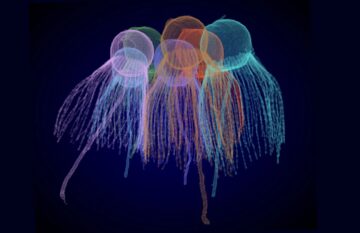 For some three billion years, unicellular organisms ruled Earth. Then, around one billion years ago, a new chapter of life began. Early attempts at team living began to stick, paving the way for the evolution of complex organisms, including