
Charles T. Rubin at the New Atlantis:
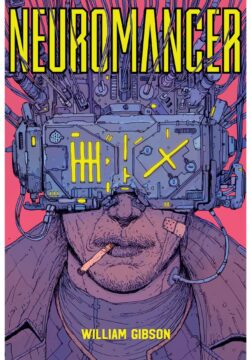 In fact, it is Gibson’s critique of what he calls the “modern program” that accounts for his belief that cities will persist under circumstances seemingly so unfavorable to their existence. By his account, a failing of the modern program is that it puts too much emphasis on the material conditions of urban life, and pays insufficient attention to its ethical dimension — how a city supports or undermines what people think of as a good life. The great modern city, Gibson understands, has no unified vision of the good, but becomes what it is by being an arena in which many such visions can interact. This situation creates dangers, most obviously the potential for conflict. But it also creates opportunities for accommodating diversity, adaptation, a certain kind of freedom, and even the adoption of ways of life that stand in a countercultural relationship to modernity. Each of these in turn presents its own set of dangers and opportunities. This complex way of life, Gibson seems to be saying, is what the modern city is, and what cities of the future could remain.
Like all science fiction authors, Gibson is an imperfect prognosticator. What we call cyberspace today has little resemblance to what he envisioned. After some forty years of anticipation, hackers still do not “jack into” cyberspace through a direct brain–machine interface. And we remain only on the verge of the various grand apocalypses that frame his stories. But we should not judge a science fiction author merely by how many of his or her inventions have come true.
more here.
Enjoying the content on 3QD? Help keep us going by donating now.