
Timothy Noah in The New Republic:
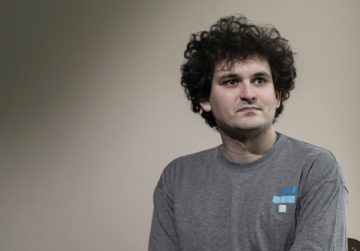 Tycoons are susceptible to the misconception that if you know how to make billions you know how to spend them. Sam Bankman-Fried, the “unkempt millennial” (The Wall Street Journal) and founder of the cryptocurrency firm FTX, demonstrated that he knew how to make a fortune that peaked at $26.5 billion. Then he demonstrated that he also knew how to lose it, under circumstances that are now under investigation by the Securities and Exchange Commission and the Justice Department. But what caught my eye was Bankman-Fried’s aspiration to use his billions to save the world through a modish variety of philanthropy especially popular right now among millennial and Gen Z cybernerds called effective altruism.
Effective altruism, or E.A., is a movement created 10 years ago by William MacAskill, a 35-year-old associate professor of philosophy at Oxford. E.A. tries to distinguish itself from routine philanthropy by applying utilitarian reasoning with academic rigor and a youthful sense of urgency.
More here.
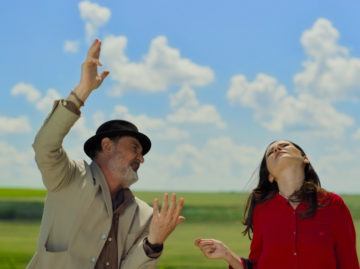 A ROMANIAN FILMMAKER who regularly deflates Romanian myths of national greatness, Radu Jude recently graced the New York Film Festival with a compact, farcical essay on the material basis of historical memory, or, to use Trotsky’s term, “the dustbin of history.”
 The creation of Steven Knight of Peaky Blinders fame, it shares with that series a fondness for mythologising and aphoristic dialogue. Set in the Egyptian desert in 1941 as the British army struggles to defend besieged Tobruk from the Germans, its tone is midway between the war comics my brother used to read as a boy (he favoured Battle) and a Duran Duran video – and I mean this as a compliment.
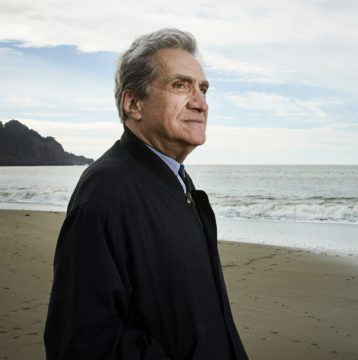 It is hard to imagine anyone who has done more to champion poetry than Robert Pinsky. The author of 10 collections of poems—including the Pulitzer Prize–nominated The Figured Wheel: New and Collected Poems, 1966-1996—Pinsky has edited anthologies, written more than a half-dozen prose books about poetry, and translated Dante’s Inferno and the poems of Czesław Miłosz. As director of
  Trans people’s right to exist
  It has been more than two decades since the issue of “loss and damage” was first raised at a UN climate summit.
 Tim Michels, a wealthy sixty-year-old businessman, was the Republican nominee for governor of Wisconsin. During the primary, when asked whether the 2020 Presidential election had been stolen, Michels said, “Maybe.” A few months later, he said that, if he became governor, Republicans would “never lose an election in Wisconsin again.” Given the context, it was hard to know whether that was normal political braggadocio or a statement of intent. Donald Trump came to Wisconsin to campaign for Michels, who made election integrity, as he put it, a big part of his pitch. He proposed to eliminate the nonpartisan agency that oversees the state’s elections and replace it with a new entity whose composition and mission was left a little hazy.
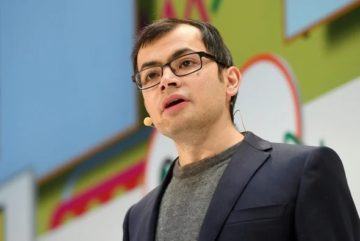 There’s an age-old adage in biology: structure determines function. In order to understand the function of the myriad proteins that perform vital jobs in a healthy body—or malfunction in a diseased one—scientists have to first determine these proteins’ molecular structure. But this is no easy feat: protein molecules consist of long, twisty chains of up to thousands of amino acids, chemical compounds that can interact with one another in many ways to take on an enormous number of possible three-dimensional shapes. Figuring out a single protein’s structure, or solving the “protein-folding problem,” can take years of finicky experiments.
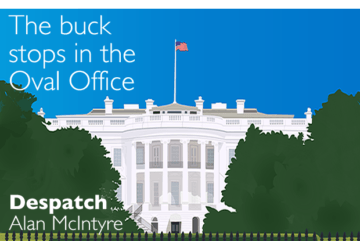 Since 1994 midterms have mattered, not just as protest votes, but as elections that have frequently determined congressional control. In the last eight midterms, control of the House has changed hands either four or five times (depending on the final 2022 result), while it’s only been twice in the Senate. Midterms have become a true political thermostat, and the result has often been divided government for the last two years of a Presidential term. Consequently, the typical second half of a Presidency is now legislative gridlock, occasional cross-party compromise, stacks of Executive Orders, and a sharp uptick in Presidential overseas trips to get away from the unpleasantness in DC.
 Why do people voluntarily hand over authority to a government? Under what conditions should they do so? These questions are both timeless and extremely timely, as modern democratic governments struggle with stability and legitimacy. They also bring questions from moral and political philosophy into conversations with empirically-minded social science. Margaret Levi is a leading political scientist who has focused on political economy and the nature of trust in government and other institutions. We talk about what democracy means, its current state, and how we can make it better.
 “Young people are definitely shaping outcomes here at COP27,” Sophia Kianni says. Swedish campaigner Greta Thunberg has skipped the Sharm el-Sheikh meeting, calling it a forum for
  One of the many times
  Fresh from a
 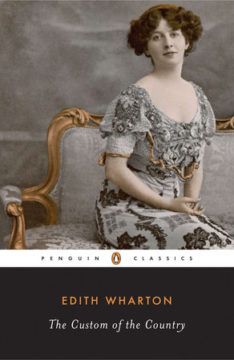 I’ve always loved Edith Wharton’s writing, but The Custom of the Country is my favorite, and I think her funniest and most sly. As I’ve worked on adapting it into a screenplay, I’ve found it interesting to hear some men say that Undine is so unlikable, while my women friends love her and are fascinated by her and what she’ll do next. We’ve all seen her before, the way she walks into the room, her focus on men, and her ease with their gaze. We admire and are annoyed by her. While I’ve often worked on stories with more sympathetic characters, it’s been so fun to dive into Undine’s world and pursuits.