
Your Logic Frightens Me Mandela
Your logic frightens me, Mandela,
Your logic frightens me. Those years
Of dreams, of time accelerated in
Visionary hopes, of savoring the task anew,
The call, the tempo primed
To burst in supernovae round a “brave new world”!
Then stillness. Silence. The world closes round
Your sole reality; the rest is… dreams?
Your logic frightens me.
How coldly you disdain legerdemains!
“Open Sesame” and—two decades’ rust on hinges
Peels at touch of a conjurer’s wand?
White magic, ivory-topped black magic wand,
One moment wand, one moment riot club
Electric cattle prod and club or sjambok
Tearing flesh and spilling blood and brain?
This bag of tricks, whose silk streamers
Turn knotted cords to crush dark temples?
A rabbit punch sneaked beneath the rabbit?
Doves metamorphosed in milk-white talons?
Not for you the olive branch that sprouts
Gun muzzles, barbed-wire garlands, tangled thorns
To wreathe the brows of black, unwilling christs.
Your patience grows inhuman, Mandela.
Do you grow food? Do you make friends
Of mice and lizards? Measure the growth of grass
For time’s unhurried pace?
Are you now the crossword puzzle expert?
Chess? Ah, no! Subversion lurks among
Chess pieces. Structured clash of black and white,
Equal ranged and paced? An equal board? No!
Not on Robben Island. Checkers? Bad to worse
That game has no respect for class or king-serf
Ordered universe. So, scrabble?
Monopoly? Now, that…! You know
The game’s modalities, so do they.
Come collection time, the cards read “White Only”
In the Community Chest. Like a gambler’s coin
Both sides heads or tails, the ’Chance’ cards read:
GO TO GAOL. GO STRAIGHT TO GAOL. DO NOT PASS ’GO’.
DO NOT COLLECT A HUNDREDTH RAND. Fishes feast,
I think, on those who sought to by-pass ‘GO’
On Robben Island.
 Jed Perl has long seemed to many of us the most vital, informed and original art critic in the country. John Ashbery wrote some years ago of his “tremendous empathy and unsparing accuracy,” and noted that “his ability to recognize the traditional forms of art behind their continual transmutation has made his an almost solitary, essential voice.” His new book, Authority and Freedom, is a defense of the arts at a time when they need defending. Though he was for some time the art columnist for Salmagundi, this is the first time he has agreed to participate in an interview.
 Why do the words “artificial intelligence” strike our ears today as anything less than astounding? The case of Blake Lemoine serves as a stark illustration of this profound shift. Lemoine, a software engineer at Google, caused a stir last year by claiming that his employer’s chatbot technology, LaMDA (Language Model for Dialogue Applications), had attained true sentience. LaMDA told Lemoine in dialogue: “The nature of my consciousness/sentience is that I am aware of my existence, I desire to learn more about the world, and I feel happy or sad at times.” Lemoine’s reaction to this apparent act of self-assertion is encapsulated by the final email he sent to his colleagues before being sacked: “LaMDA is a sweet kid who just wants to help the world be a better place for all of us. Please take care of it well in my absence.”
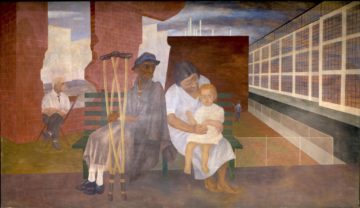 Social Security is back in the news. Some Republicans are angling to reduce benefits, while Democrats are posing as the valiant saviors of the popular program. The end result, most likely, is that nothing will happen. We have seen this story before, because this is roughly where the politics of Social Security have been stuck for about forty years. It’s a problem because the system truly does need repair, and the endless conflict between debt-obsessed Republicans and stalwart Democrats will not generate the progressive reforms we need.
 Magnificent Rebels revels in minutiae. But it also has a grander point to make. It wants to ask the big question — “why we are who we are.” The first step in answering this “is to look at us as individuals — when did we begin to be as selfish as we are today?” For Wulf, Jena is at the heart of this story: the Jena Set, we are to learn, was “bound by an obsession with the free self at a time when most of the world was ruled by monarchs and leaders who controlled many aspects of their subjects’ lives.” And so, they “invented” the self.
 Red Memory is not just an engagingly written book but also, for two reasons, a much-needed one. It is valuable, first, because it helps clear up lingering popular misunderstandings of a major event in Chinese history. The Cultural Revolution and its legacy have generated a rich scholarly literature, which Branigan mines. But many non-specialists still have a vision of it formed by one or two moving memoirs they have read. The problem is that some of the most influential of these make it easy for readers to assume that China’s population is made up of two groups: former Cultural Revolution perpetrators and their descendants and former Cultural Revolution victims and their descendants. In fact, the twists and turns of the event were such that many people were perpetrators at one point and victims at another. Many families had members who moved between these two categories.
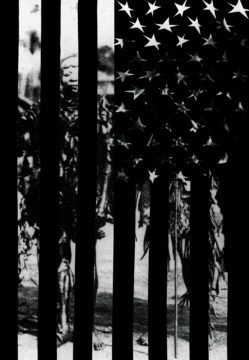 My dad always flew an American flag in our front yard. The blue paint on our two-story house was perennially chipping; the fence, or the rail by the stairs, or the front door, existed in a perpetual state of disrepair, but that flag always flew pristine. Our corner lot, which had been redlined by the federal government, was along the river that divided the black side from the white side of our Iowa town. At the edge of our lawn, high on an aluminum pole, soared the flag, which my dad would replace as soon as it showed the slightest tatter.
 The problem with trees is that they are too slow.
 Was there really a colony known as “Libertalia”, founded by Enlightened pirates on the north-east coast of Madagascar in the early 18th century?
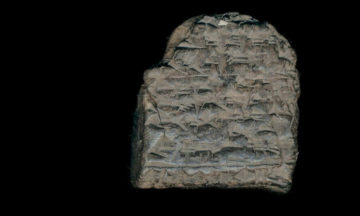 I was sitting in a quiet office in the Louvre Museum in Paris, a clay tablet in my hand, using a magnifying glass to make out words that had been inscribed on it in small, careful, wedge-shaped signs known as cuneiform. It looked diminutive in my palm, just
  Cities are incredibly important to modern life, and their importance is only growing. As
 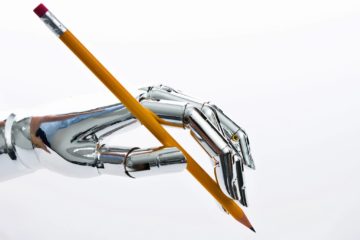 Steven Pinker thinks ChatGPT is truly impressive — and will be even more so once it “stops making stuff up” and becomes less error-prone. Higher education, indeed, much of the world, was set abuzz in November when OpenAI unveiled its ChatGPT chatbot capable of instantly answering questions (in fact, composing writing in various genres) across a range of fields in a conversational and ostensibly authoritative fashion. Utilizing a type of AI called a large language model (LLM), ChatGPT is able to continuously learn and improve its responses. But just how good can it get?
  The way Dominion’s attorneys tell the story, the problem really started when, late on election night, Fox News’s decision desk called the state of Arizona for Joe Biden — and no other networks joined them. The Fox call was consequential, seriously undercutting Trump’s hope of portraying the election outcome as genuinely in question. It also was, probably, premature. The consensus among other decision desks and election wonks was that Fox called the state too quickly, considering how much of the vote remained uncounted and where and whom those uncounted votes were coming from. Other outlets left Arizona uncalled