Manjeet S Pardesi and Amitav Acharya in Aeon:
The liberal international order or Pax Americana, the world order built by the United States after the Second World War, is coming to an end. Not surprisingly, this has led to fears of disorder and chaos and, even worse, impending Chinese hegemony or Pax Sinica. Importantly, this mode of thinking that envisages the necessity of a dominant or hegemonic power underwriting global stability was developed by 20th-century US scholars of international relations, and is known as the hegemonic stability theory (HST).
In particular, hegemonic stability theory developed out of the work of the American economist Charles P Kindleberger. In his acclaimed book The World in Depression 1929-1939 (1973), Kindleberger argued that: ‘The world economic system was unstable unless some country stabilised it,’ and that, in 1929, ‘the British couldn’t and the United States wouldn’t.’ While Kindleberger was mainly concerned with economic order, his view was transformed by international relations scholars to associate hegemony with all sorts of things. In particular, a hegemonic power is generally expected to perform one or all of three main roles: first, as the dominant military power that ensures peace and stability; second, as the central economic actor within the global system; and third, as a cultural and ideational leader – either actively disseminating its political ideas across the system or serving as a model that others seek to emulate.
HST extends to all aspects of Pax Americana, and US naval power is seen as a ‘public good’ provided by the hegemon that secures the world’s maritime commons. However, many thinkers now see China’s growing power, especially naval power, as a consequential challenge to the US-led liberal international order, and fear that this assault on US hegemony portends disorder. The return of the US president Donald Trump to the White House has of course accentuated these liberal fears, especially in the US but also among America’s allies, particularly its Western partners. The premise of HST, crafted by Americans at the height of the American century, however, is wrong. History shows us that there are other pathways to international order, and that stability does not require hegemony.
More here.
Enjoying the content on 3QD? Help keep us going by donating now.

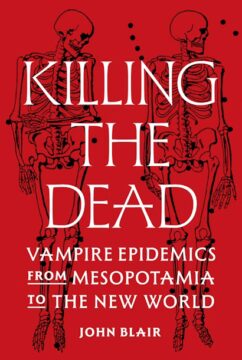 How can whole societies come to believe that the dead walk among them? Understanding that requires moving beyond theoretical approaches and engaging with tangible human communities and their world-views. We will first visit two very different societies in which the veil between life and death has been thin. The dead have been close: sometimes to be revered, sometimes to be feared, but regularly to be interacted with, if not unambiguously in a bodily form. Both case-studies manifest an endemic layer of anxiety, capable of intensifying under stress into something more concentrated and physical.
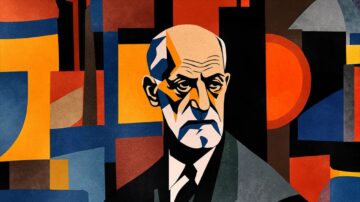 We associate Freud with the repression of thoughts and feelings. But he also described a subtler defense: recognizing an uncomfortable truth, yet acting as if it didn’t matter—a phenomenon he called disavowal. In this interview, philosopher Alenka Zupančič, a close collaborator of Slavoj Žižek, argues that disavowal is the key to understanding our political paralysis. From climate change to populism to the performative outrage of social media, Zupančič says the problem isn’t that we deny reality—it’s that we acknowledge it endlessly and keep doing nothing.
 W
W I remember the vogue in the ’60s and ’70s for critical essays predicting the imminent “death of the novel.” In
  It’s not that the AI companies are growing their computing power slowly — surprise at the lack of compute put into new training reflects how aggressively they’ve scaled until now. Releasing a one hundred times larger model every two years would demand a tenfold increase in capacity each year, which, You says, is unrealistic. A new model every three years, he says, might be feasible, though that still requires an ambitious five-fold increase in compute every year.
 In 1987, Lei Jun 雷军 was a 21-year-old student in Wuhan University’s computer science program. The book that had set his imagination alight was Fire in the Valley 硅谷之火, which chronicles the evolution of 1970s homebrew hacker culture into global titans like Apple, Microsoft, and IBM. The heroes of that story, of course, were visionaries like Steve Jobs. Lei Jun’s trajectory — he founded
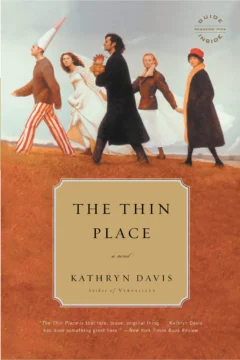 A few years after I first read The Thin Place, I found myself interviewing Davis for an issue of The Review of Contemporary Fiction, which I was editing at the time. We talked then, as we still talk now, about writing and animals and the city of Philadelphia, where part of my family is from, and where Davis was born on November 13, 1946. Her childhood in a semidetached house on Woodale Road, at the edge of the affluent suburb of Chestnut Hill, Pennsylvania, has found its way into many of her books. It’s there most directly in the haunted house in Hell (1998), the suburban street in Duplex, and the shared childhood memories of the mysterious “we” who narrate The Silk Road (2019). But once you have entered the labyrinth of Davis’s work, you begin to see it, or sense it, around every corner: an atmosphere of dread ruled by the rituals of parents and the patterns of convention—a place where the important things go unsaid or are spoken in code so that if the children overhear, they won’t understand. A place that anybody in their right mind would try to escape.
 In Some Notes on Mediated Time – one of three completely new essays in the collection – Smith recalls how the “dreamy, slo-mo world” of her 1980s childhood gave way, within a generation, to the “anxious, permanent now” of social media. If you lived through that transition, you don’t have to be very old to feel ancient. When this estrangement is compounded by the ordinary anxieties of ageing, cultural commentary becomes inflected with self-pity. Smith’s identification with the protagonist of
  ‘J
‘J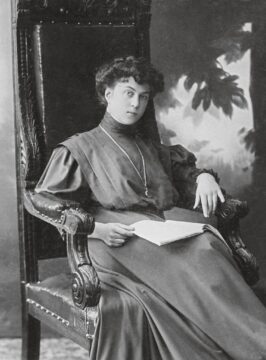 In 1990, when Julia Ioffe was 7 years old, her family left a collapsing Soviet Union for suburban Maryland. Her new classmates never let her forget that she was the “weird Russian girl,” but the disdain, she makes clear, was mutual. Growing up, she looked down on American kids who bragged about seeing a Broadway musical or vacationing in Florida. Ioffe’s idea of a good time was going to the opera and reading Pushkin.