
Jackson Lears in Harper’s:
 The war in Ukraine has resurrected the ultimate technocratic fantasy: a winnable nuclear war. Intellectuals at the Hoover Institution are urging American strategists to “think nuclearly again,” reestablishing the idea that nuclear weapons are tools to assert U.S. primacy over Russia and China. This isn’t just talk. The Bulletin of the Atomic Scientists recently noted “steadily increasing U.S. bomber operations in Europe”—some near the Russian border. Though most Americans are unaware of it, escalation toward nuclear conflict is already under way.
In this strange atmosphere, I feel moved to revisit my own experience as a naval officer on a nuclear-armed ship more than fifty years ago. My story is all too relevant today. As Daniel Ellsberg demonstrates in The Doomsday Machine, the shape of U.S. nuclear strategy has remained unchanged since the early Sixties.
More here.
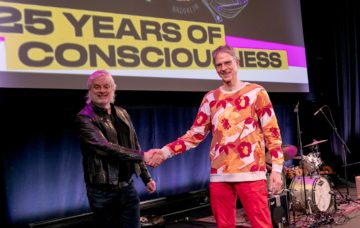 A 25-year science wager has come to an end. In 1998, neuroscientist Christof Koch bet philosopher David Chalmers that the mechanism by which the brain’s neurons produce consciousness would be discovered by 2023. Both scientists agreed publicly on 23 June, at the annual meeting of the Association for the Scientific Study of Consciousness (ASSC) in New York City, that it is still an ongoing quest — and declared Chalmers the winner. What ultimately helped to settle the bet was a key study testing two leading hypotheses about the neural basis of consciousness, whose findings were unveiled at the conference. “It was always a relatively good bet for me and a bold bet for Christof,” says Chalmers, who is now co-director of the Center for Mind, Brain and Consciousness at New York University. But he also says this isn’t the end of the story, and that an answer will come eventually: “There’s been a lot of progress in the field.”
 Two new drugs for treating obesity are on course to become available in the next few years — and they offer advantages beyond those of the
  Those of us who revere Octavia Butler’s work and have never stopped mourning her passing do so in part, I suspect, because we know that no matter what happens in this Universe there will never be anyone like Butler again—not as a person and certainly not as an artist. Like Toni Morrison, Butler was a literary eucatastrophe, (a sudden and miraculous grace: never to be counted on to recur), a literary Kwisatz Haderach (Butler loved Dune) that occurs so very rarely in a culture and only if it is lucky.
 It’s somewhat amazing that cosmology, the study of the universe as a whole, can make any progress at all. But it has, especially so in recent decades. Partly that’s because nature has been kind to us in some ways: the universe is quite a simple place on large scales and at early times. Another reason is a leap forward in the data we have collected, and in the growing use of a powerful tool: computer simulations. I talk with cosmologist Andrew Pontzen on what we know about the universe, and how simulations have helped us figure it out. We also touch on hot topics in cosmology (early galaxies discovered by JWST) as well as philosophical issues (are simulations data or theory?).
 Ecological collapse is likely to start sooner than previously believed, according to a new study that models how tipping points can amplify and accelerate one another.
 ‘G
‘G In “Planta Sapiens,” Paco Calvo, a philosopher of plant behavior, and his co-author, Natalie Lawrence, present the idea that flora are intelligent — that is, capable of cognition. In Calvo’s opinion, people pay more attention to animals than plants and this may explain why some of plants’ remarkable abilities have been overlooked. Our evolutionary history may also shape our reduced attention to the subject; plants are, after all, unlikely to attack people.
 Patrick Bigger and Federico Sibaja in Phenomenal World:
 Tim Sahay in Foreign Policy:
 Timothy Andersen in Aeon:
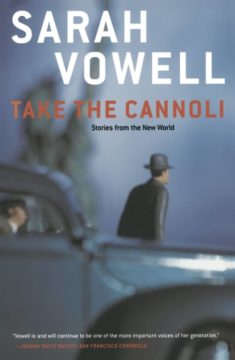 Vowell’s unforgettable early contribution to a relatively early incarnation of This American Life (back in 1999), in which she performed a similar feat, though that time unfurling the entire history of the United States drawing on the 720 degree panorama (360 degrees of space compounded by 360 degrees of time) available from just one street corner in Chicago. To wit, this one here: Michigan Avenue as it courses over the Chicago River and intersects with Wacker Drive.
 One of the strangest, most audacious winks Fear of Kathy Acker bestows is the fact that its contents have little to do with her. Yet Skelley pays substantial tribute to Acker in his introduction, pointing to his own literary puberty in which she was a catalyst: “[H]er vastly funny, scary, sexy portals to expression opened at a susceptible period. […] It was a nascent and fertile moment when Kathy, at the peak of her powers, disrupted me, erupted in me.” After hearing the chapbook discussed on the radio in the 1980s, Acker sent Skelley a postcard that would become a crowning endorsement of the work: “[D]espite my dislike of seeing my own name I think you’re a good writer […] Never what’s expected,” she wrote.