
Andrew Zolli & Ann Marie Healy in Delancey Place:
 The internet was created by the U.S. military as a way to preserve communications to missile silos in the event of a Soviet nuclear attack:
“From its inception as a U.S. military funded project in the 1960s, the Internet was designed to solve a particular problem above all else: to ensure the continuity of communications in the face of disaster. Military leaders at the time were concerned that a preemptive nuclear attack by the Soviets on U.S. telecommunications hubs could disrupt the chain of command — and that their own counterstrike orders might never make it from their command bunkers to their intended recipients in the missile silos of North Dakota. So they asked the Internet’s original engineers to design a system that could sense and automatically divert traffic around the inevitable equipment failures that would accompany any such attack.
“The Internet achieves this feat in a simple yet ingenious way: It breaks up every email, web page, and video we transmit into packets of information and forwards them through a labyrinthine network of routers — specialized network computers that are typically redundantly connected to more than one other node on the network. Each router contains a regularly updated routing table, similar to a local train schedule. When a packet of data arrives at a router, this table is consulted and the packet is forwarded in the general direction of its destination. If the best pathway is blocked, congested, or damaged, the routing table is updated accordingly and the packet is diverted along an alternative pathway, where it will meet the next router in its journey, and the process will repeat. A packet containing a typical web search may traverse dozens of Internet routers and links — and be diverted away from multiple congestion points or offline computers — on the seemingly instantaneous trip between your computer and your favorite website.
More here.
 350 pages into Vikram Chandra’s epic novel Red Earth and Pouring Rain, a particular story within a story within a story caught my attention the first time I read it in the mid-aughts. Perhaps one day I’ll pen a lecture on the image of printers within contemporary literature. This one involves the wily Calcutta printer Sorkar, working on commission to an aloof Englishman named Markline. Sorkar wanders his shopfloor, occasionally handing out special letters to his Bengali typesetters to substitute for their fonts. What do these letters spell? It turns out that they are a cipher, a means of encoding secret linguistic jabs against the printer’s British master. They range from political statements such as “The Company makes widows and famines, and calls it peace” to the simple and effective, “Fuck you.”
 “We got down from the car and went inside.”
 During the summer months in the Oxfordshire town where I live, I go swimming in the nearby 50-metre lido. With my inelegantly slow breaststroke, from time to time I accidentally gulp some of the pool’s opulent, chlorine-clean 5.9m litres of water. Sometimes, I swim while it’s raining, when fewer people brave it, alone in my lane with the strangely comforting feeling of having water above and below me. I stand a bottle of water at the end of the lane, to drink from halfway through my swim. I normally have a shower afterwards, even if I’ve showered that morning. I live a wet, drenched, quenched existence. But, as I discovered, this won’t last. I am living on borrowed time and borrowed water.
 As part of our event series with The Philosopher, Amna Akbar sat down with Bernard Harcourt, legal scholar and professor of political science at Columbia University, to discuss his new book, Cooperation: A Political, Economic, and Social Theory. In the course of their conversation, moderated by Philosopher editor Anthony Morgan, they discuss the failure of traditional electoral politics and mass mobilization, existing cooperative efforts, our punitive society, and how we might build democratic self-governance. Below is a transcript of their conversation, which has been edited for clarity and concision.
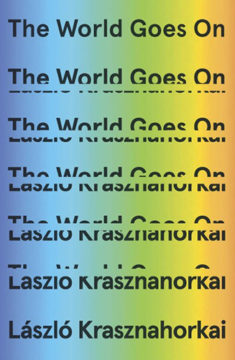 Hungarian writer László Krasznahorkai has become a more familiar name to English speaking readers over the last few years thanks to his receipt of the Man Booker International Prize in 2015. Nevertheless, his is a name that remains shrouded in a certain mystique, due in part to his gnomic responses in interviews, and to the notorious difficulty of his work, with its breathtakingly long sentences and apocalyptic, melancholic themes. The World Goes On, which has been shortlisted for 2018 Man Booker International Prize, continues to explore these themes, albeit in a less menacing or apocalyptic tone than some of his earlier works.
 One March day in 1742, a very unusual man set up a table on a busy Philadelphia street. Benjamin Lay was sixty-one years old, wore humble homespun clothes, and sported a long beard. His head was large and his eyes luminous, but his posture and height immediately set him apart: he had a stooped back and stood a little over four feet tall. He carefully laid out a few teacups and saucers, delicate objects that had been treasured by his wife before she passed away, and then proceeded to smash them with a hammer, crushing the dishes with dramatic flair. With each loud blow, bits of ceramic flying, he denounced the “tyrants” in India and the Caribbean who mistreated the workers who harvested the tea and enslaved the people who produced the sugar that his Pennsylvania neighbors consumed.
 Temnothorax nylanderi
 Over the last decade, dozens of companies and nearly all large countries have vowed to stop demolishing forests, a practice that destroys entire communities of wildlife and pollutes the air with enormous amounts of carbon dioxide. A big climate conference in Glasgow, in the fall of 2021, produced the most significant pledge to date:
  T
T
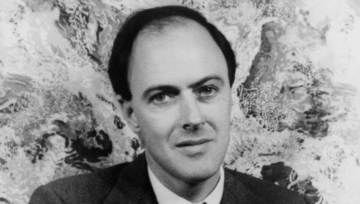 Setsuko Nakamura was 13 years old when the atomic bomb hit Hiroshima.
  The multi-prize-winning theoretical physicist Giorgio Parisi was born in Rome in 1948. He studied physics at the Sapienza University in the city, and is now a professor of quantum theories there. A researcher of broad interests, Parisi is perhaps best known for his work on “spin glasses” or disordered magnetic states, contributing to the theory of complex systems. For this work, together with Klaus Hasselmann and Syukuro Manabe,