
Devorah Baum in The White Review:
 1. ‘It’s kind of crazy to shop at Target, watch Netflix, drive a Honda, and still have a husband.’
Marriage falls into a specific category of things I don’t want to think about because their meaning swells the more you do. Personally, socially, historically. And yet, I am always interested in love stories: I listen to my friends talk about their love lives and when they apologise for dwelling on something – ‘is this boring?!’ – I answer, ‘love is the subject.’ I am interested in how we organise our lives by connection with other people, in how we live alongside others, in how love is a social construct and a form of relation. Love is the subject, by which I mean, love is something we want to narrate and discuss, because words make this inexplicable and incomprehensible thing – other people – feel less ambiguous, perhaps closer to certainty.
I don’t mean to conflate marriage and love. Quite the opposite – it is marriage’s function as an organising logic that I fear, that I believe does not work for anyone (especially not women). When I speak of marriage, it is not love I think of, but power. I think about Phyllis Rose discussing this in the introduction to PARALLEL LIVES: FIVE VICTORIAN MARRIAGES (1983): ‘When we resign power or assume new power, we insist it is not happening and demand to be talked to about love. Perhaps that is what love is – the momentary or prolonged refusal to think of another person in terms of power.’ But power is impossible to sidestep. A page later: ‘Who can resist the thought that love is the ideological bone thrown to women to distract their attention from the powerlessness of their lives?’
More here.
 The controversies of late over the perils and promise of generative AI have raised anew the philosophical question of where technological sovereignty ends and human autonomy begins. Will the super-intelligent capacities of the putative servant we have invented end up being our actual master?
 I
I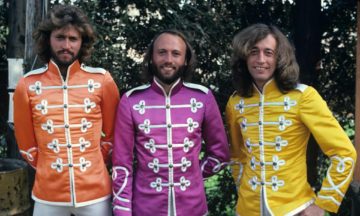 This book contains few new interviews about the “insanely productive” group who sold more than 220m records: it is author-led, meaning we are mainly given Bob Stanley’s opinions about the
  Almost a century ago, physics produced a problem child, astonishingly successful yet profoundly puzzling. Now, just in time for its 100th birthday, we think we’ve found a simple diagnosis of its central eccentricity.
 A lot of people — at least, a lot of people who read this blog — know of Matt Yglesias’ book
  According to Kenner, the Hollow Men provides the first expression of the “structural principle” of Eliot’s later work and, I would suggest, of Kenner’s work as well. What is that principle? Eliot’s aim is to articulate “moral states which to an external observer are indistinguishable from one another” (IP, 163). So that we can “judge a man’s action,” Kenner says, but “we cannot judge the man by his actions.” What Kenner calls “distinct actions,” occlude from the observer the nature of a man’s true actions. And since what we are asked to judge are “moral states,” it naturally follows that we are not meant to judge works of art, which is exactly what Kenner says (IP, 163). “In art,” Kenner writes, “actions are determined by their objects.” In morals, by contrast, actions are “determined by their motives, which are hidden: hidden, often, from the actor” (IP, 163). The art that Kenner admires is anti-art in the sense that conventional artworks are construed as the expression of distinct actions, a kind of action we sometimes define as intentional tout court.
 T
T For millennia, the movements of the celestial bodies in the heavens above, from shining planets to the faintest of stars, have provided practical guidance to navigators and spiritual direction to oracles. But some signals created by the stars are invisible to the naked human eye.
 On 9 October 1911, Franz Kafka, then 28 years old, wrote in his diary that he didn’t expect to reach the age of 40. At the time of this entry, he was not yet stricken with the tuberculosis that would lead to his death in 1924, shortly before his
 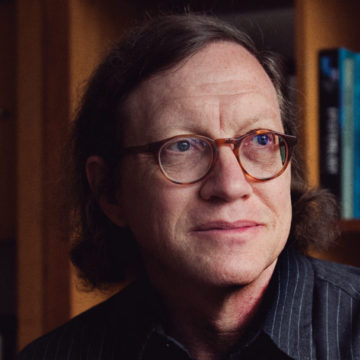 Last year’s Nobel Prize for experimental tests of Bell’s Theorem was the first Nobel in the foundations of quantum mechanics since Max Born in 1954. Quantum foundations is enjoying a bit of a resurgence, inspired in part by improving quantum technology but also by a realization that understanding quantum mechanics might help with other problems in physics (and be important in its own right). Tim Maudlin is a leading philosopher of physics and also a skeptic of the Everett interpretation. We discuss the logic behind hidden-variable approaches such as Bohmian mechanics, and also the broader question of the importance of the foundations of physics.
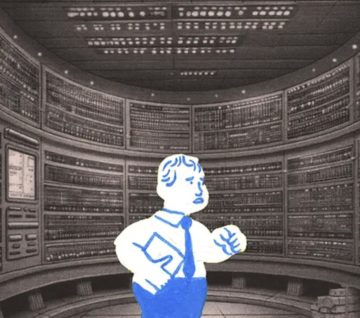 It’d be a mistake to characterize the risk of human extinction from artificial intelligence as a “fringe” concern now hitting the mainstream, or a decoy to distract from current harms caused by AI systems. Alan Turing, one of the fathers of modern computing, famously wrote in 1951 that “once the machine thinking method had started, it would not take long to outstrip our feeble powers. … At some stage therefore we should have to expect the machines to take control.” His colleague I. J. Good agreed; more recently, so did Stephen Hawking. When today’s luminaries warn of “extinction risk” from artificial intelligence, they are in good company, restating a worry that has been around as long as computers. These concerns predate the founding of any of the current labs building frontier AI, and the historical trajectory of these concerns is important to making sense of our present-day situation. To the extent that frontier labs do focus on safety, it is in large part due to advocacy by researchers who do not hold any financial stake in AI. Indeed, some of them would prefer AI didn’t exist at all.
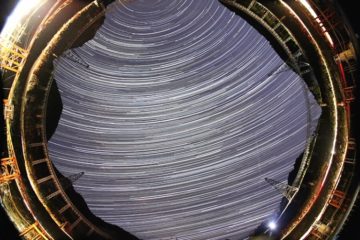 Gravitational waves are back, and they’re bigger than ever.
 The internet was created by the U.S. military as a way to preserve communications to missile silos in the event of a Soviet nuclear attack: