
Constance Grady in Vox:
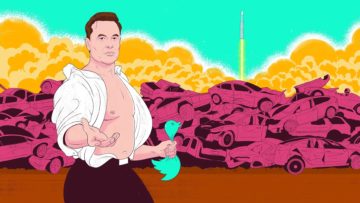 Elon Musk is an Ozymandias for our moment.
He’s got wealth and influence. His place as the richest man on earth fluctuates with the market, but he consistently cycles among the top three slots. He’s the CEO of two major companies and the owner of what was, up until he bought it, arguably the most influential social media network in the world. Marvel used him as the basis for Tony Stark. Since Musk first made his way into public view in the mid-2000s, he has promised to change the world. He is going to solve climate change. He is going to take humanity to Mars. He is going to use AI to unravel the true nature of the universe. He is going to save the human race.
For most of the past decade, the media and Musk’s many super fans treated Musk’s promises as something close to fait accompli. After all, Musk may not yet have taken people to Mars, but he did build reusable rockets. He reinvigorated the electric car industry. Surely, the people who congregate in Musk’s Twitter replies would suggest, he was on the cusp of doing the rest of what he says he’ll do, no matter how abrasive his personality might seem or how many times he’s already failed to deliver.
To understand exactly how this worldview works, it’s illustrative to look at a book by the English writer and actress Talulah Riley. Riley was Musk’s second and third marriages: The pair divorced in 2012, remarried in 2013, and divorced a second time in 2016. (Riley recently announced her engagement to Thomas Brodie-Sangster, the kid from Love Actually — the woman has lived a life.) Also in 2016, Riley published a romance novel titled Acts of Love.
More here.
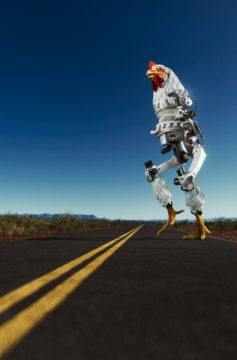 Last month, in the crowded back room of a bar in Williamsburg, Brooklyn, the fate of humanity hung in the balance.
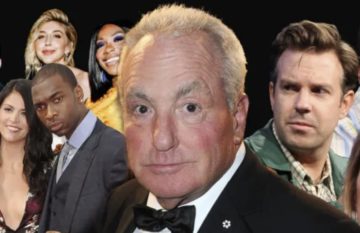 Michaels is intimately acquainted with this power, having spent the last half-century using SNL to launch bankable talents and profit from their careers. Bupkis isn’t just a Pete Davidson vehicle; it’s a Lorne Michaels production. So is Staten Island Summer, for that matter, and Shrill, The Tonight Show, Schmigadoon!, and That Damn Michael Che—not to mention the recently departed The Other Two and Kenan. The promise of SNL under Michaels’ leadership is simple: If you are loyal to the family, you will reap handsome rewards. Over almost 50 years, that promise has come to justify a legacy of alleged workplace abuses ranging from the familiar to the shocking. Beyond 30 Rock’s walls, it has become the promise of the massive live comedy ecosystem feeding SNL, an amorphous network of small businesses that successfully encoded their exploitative labor practices and regressive cultural norms into the industry’s DNA. As they churned ruthlessly through generations of comedy workers, they helped create the world we’re in now, the one Hollywood writers and actors are striking to change. It’s a world where talent and hard work aren’t nearly enough to earn a stable living; a world where a few fabulously wealthy men hold the power to shape entire art forms in their image.
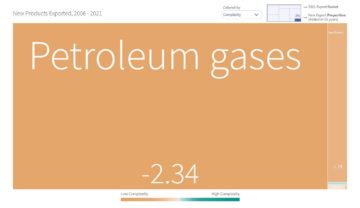 A useful tool from Harvard’s Growth Lab:
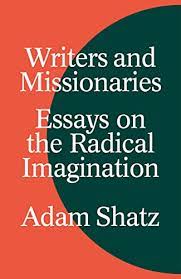 J. Howard Rosier interviews Adam Shatz about solidarity, the art of the essay, and his recent collection Writers and Missionaries in The Nation:
 Branko Milanovic over at his Substack: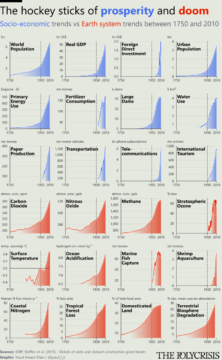
 Do you know what makes you attractive? Your best features are the
 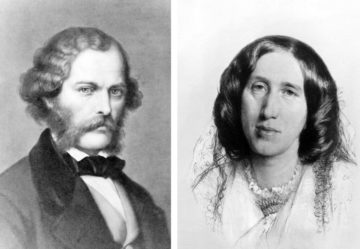 We could all use a hype man like George Henry Lewes.
 “A
“A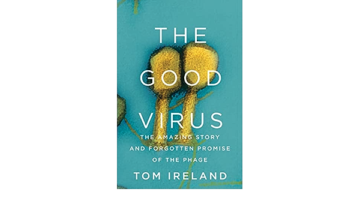 While recent events have provided a painful reminder of the very bad viruses that prey on us, Tom Ireland’s “The Good Virus” is a colorful redemption story for the oft-neglected yet incredibly abundant phage, and its potential for quelling the existential threat of antibiotic resistance, which scientists estimate might cause up to 10 million deaths per year by 2050. Ireland, an award-winning science journalist, approaches the subject of his first book with curiosity and passion, delivering a deft narrative that is rich and approachable.
 It is well, at certain hours of the day and night, to look closely at the world of objects at rest. Wheels that have crossed long, dusty distances with their mineral and vegetable burdens, sacks from the coalbins, barrels and baskets, handles and hafts for the carpenter’s tool chest. From them flow the contacts of man with the earth … The used surfaces of things, the wear that the hands give to things, the air, tragic at times, pathetic at others, of such things—all lend a curious attractiveness to the reality of the world that should not be underprized.
 Cheri Ferguson has traded her vape pen for an Ozempic pen. One day seven weeks ago, “I thought, ‘you’re doing something about your weight; leave your vape at home,’ ” Ferguson said. She hasn’t picked it back up since, she says. Ferguson is one of many people taking Ozempic and similar drugs for weight loss who say they’ve also noticed an effect on their interest in addictive behaviors like smoking and alcohol. A smoker for most of her life, Ferguson started Ozempic 11 weeks ago to try to lose about 50 pounds she’d gained during the Covid-19 pandemic, which had made her prediabetic.