
Amor Towles in the New York Times:
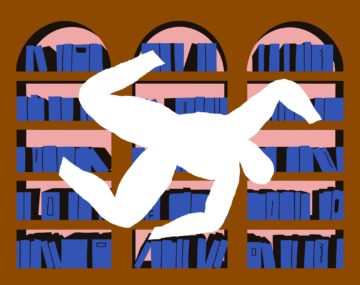 For over 100 years the cadaver, that unsung hero of murder mysteries, has been accommodating, gracious and generally on time. There is no other figure in crime who has proved more reliable. Since the murder mystery first gained popularity, there have been two world wars, multiple economic crises, dance crazes and moonshots, the advent of radio, cinema, television and the internet. Ideas of right and wrong have evolved, tastes have changed. But through it all, the cadaver has shown up without complaint to do its job. A clock-puncher of the highest order, if you will.
More here.

 I
I It’s tempting to imagine memory as a videotape that stores and plays back the past just as it happened. But the workings of the mind are
  Over the past few years, Korean reality TV has been a source of inspiration for my writing. Reading the subtitles is an amazing lesson in dialogue. The random casts of participants are a fun study of group dynamics. These shows allow me to witness tender, precarious moments between lovers and strangers. They prove that the mundane and dramatic often go hand in hand. Watching them, I’ve cried, laughed, and shouted at the screen. I’ve become more aware of how we are all living a life of scenes, surrounded by and involved in a seemingly never-ending narrative.
 I
I  The California State Board of Education’s new math framework, adopted last month, has drawn intense public criticism. Most critics have focused on the framework’s overt political content or its aims to achieve “equity” by holding back advanced students, but there is an arguably even more fundamental problem: an approach to education called inquiry learning, which has virtually zero grounding in research. There is little in the framework that resembles real mathematical learning.
 Yascha Mounk: You have a really interesting new book called
  Nearly every step of O’Connor’s career brought trouble. While making her debut album, 1987’s
  T
T It must be a while ago now since
  Stanford University scientists have invented a new kind of paint that can keep homes and other buildings cooler in the summer and warmer in the winter, significantly reducing energy use, costs, and greenhouse gas emissions.
 L
L W
W On the one hand, the promise of a liberal society is of a society of equals – of people who are equally entitled and empowered to make decisions about their own lives, and who are equal participants in the collective governance of that society. Liberalism professes to achieve this by protecting liberties. Some of these are personal liberties. I get to decide how to style my hair, which religion to profess, what I say or don’t say, which groups I join, and what I do with my own property. Some of these liberties are political: I should have the same chance as anyone else to influence the direction of our society and government by voting, joining political parties, marching and demonstrating, standing for office, writing op-eds, or organising support for causes or candidates.