
Cara Buckley in The New York Times:
 The tiny forest lives atop an old landfill in the city of Cambridge, Mass. Though it is still a baby, it’s already acting quite a bit older than its actual age, which is just shy of 2. Its aspens are growing at twice the speed normally expected, with fragrant sumac and tulip trees racing to catch up. It has absorbed storm water without washing out, suppressed many weeds and stayed lush throughout last year’s drought. The little forest managed all this because of its enriched soil and density, and despite its diminutive size: 1,400 native shrubs and saplings, thriving in an area roughly the size of a basketball court.
It is part of a sweeping movement that is transforming dusty highway shoulders, parking lots, schoolyards and junkyards worldwide. Tiny forests have been planted across Europe, in Africa, throughout Asia and in South America, Russia and the Middle East. India has hundreds, and Japan, where it all began, has thousands. Now tiny forests are slowly but steadily appearing in the United States. In recent years, they’ve been planted alongside a corrections facility on the Yakama reservation in Washington, in Los Angeles’s Griffith Park and in Cambridge, where the forest is one of the first of its kind in the Northeast.
More here.


 Advait Arun in Phenomenal World:
 Greg Conti in Compact Magazine:
 Jodi Dean in LA Review of Books:
 D
D Two pages into his new biography of Harry Smith, the enigmatic anthropologist, underground filmmaker, painter and music collector responsible for the influential “
 Writing to his uncle from quarantine in Rhodes, a twenty-eight-year-old
  Sixty years ago, in the summer of 1963, a four-story townhouse on West 130th Street in Harlem became the headquarters for what was then the largest civil rights event in American history, the March on Washington for Jobs and Freedom. For one summer the house, a former home for “
 The Moshiach came to Madison Avenue this summer. All over a not particularly Jewish neighborhood, posters of the bearded, Rembrandtesque Rebbe Schneerson appeared, mucilaged to every light post and bearing the caption “Long Live the Lubavitcher Rebbe King Messiah forever!” This was, or ought to have been, trebly astonishing. First, the rebbe being urged to a longer life died in 1994, and the new insistence that he was nonetheless the Moshiach skirted, as his followers tend to do, the question of whether he might remain somehow alive. Second, the very concept of a messiah recapitulates a specific national hope of a small and oft-defeated nation several thousand years ago, and spoke originally to the local Judaean dream of a warrior who would lead his people to victory over the Persians, the Greeks, and, latterly, the Roman colonizers. And, third, the disputes surrounding the rebbe from Crown Heights are strikingly similar to those which surrounded the rebbe Yeshua, or Jesus, when his followers first pressed his claim: was this messianic pretension a horrific blasphemy or a final fulfillment? Yet there it was, another Jewish messiah, on a poster, in 2023.
 Everyone knows about the importance of a good night’s sleep. Researchers have also shown the harmful effects of prolonged
 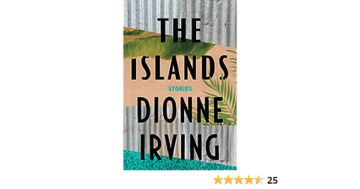 I mean it as a compliment when I say many of the stories in The Islands are disturbing. Shame and alienation are the baggage Irving’s characters carry. Some are entitled, living the American dream, while others scrape by or are haunted by loss. “All-Inclusive” is a gorgeously dark story. In an ironic switch, Anaya, a Los Angeles model-slash-waitress and the daughter of Jamaican immigrants, meets a white man known as The Poet who is from Jamaica. Anaya becomes The Poet’s mistress, and they travel the world together. He is rich, she is poor; he is married, she is not. She revels in being able to “demand drinks, not deliver them,” and “To call for a bed to be turned down.” Anaya hasn’t visited Jamaica since she was a child, and her memories of the place are unpleasant. When she and The Poet take a trip to an all-inclusive resort on the island, Anaya wonders, had she been born and raised in Jamaica, if she would be doing the bidding of thoughtless white tourists, turning down their beds at night. She is ashamed and humbled by being waited on by people like herself and her family, many of whom still live on the island; that she is being willingly used by a white man who disgusts her is a truth she can’t admit to herself until he flat-out tells her. There are no happy endings in The Islands, and redemption is just out of reach. Its characters walk a tightrope between past and present realities.