
Louise Marburg at The Hudson Review:
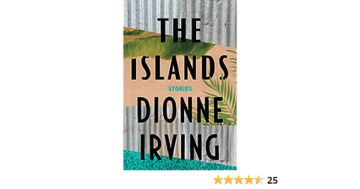 I mean it as a compliment when I say many of the stories in The Islands are disturbing. Shame and alienation are the baggage Irving’s characters carry. Some are entitled, living the American dream, while others scrape by or are haunted by loss. “All-Inclusive” is a gorgeously dark story. In an ironic switch, Anaya, a Los Angeles model-slash-waitress and the daughter of Jamaican immigrants, meets a white man known as The Poet who is from Jamaica. Anaya becomes The Poet’s mistress, and they travel the world together. He is rich, she is poor; he is married, she is not. She revels in being able to “demand drinks, not deliver them,” and “To call for a bed to be turned down.” Anaya hasn’t visited Jamaica since she was a child, and her memories of the place are unpleasant. When she and The Poet take a trip to an all-inclusive resort on the island, Anaya wonders, had she been born and raised in Jamaica, if she would be doing the bidding of thoughtless white tourists, turning down their beds at night. She is ashamed and humbled by being waited on by people like herself and her family, many of whom still live on the island; that she is being willingly used by a white man who disgusts her is a truth she can’t admit to herself until he flat-out tells her. There are no happy endings in The Islands, and redemption is just out of reach. Its characters walk a tightrope between past and present realities.
more here.
 Perhaps, to begin with, a remark by Nabokov—always a good place to start—who at the time was laying out the requisites for being a good novelist, though, for our purposes we might think of these as the requirements for being fully alive. But listen to him closely, because it’s the opposite of how we usually think of these things: “The true master,” he says, “requires, the precision of a poet and the imagination of a scientist.” The precision of a poet—and the imagination of a scientist.
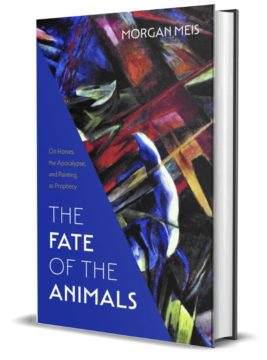 It’s hard to know how to review a Morgan Meis book, and the more books he writes, the harder it gets. That is, I think, precisely the point. Meis’s last book, The Drunken Silenus (part one of the Three Paintings trilogy, published by Slant Books), tackles the question “What is the best thing for man?”, knocks it flat, and gives it a concussion. Part two of the trilogy, The Fate of the Animals, is the tale of a painting whose artist thought it was almost unseeable, is enamored of the unsayable—yet by the final page, Meis has come terrifying close to saying just that.
 AI’s contributions to research and development might help to solve some of humanity’s oldest challenges, including by finding new treatments for diseases. The patent system must be overhauled.
 The concept of “elite overproduction” has attracted a lot of attention in the past several years, and it’s not hard to see why. Most associated with Peter Turchin, a researcher who has attempted to develop models that describe and predict the flow of history, elite overproduction refers to periods during which societies generate more members of elite classes than the society can grant elite privileges. Turchin argues that these periods often produce social unrest, as the resentful elites jostle for the advantages to which they believe they’re entitled.
 D
D A
A Every organism responds to the world with an intricate cascade of biochemistry. There’s a source of heat here, a faint scent of food there, or the crack of a twig as something moves nearby. Each stimulus can trigger the rise of one set of molecules in an animal’s body and perhaps the fall of others. The effect ramifies, tripping feedback loops and flipping switches, until a bird leaps into the air or a bee alights on a flower. It’s a vision of biology that entranced
 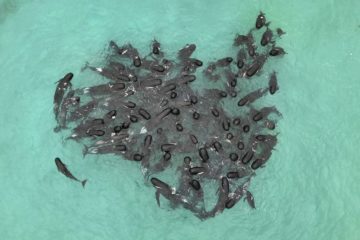 I wanted to write a poem about how the extreme heat of the ocean is breaking my heart, but the whales beat me to it. In late July, almost 100 long-finned pilot whales left the deep, usually cold waters where they live—so deep, so cold that scientists have barely been able to study them. Together they came to the coast of western Australia and huddled into a massive heart shape (if your heart were shaped like 100 black whales, like mine is).
  There are two
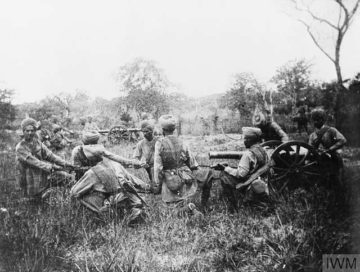 What would a successful war novel look like? This question, asked of a teacher years ago, concealed a deeper question I had: What would a truthful Kashmir novel look like? I have grappled for years with such questions, since I grew up amid the violent rebellion that Kashmiri Muslims waged against the Indian state in 1988. At first, I wondered whether the job of the novelist was to replicate the traumatic event that one had intimately witnessed.
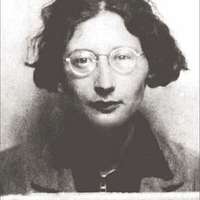 Though Weil coined the term decreation, she never treated it at length in a single text. Instead, she seeds passages on the subject through her later notebooks, not living long enough to give them shape. (Depending on your perspective, Thibon helpfully or misleadingly grouped several of these passages under the rubric of “Décréation” in Gravity and Grace.) But honestly, how much more she could have said about this claim? There are only so many ways to express the thought that I should unmake the being who is expressing that same thought. I have read and written a good deal on Weil’s work and life, but the passages on decreation still shock me. They are steeped in Christian imagery and ideals, and I sometimes wonder if my reaction to them has to do with the fact that I am neither a Christian nor religious. (Besides, I know Christians who, like me, are just as stunned by these fragments.) And my shock is not, I believe, because I do not accept a transcendental reality. Instead, I am shocked because her notion of decreation questions not just how I have lived my life but why I should have ever bothered to live in the first place—other than, that is, to surrender my life as quickly and gladly as possible. “Our existence,” she observes matter-of-factly, “is made up only of his waiting for our acceptance of not being.”
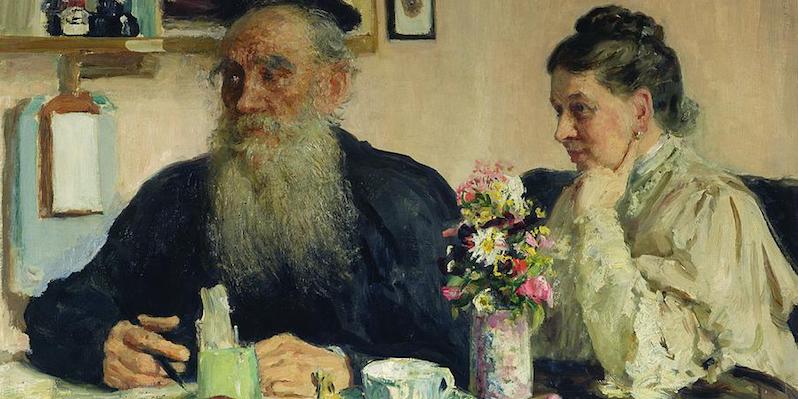 Deep in a Russian forest, in a well-concealed hermit’s cave, the lone occupant, who hadn’t spoken to another human being for seven years, a hermit named Sergius who had renounced the world, is forced to resist the wiles of a worldly woman who has come to seduce him and almost succeeds had he not, Tolstoy tells us, forfended her intentions by taking an axe and chopping off one of his fingers “below the second joint.”
 At the 2021 Australian and US Open tennis championships, all the line judges were replaced by machines. This was, in many ways, inevitable. Not only are these machines far more accurate than any human at calling balls in or out, but they can also be programmed to make their calls in a human-like voice, so as not to disorient the players. It is a little eerie, the disembodied shriek of “Out!” coming from nowhere on the court (at the Australian Open the machines are programmed to speak with an Australian accent). But it is far less irritating than the delays required by challenging incorrect calls, and far more reliable. It takes very little getting used to.
 It was nearing eight o’clock in the evening on December 11, 1981, and the serial killer Stephen Morin was driving the SUV of his latest captive, Margy Palm, north out of San Antonio. Helicopters circled the city and police combed the streets, warning people to stay inside and lock the doors. Morin’s reign of terror was sputtering to a clumsy close after a rare mistake earlier that day. He was suspected of the murder, torture, and in some cases rape of more than 30 women in 9 or 10 states—and most of San Antonio now knew that he was on the loose in its manicured, country-club midst.