
Alex Wilkins in New Scientist:
 Quantum computers have long promised to solve certain problems faster than any ordinary, or classical, computer can. In fact, Google delivered on this promise in 2019, when it declared that its quantum computer had achieved quantum supremacy, performing a calculation impossible for the best classical computers of the day. As New Scientist said at the time, Google had “secured yet another place in the history books”.
Yet the next chapter of the quantum revolution is struggling to be written. Since Google’s breakthrough in 2019, other groups have made similar claims, but in each case improved algorithms for classical computers have reasserted dominance over quantum machines, or at least threatened to. With this back and forth ongoing, will quantum computers ever pull ahead?
More here.
 In November, the United Kingdom will host a high-profile international summit on the governance of artificial intelligence. With the agenda and list of invitees still being finalized, the biggest decision facing UK officials is whether to invite China or host a more exclusive gathering for the G7 and other countries that want to safeguard liberal democracy as the foundation for a digital society.
 On a 95-degree evening in Austin last fall, I ran into a curator from the University of Texas’ Blanton Museum of Art at a gallery reception across town. We briefly chatted about the Blanton’s then recently opened “Ellsworth Kelly: Postcards” exhibition, which had been organized by the Frances Young Tang Teaching Museum and Art Gallery at Skidmore College. I mentioned I was covering the show for Salmagundi and that I was very much looking forward to seeing the presentation—a departure from the artist’s much larger monochromatic works—up close and personal, and possibly with a pair of reading glasses.
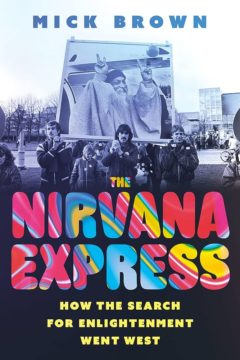 Not so long ago, India’s greatest export to the West, people aside, was spirituality. Mick Brown’s The Nirvana Express is an engaging history of India’s spiritual influence on the West between 1893, when Swami Vivekananda was the surprise star at the World’s Parliament of Religions in Chicago, and 1990, when the multimillionaire cult leader and tax dodger Bhagwan Rajneesh popped his sandals. The economic reforms that began the transformation of India’s economy started a year after Rajneesh’s death. The subsequent changes make the history described in Nirvana Express feel almost ancient.
 FRANZ KAFKA’S LAST STORYwas a fable about art and labor. “Josephine the Singer, or the Mouse Folk” is a tale told by a mouse who, with marked erudition and fair-mindedness, reflects on an extraordinary community member, the singer Josephine. At times of danger or emergency, the news will spread that she plans to sing. The community assembles, and Josephine, delicate and frail, stands before them in song, her arms spread wide, her throat stretched high. The tones emanating from that delicate throat are, according to some, not singing at all but rather ordinary piping—if anything, weaker and thinner than the sounds all mice make. It is peculiar, the narrator considers, that “here is someone making a ceremonial performance out of doing the usual thing.” But her art has a strange hold on all who listen. It turns the ordinary materials of speech into something transcendent.
 Pakistan has introduced measures against modern slavery with mixed success. Climate change, however, is reinforcing the most egregious abuses due to mounting personal debt, and the economic relationship between sharecroppers and small farmers on the one hand, and landlords and local merchants on the other.
 Ruscha’s avant-garde proclivities surfaced in his first pagework as a member of the group Students Five, a collective of friends—Joe Good, Jerry McMillan (both high-school classmates of Ruscha’s), Patrick Blackwell, Don Moore, and later Wall Batterton. Their mailer/bulletin, Orb,9 published in seven issues between 1959 and 1960 by Chouinard’s Society of Graphic Designers, contained an amalgam of cartoons, collages, graphic experiments, texts, and exhibition announcements. Ruscha edited and laid out the issues on a single seventeen-by-twenty-two-inch sheet, printing it recto-verso in an elaborate overlapping two-color system and folding it six times down for dissemination through the mail. Commenting on the genesis of Orb’s design, Ruscha would say, “I pasted the thing up and I maybe was thinking in the back of my head, Dada, ’cause they kind of echo a lot of the things that the Dadaists were doing. Things can be upside down, they don’t have to be orderly, you don’t have to have a proper well-behaved page line.”
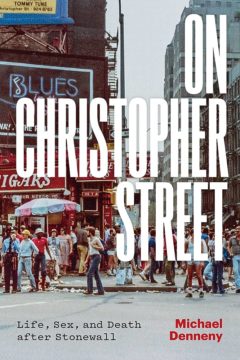 What distinguished the relationship between Gefter and Marks—other than the fact that it had lasted an eternity in gay years—was the photography. Inspired by the breathtaking tenderness of Alfred Stieglitz’s portraits of Georgia O’Keeffe, and Emmet Gowin’s of Edith Morris, Gefter, who had recently completed a BFA in photography and painting at the Pratt Institute, set out to document his romance with Marks, who, in turn, always insisted on reciprocating the photographic act. An archive of portraits, spontaneously taken by one another in moments of affection, lust, anxiety, jealousy, and fury, is the point of departure for their dialogues with Denneny. In his 2023 book On Christopher Street: Life, Sex, and Death after Stonewall, Denneny, who died this past April, described his aspiration to “make something like a literary or intellectual version of a Joseph Cornell box, using Philip and Neil’s photographs, the live interviews, and the written self-portraits to capture something—love, passion, and its loss—that I was obsessed with.”
 The cells of all living organisms are powered by the same chemical fuel:
  A research team headed by Prof. Jacob Hanna at the Weizmann Institute of Science has created complete models of human embryos from stem cells cultured in the lab—and managed to grow them outside the womb up to day 14.
  Lolita was originally published as a limited edition in France in September 1955. The book was released by Maurice Girodias of Olympia Press, a company known for specializing in pornography, but which had also built a reputation for publishing challenging literary titles. The first print run had been 5,000 copies and the book received little attention.
 Since modernity began, people have complained about airborne dust – but the measures required to control it have come decades or centuries after, if at all. The coalmines and factories that powered Britain’s Industrial Revolution made a capitalist class very rich, while the cost was borne by their workers in their bodies, lungs and blood. The Ethics of Dust was, for me, about human presence made present – about the building rewritten as not only limestone and glass and a wood-beamed roof, or as big abstract nouns like history and tradition and power, but the material traces of millions of bodies, their labours and their livelihoods. It brings the polis, the people, right into the heart of parliament – and it brings a reckoning with the source of Britain’s historical prosperity, too.
 In one of India’s most chilling hate crimes, a Railway Protection Force jawan named Chetansinh Chaudhary shot four train passengers dead on July 31. Three of those people were Muslim. Chaudhary had roamed through the train he had been entrusted to protect, hunting for people who looked Muslim, asked for their names and then pumped bullets into them. In the middle of this terror rampage, Chaudhary also