
Anton Howes at Age of Invention:
Back in 2011, the field of psychology went into crisis. Some of the most famous and widely-cited experimental results — like the finding that powerfully posing for a few minutes gives you a hormonal boost in confidence, or that priming people with words to do with ageing makes them walk faster — could not be replicated by others. These were findings published in the field’s most prestigious academic journals, and going back for decades. Many of them had made mistakes in the experiments, through negligence, unintended bias, or simple error. A few, quite simply, had been faked. Whole swathes of research and media coverage, including some globally best-selling books, turned out to be based on foundations of sand. And since then, more and more scientific fields have turned out to have been the victims of replication crises.
Nobody had bothered, for years and years, to go to the trouble of actually checking the more unusual and interesting findings. The Scottish psychologist-turned-science journalist Stuart Ritchie wrote an eye-opening book about the scandals in science called Science Fictions. He and another science journalist, Tom Chivers, have also lately started a podcast to sort the reliable findings from the media froth, diving into the details of what scientific studies actually show — it’s called The Studies Show (har har).
But I’ve become increasingly worried that science’s replication crises might pale in comparison to what happens all the time in history, which is not just a replication crisis but a reproducibility crisis.
More here.
 There are alien minds among us. Not the little green men of science fiction, but the alien minds that power the facial recognition in your smartphone,
  T
T The ceremony takes place on the night of the full moon in February, which the Tibetans celebrate as the coldest of the year. Buddhist monks clad in light cotton shawls climb to a rocky ledge some 15,000 feet high and go to sleep, in child’s pose, foreheads pressed against cold Himalayan rocks. In the dead of the night, temperatures plummet below freezing but the monks sleep on peacefully, without shivering.
 Some
Some 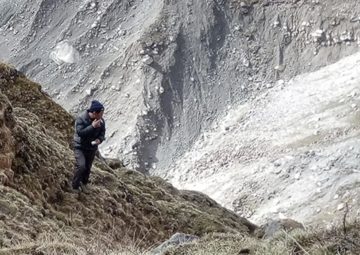 I
I Over the past two years, China has enacted some of the world’s earliest and most sophisticated
 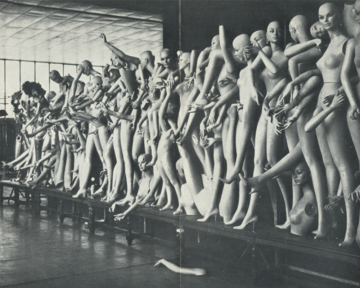 There were less intimate places available, so it was odd when a woman took the seat directly facing mine across the subway aisle. I looked up from my book and right back down: a couple of months before, we’d gone home together. She had a Southern accent and a boy’s name she swore was given. Bobby. Probably spelled Bobbie or Bobbi but she didn’t say “Bobbi with an i,” which I thought cool of her. Good sex, great chemistry, and I promised but then failed to text; encountering her on the subway might have been awkward even if I weren’t reading What Were You Expecting?: A New Manual for New Parents by Drs. Laurie and Lawrence Shriver. No point hiding the cover now. Bobbi had seen it before she sat down—that much was clear when we made eye contact. She chose the seat to shame me.
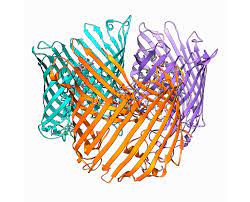 The protein universe just got a lot brighter.
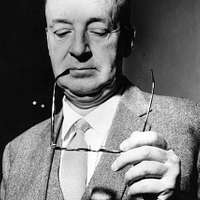 Every time this happens I’m reminded of Vladimir Nabokov’s unique and hilarious novel Pale Fire and the opening couplet of the 999-line poem that gives the book its title:
 “‘I have named the paper thus presented Calotype paper on account of its great utility in obtaining the pictures of objects with the camera obscura,’” he said, as quoted by Ellen Sharp, who notes, that “With his improved process, Talbot had reduced exposures from an hour to a few minutes, or even seconds, depending on the strength of the sun.”
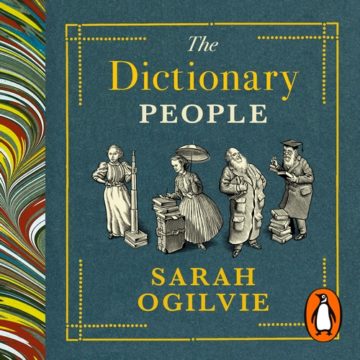 When James Murray, the then editor of the Oxford English Dictionary (OED), received the first bundle of quotations from a “Dr William Chester Minor” of Broadmoor Criminal Lunatic Asylum in 1883, he presumed the man worked there. In the first volume of the dictionary, published five years later, Minor is thanked as “Dr WC Minor, Crowthorne, Berks”. It was only in 1890 that Murray discovered the truth: that while Minor was an American surgeon, he was also a paranoid schizophrenic and probable sex addict who had been committed to Broadmoor after shooting a man dead.
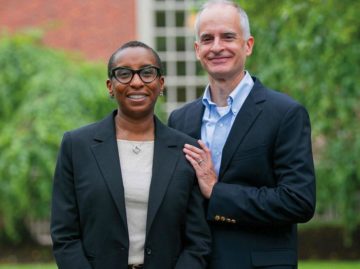 CLAUDINE GAY
 I
I