
Romanticism 101
Then I realized I hadn’t secured the boat.
Then I realized my friend had lied to me.
Then I realized my dog was gone
no matter how much I called in the rain.
All was change.
Then I realized I was surrounded by aliens
disguised as orthodontists having a convention
at the hotel breakfast bar.
Then I could see into the life of things,
that systems seek only to reproduce
the conditions of their own reproduction.
If I had to pick between shadows
and essences, I’d pick shadows.
They’re better dancers.
They always sing their telegrams.
Their old gods do not die.
Then I realized the very futility was salvation
in this greeny entanglement of breaths.
Yeah, as if.
Then I realized even when you catch the mechanism,
the trick still works.
Then I came to in Texas
and realized rockabilly would never go away.
Then I realized I’d been drugged.
We were all chasing nothing
which left no choice but to intensify the chase.
I came to handcuffed and gagged.
I came to intubated and packed in some kind of foam.
This too is how ash moves through water.
And all this time the side doors unlocked.
Then I realized repetition could be an ending.
Then I realized repetition could be an ending.
by Dean Young
from Poetry, July/August 2014
The Poetry Foundation, 2014
 A number of things have changed regarding climate change over the last 13 years. On the negative side, annual emissions continued to increase slowly or maybe
  The study of cognition and sentience would be greatly abetted by the discovery of intelligent alien beings, who presumably developed independently of life here on Earth. But we do have more than one data point to consider: certain vertebrates (including humans) are quite intelligent, but so are certain cephalopods (including octopuses), even though the last common ancestor of the two groups was a simple organism hundreds of millions of years ago that didn’t have much of a nervous system at all. Peter Godfrey-Smith has put a great amount of effort into trying to figure out what we can learn about the nature of thinking by studying how it is done in these animals with very different brains and nervous systems.
 In 1958, the young Indian poet Purushottama (P.) Lal was living in Calcutta, writing in English, and looking for a publisher. Unable to find one, he gathered a small group of college friends who were also convinced that English was a legitimate Indian language for creative writing, including Anita Desai, and started an independent press, known still as Writers Workshop. During what became their legendary Sunday morning
  Of all the forms of human intellect that one might expect
 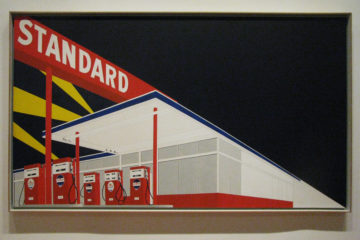 As Warhol was patron saint of the New York night, Ed Ruscha is the quintessential artist of Los Angeles and its heartbreaking light. His paintings, books, photographs, films, and works on paper — made with ingredients as disparate as gunpowder, sulfuric acid, chocolate, urine, Pepto-Bismol, tobacco, and rose petals — could only come from someone who embodies L.A.’s glamour and chaos, its self-consciousness and banal hopes. Peter Plagens once
 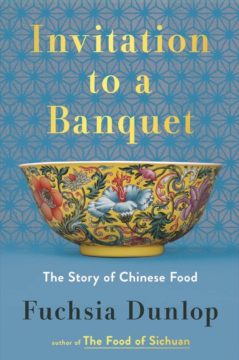 Collectively, the book’s chapters present Chinese cuisine as diverse and dynamic. Dunlop describes how, in the ninth century, the majority of the Chinese population switched from millet to rice, their present staple, after losing the millet-growing north of the country to nomads. She also explains the impact of the chilli pepper. Brought from the Americas in the late 16th century, it imparted a fiery character to the cooking of Sichuan and Hunan, further distinguishing these regional cuisines from the milder fare of coastal cities like Canton. We also hear about borscht, a legacy of the Russians who settled in Shanghai after the Bolshevik Revolution. Shanghainese cooks subsequently put their own spin on the dish, now known as luosongtang, replacing the beetroot with tomatoes to make a dense soup comprising ‘squares of cabbage, slices of carrot and potato and a few tiny fragments of beef’.
 Jacob Keanik scanned his binoculars over the field of ice surrounding our sailboat. He was looking for the polar bear that had been stalking us for the past 24 hours, but all he could see was an undulating carpet of blue-green pack ice that stretched to the horizon. “Winter is coming,” he murmured. Jacob had never seen Game of Thrones and was unaware of the phrase’s reference to the show’s menacing hordes of ice zombies, but to us, the threat posed by this frozen horde was equally dire. Here in remote Pasley Bay, deep in the Canadian Arctic, winter would bring a relentless tide of boat-crushing ice. If we didn’t find a way out soon, it could trap us and destroy our vessel—and perhaps us too.
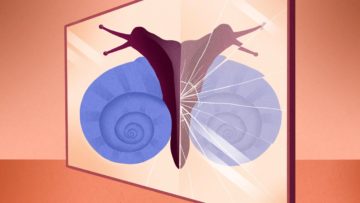 In 1848, when Louis Pasteur was a young chemist still years away from discovering how to sterilize milk, he discovered something peculiar about crystals that accidentally formed when an industrial chemist boiled wine for too long. Half of the crystals were recognizably tartaric acid, an industrially useful salt that grew naturally on the walls of wine barrels. The other crystals had exactly the same shape and symmetry, but one face was oriented in the opposite direction.
 Karen Hopkin: This is Scientific American’s 60-Second Science. I’m Karen Hopkin. They say that practice makes perfect.
 One afternoon in early 2017, at Facebook’s headquarters in Menlo Park, Calif., an engineer named Tommer Leyvand sat in a conference room with a smartphone standing on the brim of his baseball cap. Rubber bands helped anchor it in place with the camera facing out. The absurd hat-phone, a particularly uncool version of the future, contained a secret tool known only to a small group of employees. What it could do was remarkable. The handful of men in the room were laughing and speaking over one another in excitement, as captured in a video taken that day, until one of them asked for quiet. The room went silent; the demo was underway.
 I
I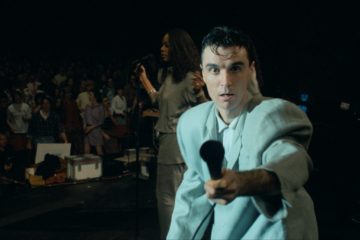 Four decades after it was filmed, “Stop Making Sense,” the Talking Heads concert documentary, is still ecstatic and strange. “It stays kind of relevant, even though it doesn’t make literal sense,” David Byrne, the band’s leader and singer, said in a recent interview.
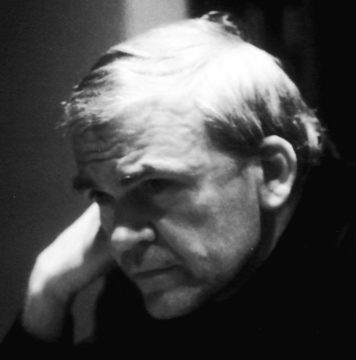 Milan Kundera, the Czech writer who died earlier this summer aged 94, represented a number of things, but they were all variations – to borrow one of his own favourite words – on the theme of freedom. To the Western readership which embraced his work perhaps as eagerly as that of any non-Anglophone writer during the final quarter of the twentieth century (Marquez was the obvious competitor) he seemed to offer a distinctive, unorthodox and unassailably authoritative approach to novelistic form, literary history and the sanctity of private life. But no less important to Kundera’s project and legacy were the liberties he took, the freedoms he granted himself – from responsibility and rigour, from his obligations to coherence and even reality.