
David Shariatmadari in The Guardian:
 Halfway through my interview with the co-founder of DeepMind, the most advanced AI research outfit in the world, I mention that I asked ChatGPT to come up with some questions for him. Mustafa Suleyman is mock-annoyed, because he’s currently developing his own chatbot, called Pi, and says I should have used that. But it was ChatGPT that became the poster child for the new age of artificial intelligence earlier this year, when it showed it could do everything from compose poetry about Love Island in the style of John Donne to devise an itinerary for a minibreak in Lisbon.
The trick hadn’t really worked, or so I thought – ChatGPT’s questions were mostly generic talking points. I’d asked it to try a bit harder. “Certainly, let’s dive into more specific and original questions that can elicit surprising answers from Mustafa Suleyman,” it had trilled. The results still weren’t up to much. Even so, I chuck one at him as he sits in the offices of his startup in Palo Alto on the other end of a video call (he left DeepMind in 2019). “How do you envision AI’s role in supporting mental health care in the future,” I ask – and suddenly, weirdly, I feel as if I’ve got right to the heart of why he does what he does.
More here.
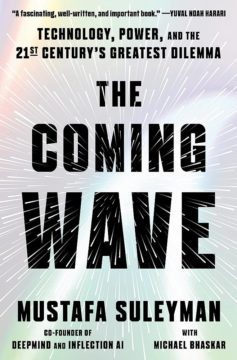 The Coming Wave distils what is about to happen in a forcefully clear way. AI, Suleyman argues, will rapidly reduce the price of achieving any goal. Its astonishing labour-saving and problem-solving capabilities will be available cheaply and to anyone who wants to use them. He memorably calls this “the plummeting cost of power”. If the printing press allowed ordinary people to own books, and the silicon chip put a computer in every home, AI will democratise simply doing things. So, sure, that means getting a virtual assistant to set up a company for you, or using a swarm of builder bots to throw up an extension. Unfortunately, it also means engineering a run on a bank, or creating a deadly virus using a DNA synthesiser.
 In 1947, the Black German musician Fasia Jansen stood on a street in Hamburg and began to sing the music of Brecht in her thick Low German accent to anyone passing by. Perhaps she’d learned the songs from prisoners and internees at Neuengamme, the concentration camp where she’d been forced to work four years earlier. Perhaps she’d learned them in the early days after the war, when she’d performed with Holocaust survivors at a hospital in 1945. One thing was clear: As Jansen wrestled with her trauma, song was at the center of her experience.
 Herman Mark Schwartz in The Syllabus:
 Samuel Moyn in Boston Review:
 In 2012, the mathematician Shinichi Mochizuki claimed he had solved the abc conjecture, a major open question in number theory about the relationship between addition and multiplication. There was just one problem: His proof, which was more than 500 pages long, was completely impenetrable. It relied on a snarl of new definitions, notation, and theories that nearly all mathematicians found impossible to make sense of. Years later, when two mathematicians translated large parts of the proof into more familiar terms, they pointed to what one called a “
 A recent rise in activism in Iran has added a new chapter to the country’s long-standing history of murals and other public art. But as the
 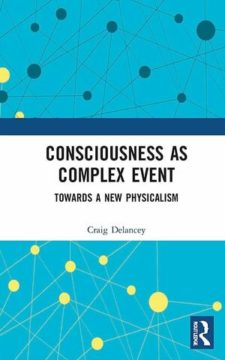 In Consciousness as Complex Event: Towards a New Physicalism, Craig DeLancey argues that what makes conscious (or “phenomenal”) experiences mysterious and seemingly impossible to explain is that they are extremely complex brain events. This is then used to debunk the most influential anti-physicalist arguments, such as the knowledge argument. A new “complexity-based” way of thinking about physicalism is then said to emerge.