
Max Kozlov in Nature:
 Rich, high-fat foods such as ice cream are loved not only for their taste, but also for the physical sensations they produce in the mouth — their ‘mouthfeel’. Now scientists have identified a brain area that both responds to the smooth texture of fatty foods and uses that information to rate the morsel’s allure, guiding eating behaviour1.
A tongue for texture
…To explore how food textures influence eating habits, Fabian Grabenhorst, a neuroscientist at the University of Oxford, UK, and his colleagues set out to quantify the mouthfeel of fatty foods. The authors prepared several milkshakes with varying fat and sugar contents and placed a sample of each between two pig tongues procured from a local butcher. The researchers then slid the tongues across each other and measured the amount of friction between the two surfaces, providing a numerical index of each shake’s smoothness.
More here.
 Even in the wilting heat of a late-stage New York summer, Adjei-Brenyah cuts a striking figure; a security guard pulls away from corralling unruly tweens just to compliment his hat, a trilby in rich forest green. The guard probably has no reason to know that this elegant, soft-spoken man who quite literally would not hurt a fly is the same one who’s published two of the most explosive and unlikely literary sensations of the past five years—the astonishing 2018 story collection
  Some scientific discoveries matter because they reveal something new — the double helical structure of DNA, for example, or the existence of black holes. However, some revelations are profound because they show that two old concepts, once thought distinct, are in fact the same. Take James Clerk Maxwell’s equations showing that electricity and magnetism are two aspects of a single phenomenon, or general relativity’s linking of gravity with a curved space-time.
 Hamas’s random
  AI is developing rapidly. ChatGPT has become the
  When Charles Darwin made the famous voyage that took him to the Galapagos, he marveled at the giant tortoises that lumbered across the islands. He tried to ride them. He ate their flesh. He followed the paths they created in their ponderous travels. And he mused at their differing shapes on different islands, insights that helped steer him toward his theory of evolution by natural selection.
 For years, Alzheimer’s conferences were like the obituary pages in the local newspaper: It’s where clinicians and researchers in the field went to find out the names of the latest promising drugs to die. Between 1998 and 2017 alone, 146 clinical trials of new Alzheimer’s drugs failed.
 Israel has ordered more than a million people to leave northern Gaza, presumably to prepare for an imminent ground offensive. Its military strategists appear to be planning the depopulation and reoccupation of at least part of an area home to around 2.3 million people —
  T
T In the Arab world, people have been as quick to show support for Palestine as most American politicians have for Israel. On Friday, after prayers at Egypt’s al-Azhar Mosque, protesters filled the streets. As did tens of thousands of
  Section 301, in the second-to-highest tier of Levi’s Stadium, floats 105 feet above Santa Clara, Calif. It comprises 251 seats — a mere hamlet in the vast 64,000-seat general kingdom of the place, but it was our hamlet, and on the last Saturday in July, we took up each one of those seats and watched, our collective breath held, as Taylor Swift emerged from a bevy of billowing pastel parachutes and rose up on a platform to perform the 47th show of her Eras Tour. A few songs in, she announced, laughing, that her father told her that Santa Clara had named her its honorary mayor during her two-night stay there and that the entire town had been
  It was a more physical world, though we thought it quite advanced. There seemed nothing “terrestrial” about twisting a radio knob to some eccentric decimal point, dialling static into song. In the summer of 1985, we all knew someone, usually an older sibling, who owned a portable, cassette-playing stereo. The rest of us remained stuck catching Top Forty countdowns on AM radio, or playing, on our parents’ imperial turntables, the one or two LPs in our possession. Increasingly, we listened to music by watching it on TV, our dance parties often overseen by a strutting, tattered sprite who wore bangles like opera gloves and held the camera’s gaze with her entire being, as though locked in a dare she was not going to lose.
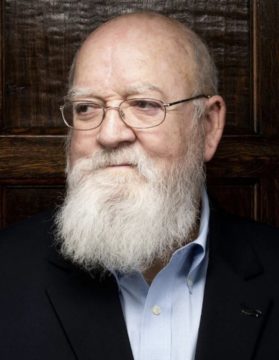 In the book, Dennett describes his intellectual growth and the role he played in many philosophy developments over the years. There’s plenty of inside baseball, but it is lively reading even for those with no stake in the game.
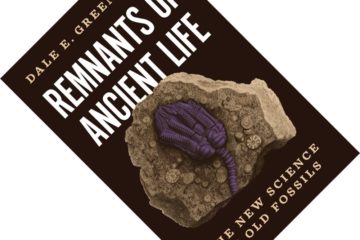 This is the second of a two-part review about ancient biomolecules; think of them as the other fossil evidence. Having just reviewed Jones’s
  Hamas’s brazen and vicious attacks within Israel have rightly drawn condemnation from around the world. If this is a war, as both sides agree it is, then Hamas’s deliberate targeting of civilians counts as a major war crime.