
Thad Williamson in the Boston Review:
 Danielle Allen’s Justice by Means of Democracy represents a major, and much-needed, shift in perspective. In the book, she locates the work of establishing justice not in the philosophy seminar room but in real-world discussions with diverse, everyday people: “talking with strangers” with intention to co-create a more democratic and more just society together. Fifty years on from Rawls’s foundational A Theory of Justice, Allen has set out to articulate not simply a new theory of justice but a new way of thinking about justice: one that trades Rawls’s abstract thought experiments for real-life ones. And equally importantly, it offers us the concrete tools for getting from thinking about to practicing democracy, however imperfectly, in messy situations in which the needs and future prospects of real people are concretely implicated.
More here.
 It’s one of the great mysteries of music history, as high in the ranks as “Who wrote the Renaissance lover’s tribute ‘Greensleeves’” and “How did
  Coffee
 Quillette: In Enlightenment Now, you discuss the importance of “norms and institutions that channel parochial interests into universal benefits.” Jonathan Haidt says the nation is the largest unit that activates the tribal mind, whereas Peter Singer says we are on an “escalator of reason” that allows our circle of moral concern to keep expanding. What would you say are the limits of human solidarity?
 The title of “
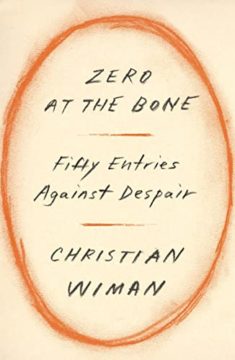 Much of “Zero at the Bone” is set a long way from Yale: in the hot, flat, scrubby towns of Texas where Wiman grew up, the apparent golden child of a deeply tarnished family, “my father vanishing, my mother wracked with rage and faith, my siblings sinking into drugs and alcohol, my own mind burning at night like an oil fire on water.” (He mentions only briefly an opiate addiction of his own, and spends maybe a little too much time recapping an abandoned bildungsroman in service of the theory that God is a failed novelist “who seems conflicted about how — or whether — to finish us.”)
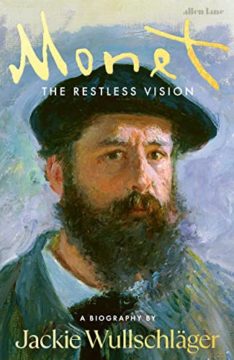 In seventeen years it will be the 200
 R
R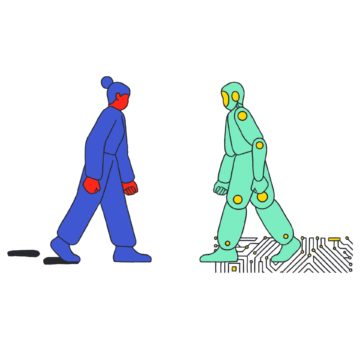 A little more than a year ago, the world seemed to wake up to the promise and dangers of artificial intelligence when OpenAI released
  In Germany, public discussion of Hamas’s brutal October 7 attack and Israel’s devastating counterassault has been uniquely constrained. The horrors of the Shoah and the genocide of nearly six million Jews—nearly a third of the world Jewish population at the time—left German citizens with a singular burden of responsibility to ensure that the Jewish minority would never again be exposed to such crimes. Since its founding in 1949, the Federal Republic of Germany has upheld what amounts to an official policy of unequivocal support for Israel. This remains largely the case even today, despite marked changes in Israel’s political culture and the rise of far more militant voices on the religious right over the last few decades—voices that claim all territories (including both Gaza and the West Bank) for the Jews alone and at times have called for the expulsion of Palestinians, even the 20 percent who are officially Israeli citizens and have their own political parties.
 The Irish singer and songwriter Shane MacGowan, a founding member of the punk-rock band the Pogues, died on Thursday, of pneumonia, at age sixty-five. It might sound as though he went young—and, by ordinary rubrics, he did—but MacGowan was a famously voracious consumer of drugs and prone to physical trauma. For decades, he flung himself around as though he were made of rubber. (“He was repeatedly injured in falls and struck by moving vehicles,” is how the Times put it in his
  What the hell is reality and how do we distinguish it from fiction? Who decides? Furthermore, if those who decide the allocations of the real and unreal are cruel, mad or colossally wrong, what then? These are the sorts of questions to which J G Ballard returns again and again in his fiction and non-fiction. His writing career spanned more than five decades. His work ranged from short stories published in New Worlds and Science Fantasy in the 1950s through to anti-realist novels exploring malfunctioning societies, psychological extremity, fragmentary modernity and technomania: from Crash! (1973), Concrete Island (1974), The Unlimited Dream Company (1979) to Rushing to Paradise (1994) and others. In later novels, such as Cocaine Nights (1996), Super-Cannes (2003) and Kingdom Come (2006), Ballard focused intently on savage anomie among the upper-middle classes, devising his own genre of bourgeois noir. Like Philip K Dick – who defined himself as ‘a fictionalising philosopher’ – Ballard deployed the creaking conventions of the novel to pose deep questions about reality, truth and the relationship between the inner mind and the external world. In his introduction to the French edition of Crash!, Ballard wrote: ‘The most prudent and effective method of dealing with the world around us is to assume that it is a complete fiction.’