
Charles Duhigg in The New Yorker:
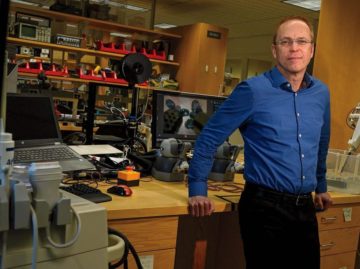 At around 11:30 a.m. on the Friday before Thanksgiving, Microsoft’s chief executive, Satya Nadella, was having his weekly meeting with senior leaders when a panicked colleague told him to pick up the phone. An executive from OpenAI, an artificial-intelligence startup into which Microsoft had invested a reported thirteen billion dollars, was calling to explain that within the next twenty minutes the company’s board would announce that it had fired Sam Altman, OpenAI’s C.E.O. and co-founder. It was the start of a five-day crisis that some people at Microsoft began calling the Turkey-Shoot Clusterfuck.
Nadella has an easygoing demeanor, but he was so flabbergasted that for a moment he didn’t know what to say. He’d worked closely with Altman for more than four years and had grown to admire and trust him. Moreover, their collaboration had just led to Microsoft’s biggest rollout in a decade: a fleet of cutting-edge A.I. assistants that had been built on top of OpenAI’s technology and integrated into Microsoft’s core productivity programs, such as Word, Outlook, and PowerPoint. These assistants—essentially specialized and more powerful versions of OpenAI’s heralded ChatGPT—were known as the Office Copilots.
More here.
 Noisy. Hysterical. Brash. The textual version of junk food. The selfie of grammar. The exclamation point attracts enormous (and undue) amounts of flak for its unabashed claim to presence in the name of emotion which some unkind souls interpret as egotistical attention-seeking. We’ve grown suspicious of feelings, particularly the big ones needing the eruption of a ! to relieve ourselves. This trend started sometime around 1900 when modernity began to mean functionality and clean straight lines (witness the sensible boxes of a Bauhaus building), rather than the “extra” mood of Victorian sensitivity or frilly playful Renaissance decorations.
 In
In  T
T What doesn’t kill you might make you stronger. When it comes to nature’s toxins, they might even save your life (or at least blunt the sting of its finality). The distinction, as the evolutionary biologist Noah Whiteman explores in “Most Delicious Poison,” is all in the dosage.
 Teaching algorithms to mimic humans typically requires hundreds or thousands of examples. But a new AI from Google DeepMind can pick up new skills from human demonstrators on the fly. One of humanity’s greatest tricks is our ability to acquire knowledge rapidly and efficiently from each other. This kind of social learning, often referred to as cultural transmission, is what allows us to show a colleague how to use a new tool or teach our children nursery rhymes. It’s no surprise that researchers have tried to replicate the process in machines. Imitation learning, in which AI watches a human complete a task and then tries to mimic their behavior, has long been a popular approach for training robots. But even today’s most advanced deep learning algorithms typically need to see many examples before they can successfully copy their trainers.
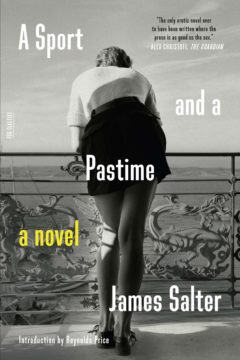 The English novelist Geoff Dyer remarked that “creative writing courses emphasise the importance of point-of-view and p.o.v. characters. Salter blows much of that stuff out of the water.” After the austere prose of his early war books he was no longer interested in traditional narrative and chronological structure, and used a radically different style and form in his third and fourth novels, A Sport and a Pastime and Light Years. The narrator in Sport is admittedly unreliable and cannot possibly have seen everything he describes. Salter told Phelps (punning in French on his name) that his sentence fragments—which suggest broken thoughts and incomplete speech—are “going to have many beautiful jumps, sauts, perhaps will be a ballet.” One puzzled critic noted that “Salter jumps the gap from one kind of time to another, from broad narrative time to tight episodic time, without a safety net, trusting the reader to follow him.” Salter also alienated readers by killing his main characters at the end of the novels: Connell in The Hunters, Cassada in Arm of Flesh, Dean in Sport, Nedra in Light Years.
 So you want to live like you’re from the Middle Ages? Well, maybe that’s not a common aspiration, but nevertheless, it’s a subject that’s become Olivia M. Swarthout’s expertise.
 Buying or selling bitcoin uses 16,000 litres of clean water for every single transaction, which could exacerbate existing droughts around the world. While the energy consumption and carbon emissions produced by bitcoin and other cryptocurrencies have been well studied, this is the first assessment of its water use and wider environmental impact.
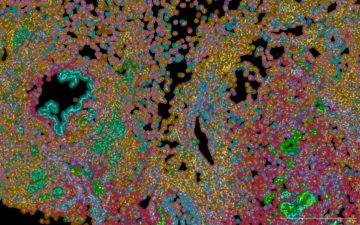 DNA mutations
 Nonprofit hospitals have been caught doing some surprising things, given how they are supposed to serve the public good in exchange for being exempt from federal, state and local taxes — exemptions that added up to
 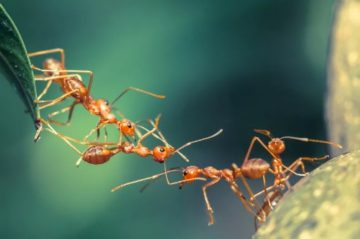 Biologists have discovered another incredible skill of ants that put humans to shame—they have a special technique to avoid traffic jams. Scientists from Texas Tech University and other institutions studied the 20-minute rhythms of the Leptothorax ant and discovered that their clever synchronization skills allowed them to avoid congestion. Their findings are published in a Proceedings of the Royal Society study.