
William Deresiewicz at Salmagundi:
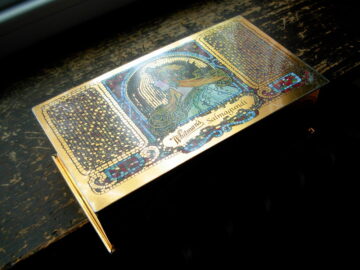 Art is useless, said Wilde. Art is for art’s sake—that is, for beauty’s sake. But why do we possess a sense of beauty to begin with? A question we will never answer. Perhaps it’s just a kind of superfluity of sexual attraction. Nature needs us to feel drawn to other human bodies, but evolution is imprecise. In order to go far enough, to make that feeling strong enough, it went too far. Others are powerfully lovely to us, but so, in a strangely different, strangely similar way, are flowers and sunsets. Art, in turn, this line of thought might go, is a response to natural beauty. Stunned by it, we seek to rival it, to reproduce it, to prolong it. Flowers fade, sunsets melt from moment to moment; the love of bodies brings us grief. Art abides. “When old age shall this generational waste, / Thou shalt remain.”
Art is for truth. Even Wilde suggests as much, though he, and we, don’t call it truth but meaning. Art points beyond itself. At what? At us.
more here.
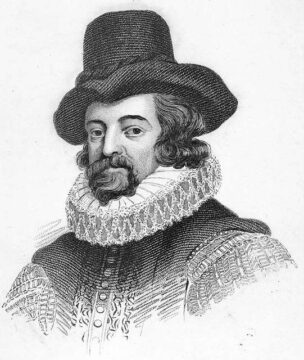 In form, Francis Bacon’s New Atlantis is modeled loosely on Thomas More’s Utopia. A ship full of European sailors lands on a previously unknown island in the Americas where they find a civilized society in many ways superior to their own. The narrator describes the customs and institutions of this society, which in Bacon is called “Bensalem,” Hebrew for “son of peace.” Sometimes Bacon echoes, sometimes improves upon, More’s earlier work. But at the end of the story, Bacon turns to focus solely on the most original feature of the island, an institution called Solomon’s House, or the College of the Six Days Works.
 It’s been a year of endless einsteins. In March, a troupe of
  Natural Selection is the pressure that drives evolution up the slopes of Mount Improbable. Pressure really is rather a good metaphor. We speak of ‘selection pressure’, and you can almost feel it pushing a species to evolve, shoving it up the gradients of the mountain. Predators, we say, provided the selection pressure that drove antelopes to evolve their fast running legs. Even as we speak, though, we remember what this really means: genes for short legs are more likely to end up in predators’ bellies and therefore the world becomes less full of them. ‘Pressure’ from choosy females drove the evolution of male pheasants’ sumptuous feathers. What this means is that a gene for a beautiful feather is especially likely to find itself riding a sperm into a female’s body. But we think of it as a ‘pressure’ driving males towards greater beauty. No doubt predators provided a selection pressure in the opposite direction, towards duller plumage, since bright males would presumably attract predator, as well as female, eyes. Without the pressure from predators the cocks would be even brighter and more extravagant under pressure from females. Selection pressures, then, can push in opposite directions, or in the same direction or even (mathematicians can find ways of visualizing this) at any other ‘angle’ relative to one another, Selection pressures, moreover, can be ‘strong’ or ‘weak’, and the ordinary language meanings of these words fit well. The particular path up Mount Improbable that a lineage takes will be influenced by lots of different selection pressures, pushing and tugging in different directions and with different strengths, sometimes cooperating with each other, sometimes opposing.
 At 11am local time on 13 December, countries adopted the text of an agreement that calls for “transitioning away from fossil fuels in energy systems, in a just, orderly and equitable manner, accelerating action in this critical decade, so as to achieve net zero by 2050 in keeping with the science.”
 W
W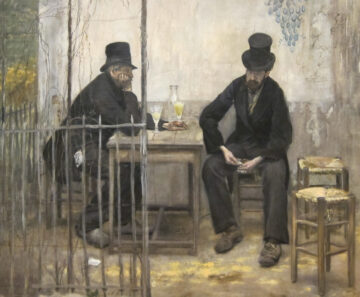 Baudelaire’s early suspicion that he had been born under a dark star seemed to be fulfilling itself. He considered becoming a monk but instead went to Belgium. “One becomes a Belgian through having sinned,” he quipped. “A Belgian is his own hell.” While walking to a church one day with the artist Félicien Rops, Baudelaire collapsed. Returning to Paris, he died in 1867 at the age of forty-six. The funeral was held in Montparnasse. Only sixty people showed up to honor the greatest poet France has ever created, but one of the mourners was Manet. Later, the journalist Victor Noir wrote, “in his last moments, his best friend was M. Manet; it was because the two natures understood each other so well.”
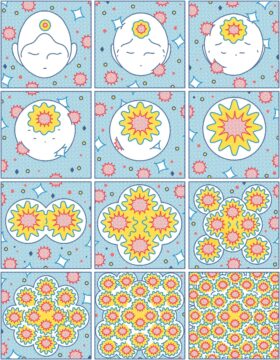
 Practicing yoga nidra—a kind of mindfulness training—might improve sleep, cognition, learning, and memory, even in novices, according to a pilot study published in the open-access journal PLOS ONE on December 13 by Karuna Datta of the Armed Forces Medical College in India, and colleagues. After a two-week intervention with a cohort of novice practitioners, the researchers found that the percentage of delta-waves in deep sleep increased and that all tested cognitive abilities improved.
 In the nineteen-seventies, Bruce Ames, a biochemist at Berkeley, devised a way to test whether a chemical might cause cancer. Various tenets of cancer biology were already well established. Cancer resulted from genetic mutations—changes in a cell’s DNA sequence that typically cause the cell to divide uncontrollably. These mutations could be inherited, induced by viruses, or generated by random copying errors in dividing cells. They could also be produced by physical or chemical agents: radiation, ultraviolet light, benzene. One day, Ames had found himself reading the list of ingredients on a package of potato chips, and wondering how safe the chemicals used as preservatives really were.
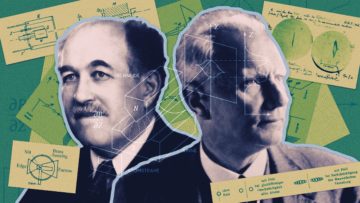 Before Erwin Schrödinger’s cat was simultaneously dead and alive, and before pointlike electrons washed like waves through thin slits, a somewhat lesser-known experiment lifted the veil on the bewildering beauty of the quantum world. In 1922, the German physicists Otto Stern and Walther Gerlach demonstrated that the behavior of atoms was governed by rules that defied expectations — an observation that cemented the still-budding theory of quantum mechanics.
 MacGowan died last week at the age of sixty-five, and to many it seemed a small miracle that he lived as long as that. His fame as a drinker was almost as great as his fame as a songwriter and performer, and all that dissipation took a toll. For one thing, it could make him sound mean. In Julien Temple’s 2020 documentary, Crock of Gold: A Few Rounds With Shane MacGowan, we see him insult his wife and friends. He is in a wheelchair, frail, and white as a sheet, making his friend (and the film’s producer) Johnny Depp, only five years younger, seem like the very image of youthful vigor by contrast. “You can be a right bitch,” he tells his wife Victoria. “But you really are very, very nice. And beautiful.”
 THIS PAST JULY, the University of Chicago’s National Opinion Research Center (NORC) and the Associated Press published the results of a