
My Quaker-Atheist Friend, Who Has Come to This Meeting House,
Smokes & Looks Out over the Rawthey to Holme Fell
what do you do
anything for?
you do it
for what the mediaevals would call
something like
the Glory of God
doing it for money
that doesn’t do it;
doing it for vanity,
that doesn’t do it;
doing it to justify a disorderly life,
that doesn’t do it
Look at the Briggflatts here . . .
It represents the best
that the people were able to do
they didn’t do it for gain;
in fact, they must have
taken a loss
whether it is a stone next to a stone
or a word next to a word,
it is the glory—
the simple craft of it
and money and sex aren’t worth
bugger-all, not
bugger all
solid, common, vulgar words,
the ones you can touch,
the ones that yield
—and a respect for the music . . .
what else can you tell ‘em?
by Jonathan Williams
from The Language They Speak Is Things to Eat
The University of North Carolina Press, 1994
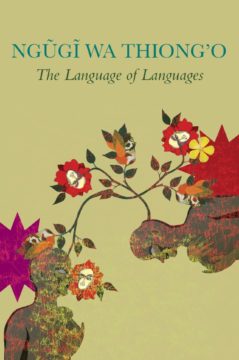 Remo Verdickt and Emiel Roothooft in LA Review of Books:
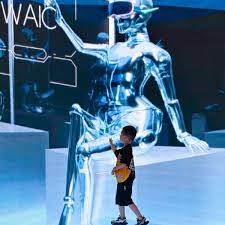 On 22 February1946, George Kennan, an American diplomat stationed in Moscow, dictated a 5,000-word cable to Washington. In this famous telegram, Kennan warned that the Soviet Union’s commitment to communism meant that it was inherently expansionist, and urged the US government to resist any attempts by the Soviets to increase their influence. This strategy quickly became known as “containment” – and defined American foreign policy for the next 40 years.
 For Julian Huxley, science was spiritual. The biologist, brother of the novelist Aldous Huxley and grandson of “Darwin’s Bulldog”
  Writing is a solitary practice;
 Quantum computers have long promised to solve certain problems faster than any ordinary, or classical, computer can. In fact, Google delivered on this promise in 2019, when it
  In November, the United Kingdom will host a high-profile international summit on the governance of artificial intelligence. With the agenda and list of invitees still being finalized, the biggest decision facing UK officials is whether to invite China or host a more exclusive gathering for the G7 and other countries that want to safeguard liberal democracy as the foundation for a digital society.
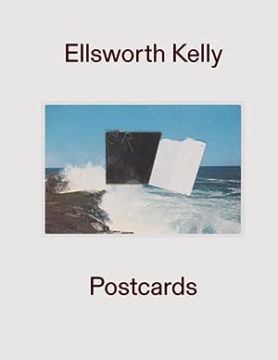 On a 95-degree evening in Austin last fall, I ran into a curator from the University of Texas’ Blanton Museum of Art at a gallery reception across town. We briefly chatted about the Blanton’s then recently opened “Ellsworth Kelly: Postcards” exhibition, which had been organized by the Frances Young Tang Teaching Museum and Art Gallery at Skidmore College. I mentioned I was covering the show for Salmagundi and that I was very much looking forward to seeing the presentation—a departure from the artist’s much larger monochromatic works—up close and personal, and possibly with a pair of reading glasses.
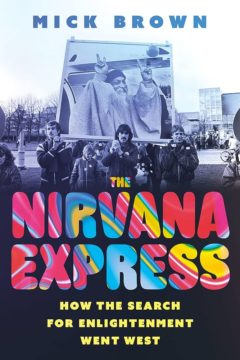 Not so long ago, India’s greatest export to the West, people aside, was spirituality. Mick Brown’s The Nirvana Express is an engaging history of India’s spiritual influence on the West between 1893, when Swami Vivekananda was the surprise star at the World’s Parliament of Religions in Chicago, and 1990, when the multimillionaire cult leader and tax dodger Bhagwan Rajneesh popped his sandals. The economic reforms that began the transformation of India’s economy started a year after Rajneesh’s death. The subsequent changes make the history described in Nirvana Express feel almost ancient.
 FRANZ KAFKA’S LAST STORYwas a fable about art and labor. “Josephine the Singer, or the Mouse Folk” is a tale told by a mouse who, with marked erudition and fair-mindedness, reflects on an extraordinary community member, the singer Josephine. At times of danger or emergency, the news will spread that she plans to sing. The community assembles, and Josephine, delicate and frail, stands before them in song, her arms spread wide, her throat stretched high. The tones emanating from that delicate throat are, according to some, not singing at all but rather ordinary piping—if anything, weaker and thinner than the sounds all mice make. It is peculiar, the narrator considers, that “here is someone making a ceremonial performance out of doing the usual thing.” But her art has a strange hold on all who listen. It turns the ordinary materials of speech into something transcendent.
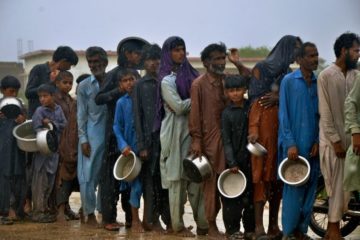 Pakistan has introduced measures against modern slavery with mixed success. Climate change, however, is reinforcing the most egregious abuses due to mounting personal debt, and the economic relationship between sharecroppers and small farmers on the one hand, and landlords and local merchants on the other.
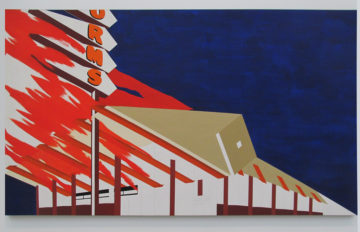 Ruscha’s avant-garde proclivities surfaced in his first pagework as a member of the group Students Five, a collective of friends—Joe Good, Jerry McMillan (both high-school classmates of Ruscha’s), Patrick Blackwell, Don Moore, and later Wall Batterton. Their mailer/bulletin, Orb,9 published in seven issues between 1959 and 1960 by Chouinard’s Society of Graphic Designers, contained an amalgam of cartoons, collages, graphic experiments, texts, and exhibition announcements. Ruscha edited and laid out the issues on a single seventeen-by-twenty-two-inch sheet, printing it recto-verso in an elaborate overlapping two-color system and folding it six times down for dissemination through the mail. Commenting on the genesis of Orb’s design, Ruscha would say, “I pasted the thing up and I maybe was thinking in the back of my head, Dada, ’cause they kind of echo a lot of the things that the Dadaists were doing. Things can be upside down, they don’t have to be orderly, you don’t have to have a proper well-behaved page line.”