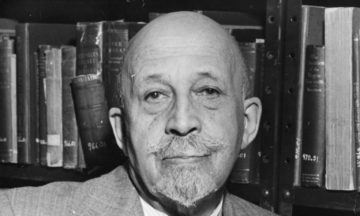
Yasemin Saplakoglu in Quanta:
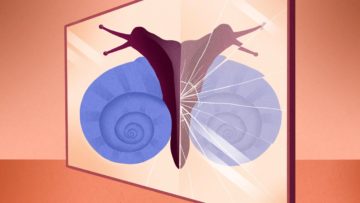 In 1848, when Louis Pasteur was a young chemist still years away from discovering how to sterilize milk, he discovered something peculiar about crystals that accidentally formed when an industrial chemist boiled wine for too long. Half of the crystals were recognizably tartaric acid, an industrially useful salt that grew naturally on the walls of wine barrels. The other crystals had exactly the same shape and symmetry, but one face was oriented in the opposite direction.
The difference was so stark that Pasteur could separate the crystals under a magnifying lens with tweezers. “They are in relation to each other what an image is, in a mirror, in relation to the real thing,” he wrote in a paper that year.
Though Pasteur didn’t know it, in the crystallized dregs of that wine, he had stumbled across one of the deepest mysteries about the origins of life on Earth.
More here.

 Karen Hopkin: This is Scientific American’s 60-Second Science. I’m Karen Hopkin. They say that practice makes perfect.
 One afternoon in early 2017, at Facebook’s headquarters in Menlo Park, Calif., an engineer named Tommer Leyvand sat in a conference room with a smartphone standing on the brim of his baseball cap. Rubber bands helped anchor it in place with the camera facing out. The absurd hat-phone, a particularly uncool version of the future, contained a secret tool known only to a small group of employees. What it could do was remarkable. The handful of men in the room were laughing and speaking over one another in excitement, as captured in a video taken that day, until one of them asked for quiet. The room went silent; the demo was underway.
 I
I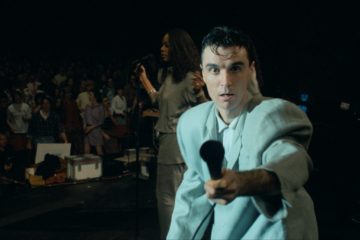 Four decades after it was filmed, “Stop Making Sense,” the Talking Heads concert documentary, is still ecstatic and strange. “It stays kind of relevant, even though it doesn’t make literal sense,” David Byrne, the band’s leader and singer, said in a recent interview.
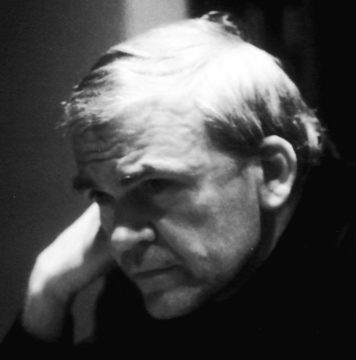 Milan Kundera, the Czech writer who died earlier this summer aged 94, represented a number of things, but they were all variations – to borrow one of his own favourite words – on the theme of freedom. To the Western readership which embraced his work perhaps as eagerly as that of any non-Anglophone writer during the final quarter of the twentieth century (Marquez was the obvious competitor) he seemed to offer a distinctive, unorthodox and unassailably authoritative approach to novelistic form, literary history and the sanctity of private life. But no less important to Kundera’s project and legacy were the liberties he took, the freedoms he granted himself – from responsibility and rigour, from his obligations to coherence and even reality.
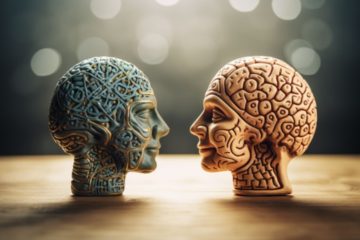 Researchers, guided by the Moral Foundations Theory (MFT), explored the neural basis of morality. They discovered that while a general brain network is involved in judging moral violations, distinct activity patterns arise for different moral issues, supporting a pluralistic view.
 IN 2023, THE ATTENDEES