
Michael Prodger at the New Statesman:
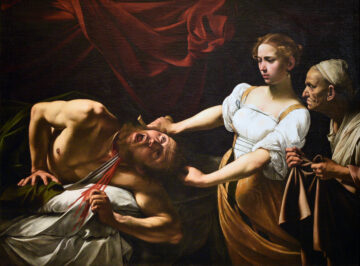 In May 1606, Caravaggio’s rackety life caught up with him. He already had a long list of misdemeanours against his name. He had been twice arrested for carrying a sword without a permit; put on trial by the Roman authorities for writing scurrilous verses about a rival, Giovanni Baglione (or “Johnny Bollocks” according to the poems); arrested for affray and assault, in one incident being injured himself (his testimony to the police survives: “I wounded myself with my own sword when I fell down these stairs. I don’t know where it was and there was no one else there”); arrested again for smashing a plate of artichokes in the face of a waiter; for throwing stones and abusing a constable (telling him he could “stick [his sword] up his arse”); and for smearing excrement on the house of the landlady who had had his belongings seized in payment of missed rent. There were more incidents, all meticulously recorded in the Roman archives.
more here.
 In February 1995, New York Governor George Pataki announced plans to close the Willard Asylum for the Insane, a state-run institution that opened in 1869 on the eastern shore of Seneca Lake. Portions of the hospital would be converted into a drug treatment center for prisoners; the rest would be permanently shuttered. Before this could happen, however, the hospital’s many artifacts—for example, its 19th-century medical equipmenat—needed to be documented and preserved. This is what Craig Williams, then a curator at the New York State Museum in Albany, did for much of the spring of 1995. One morning that April, Beverly Courtwright, a longtime storehouse clerk at Willard, told Williams that he needed to see something. She took him to the deteriorated brick structure that once housed Willard’s medical labs and occupational therapy rooms. Together they went up several flights of stairs to the attic, an open loft with exposed wood rafters and a brick wall at one end. In the brick wall was a door. Courtwright didn’t open it, so Williams went through alone.
 The discovery of animals around hydrothermal vents has led to a dramatic broadening of our understanding of the sorts of environments in which life can survive. This has significant implications for the search for extraterrestrial life – if life thrives in such environments on Earth, it is plausible it might flourish in similar conditions in the oceans of ice moons such as Enceladus, which orbits Saturn. It has also shifted assumptions about where life on Earth began: perhaps it was not in a shallow pool, but somewhere in the depths of the primordial sea. In other words, the deep ocean might not be a place of death and forgetting, but rather the birthplace of life on our planet.
 Coleman Hughes: I think there’s a lot of people that might agree with some points I make about the prevalence of racism, the decline of racism, but they might think, “Well, what’s the harm in exaggerating racism a little bit? I can see the harm in under-exaggerating racism, but shouldn’t we err on the side of assuming that there’s more racism and white supremacy out there so that we’re really facing the problem?” And I wanted to highlight the fact that there is a potential harm, including to black people, but people of color in general, to exaggerating racism.
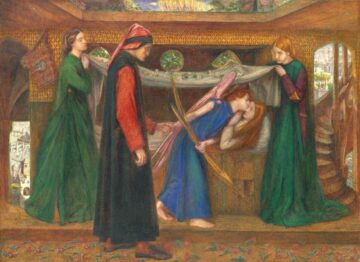 The Latin renders to “who is blessed for ever” and concludes an enigmatic, brief paragraph. First published in 1294, La Vita Nuova is a tantalizing prelude to the Florentine poet’s masterpiece, La Commedia, known today as The Divine Comedy. For centuries, readers and scholars have pored over La Vita Nuova (Italian for, literally, the new life)—convinced, as we often are, that a gifted writer’s nascent work contains the answers to longstanding mysteries.
 According to some estimates, consumers spend $62 billion a year on “anti-aging” treatments. But while creams, hair dyes and Botox can give the impression of youth, none of them can roll back the hands of time.
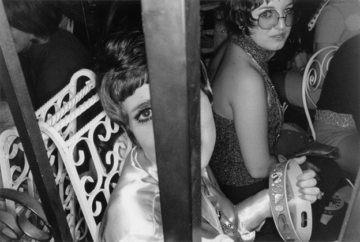 This photograph is the kind of photograph you’d throw away. If you’re working with a digital camera, you would immediately delete it. It’s a disaster. Trash it and move on. There’s a big metal bar in the middle of the shot. It must be from a gate or something. The metal bar not only dominates the very center of the picture, it’s also so close to the camera that the bar is blurred at the top. Technically speaking, that is a no-no. This is a terrible photograph.
 I’ve spent the last five years digging deep into the history of American crime forensics, writing a widely read 2020 New York Times story about
  Does free-market capitalism buttress democracy, or does it unleash anti-democratic forces? This question first emerged in the Age of Enlightenment, when capitalism was viewed optimistically and welcomed as a vehicle of liberation from the rigid feudal order. Many envisioned an equal-opportunity society of small producers and consumers, where no one would have undue market power, and where prices would be determined by the “invisible hand.” Under such conditions, democracy and capitalism are two sides of the same coin.
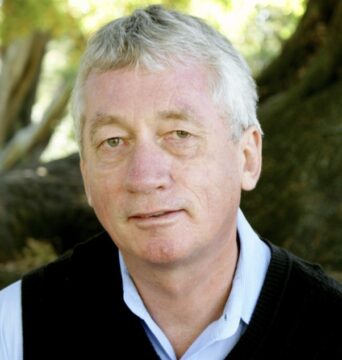 Emory University primatologist Frans de Waal — who pioneered studies of animal cognition while also writing best-selling books that helped popularize the field around the globe — passed away March 14, 2024, from stomach cancer.
 The famed coastal dunes that
 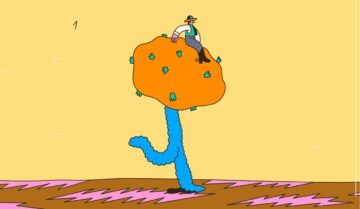 Since the 1950s, scientists have had a pretty good idea of how muscles work. The protein at the centre of the action is myosin, a molecular motor that ratchets itself along rope-like strands of actin proteins — grasping, pulling, releasing and grasping again — to make muscle cells contract.
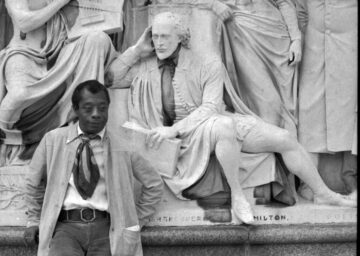 Weschler: It’s interesting in this context, you mentioned a second ago Giovanni’s Room, where part of the story is clearly about a deeply closeted white figure, an American in Paris, who gets involved with somebody who is clearly much more at ease with his sexuality. The relationship just curdles and he destroys both himself and his lover through his inability to be free. And he’s not only talking about gayness in that situation.
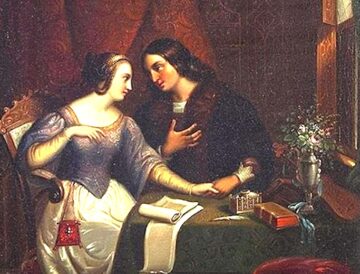 It is one of the great love stories of history and therefore inherently interesting because who isn’t interested in a great love story? Actually, it is a terrible love story as well. That is also what makes it interesting. The love part of the love story only lasted about a year in the early twelfth century. That’s when the great philosopher Peter Abelard was in Paris teaching and making fools of the other great minds to be found in Paris at the time, at least as he tells it, but other sources seem to confirm that Abelard was indeed just sharper and more witty and quicker on his feet than anyone else, plus he was a damn good poet and wrote wonderful popular songs and was handsome as hell.
 I interviewed de Waal in 2007 while researching my book