Hannah Thomasy in The Scientist:
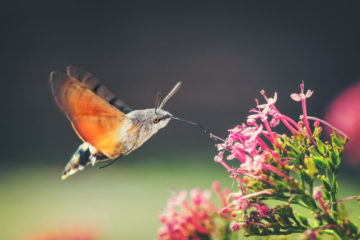
 The human gut is awash in a sea of microbes that quietly ferment fibers, produce vitamins, and exchange information with the immune system.1 Now, scientists are tasking bacteria with yet another job as they spelunk their way through the digestive system: cancer detection.
An international team of researchers engineered a bacterial biosensor capable of identifying a cancer-associated DNA mutation, which they published in the journal Science.2 The research team included molecular biologists Robert Cooper and Jeff Hasty of the University of California, San Diego and bowel cancer researchers Josephine Wright and Susan Woods at the South Australian Health and Medical Research Institute, and Daniel Worthley at the Colonoscopy Clinic. The study authors hope that this technology will one day aid in the early diagnosis of colorectal cancer, one of the most common causes of cancer-related death globally.
While scientists have previously engineered bacteria to detect inflammation or bleeding in the gut, this is the first bacterial biosensor that detects a specific DNA sequence from host tissues. To accomplish this feat, scientists leveraged Acinetobacter baylyi’s ability to take up extracellular DNA and integrate these sequences into its own genome.
More here.
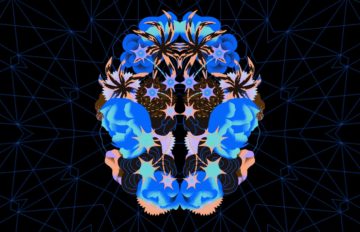 Psychedelic drugs have been undergoing a major makeover in psychiatry, earning mainstream acceptance that has eluded them for decades. In 2019, a variant of ketamine — an animal tranquillizer well known as a club drug — was approved by the US Food and Drug Administration (FDA) for treating post-traumatic stress disorder (PTSD). In May, Oregon opened its first treatment centre for administering psilocybin — the hallucinogenic compound found in magic mushrooms — following the state’s decision to legalize it (psilocybin remains illegal at the federal level). And, after decades of effort, the Multidisciplinary Association for Psychedelic Studies, a non-profit research organization in San Jose, California, formally asked the FDA for approval to market MDMA — also known as molly or ecstasy — as a treatment for PTSD.
 Awakening to the snowy sunny morning of Tuesday, March 7, 2023, I took due pleasure in looking out through my white curtains at white sun glare that appeared almost warm from within. Why not stroll outdoors? Should I take a chill, this warm room would receive me again—and, after all, certain dark brown puddles in the vacant lots along Second Street implied that spring might impend, never mind that unpleasantly cold breeze on the river, or the refusal of First Street’s prizeworthy icicle crop to even begin dripping. You see, I like to believe in spring almost as does a Christian in heaven. Why fret about unborn summer problems? The wind might numb my face, but my hands felt warm enough in their leather work gloves. In brief, I was a doughty tourist here in Reno, Nevada, on whose downtown I had fixed with the design of finding three homeless men—for in the United States, cities often rot from the center out. Since Reno’s incorporation dates to 1903, her downtown, I reasoned, ought by now to hold a skid row, or at least a few vagrants. Right away I won a jackpot of sorts: between Second and Third at Bell ran a long slushy alley with glary mountains of snow at its eastern end, while several blocks to the west a man in a blue parka, from whose wheeled conveyance hung at least fifteen black garbage bags, kept inspecting and adjusting his setup under the surveillance of a row of sparrows on a power line. I surveilled him, too.
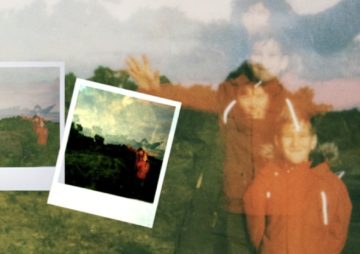 “I have discovered a potion for memory and wisdom,” the Egyptian god of the underworld tells the King of Thebes in an exchange recounted by Plato. This “magic potion,” it turns out, is writing. Previously, stories and histories, facts and fables were passed on orally. Minstrels would commit to memory the whole of the story of Troy, for example, which Homer ultimately put to the page. This was challenging work, time consuming, and imprecise. Stories were liable to variation, and exaggeration. Heroes were perhaps overly exalted. Details, dates, even characters would change over time. Writing solved many of these problems, and perfected our ability to recall.
 A 2019 study
 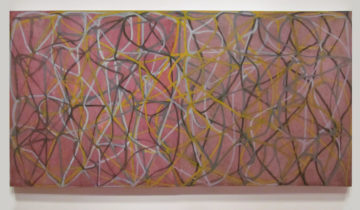 BRICE MARDEN was an artist for whom intensive looking was essential. To be with him in the studio or in a museum was to focus as hard as possible on the work of art in front of your eyes. Words never disrupted the silence of seeing.
 Darnton chooses forty or so ‘happenings’ from the four decades before the French Revolution, each crisply recounted in chapters that rarely run to more than ten pages, and assesses what Parisians made of them. All the period’s great political événements are here: Louis XV’s calamitous foreign wars and the humiliating treaties that ended them; the repeated clashes between royal government and the Paris Parlement (the city’s hugely prestigious high court); the summoning of the Estates General and the fall of the Bastille. So too are the great cultural events of the age: we have the publication of Diderot and d’Alembert’s Encyclopédie, Rousseau’s Emile and Voltaire’s Traité sur la tolerance (his plea for religious toleration), along with the performance of Beaumarchais’s hierarchy-subverting Mariage de Figaro – the great succès de scandale of the 1770s Parisian stage – and much else. Even the first public balloon flight over Paris in 1783, emphasising the boundless possibilities of science, finds its place on Darnton’s list.
 A cancer therapy may shrink the tumor of a patient, and the patient may feel better. But unseen on a CT scan or MR image, some of the cells are undergoing ominous changes. Fueled by new genetic changes due to cancer therapy itself, these rogue cells are becoming very large with twice or quadruple the number of chromosomes found in healthy cells. Some of the cells may grow to eight, 16 or even 32 times the correct number. Quickly, they will become aggressive and resistant to treatment. They will eventually cause cancer recurrence.
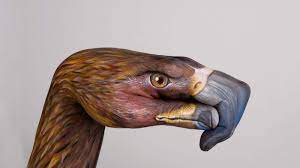 During World War II, Londoners often sought shelter from German bombs in the city’s subway tunnels. There, they encountered another type of enemy: hordes of voracious mosquitoes. These weren’t your typical above-ground mosquitoes. They were natives of the Underground, born in pools of standing water that pockmarked the underground passageways. And unlike their open-air cousins, London’s subterranean skeeters seemed to love biting humans.
 I got out of Wellesley in 1959, shortly after Lolita got out of Paris. Vladimir Nabokov’s Lolita. (Na-bwak-awf: a trip down the stairs with a loud bump and a glorious sprawl at the bottom.) I fell in love with it.