
Rupendra Brahambhatt in Ars Technica:
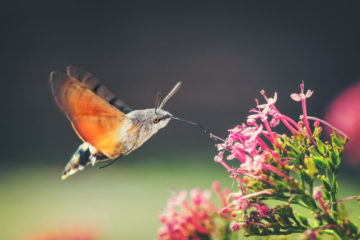
There are some insects that fly synchronously, meaning their wings on both sides flap together and in a coordinated manner. Others demonstrate asynchronous flight, in which each wing operates independently. A big difference between these two modes is that in synchronous flight, the nervous system of an insect has complete control over the wings’ motion.
The insects can command their muscles to beat on each wingstroke with their brains, just like you or I do when we command our leg muscles to move with each step. That is what the very first flying insects likely did, as it’s common in many groups of insects today, including moths, cockroaches, and others.
In asynchronous flight, the wings flap much faster than the insect’s brain can control.
More here.

 As
As  I had left my passport at an inn we stayed at for a night or so whose name I couldn’t remember. This is how it began. The next hotel would not receive me. A beautiful hotel, in an orange grove, with a view of the sea. How casually you accepted the room that would have been ours, and, later, how merrily you stood on the balcony, pelting me with foil-wrapped chocolates. The next day you resumed the journey we would have taken together.
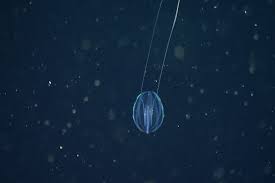 One of the greatest transformations in the history of life occurred more than 600 million years ago, when a single-celled organism gave rise to the first animals. With their multicellular bodies, animals evolved into a staggering range of forms, like whales that weigh 200 tons, birds that soar six miles into the sky and sidewinders that slither across desert dunes.
 The group behind the radical open-access initiative Plan S has announced its next big plan to shake up research publishing — and this one could be bolder than the first. It wants all versions of an article and its associated peer-review reports to be published openly from the outset, without authors paying any fees, and for authors, rather than publishers, to decide when and where to first publish their work.
 Some of our actions have near-instant consequences. Even young children learn for themselves that drinking water is a great way to quench your thirst. But sex doesn’t immediately lead to babies. It generally takes weeks to even register a pregnancy. Months pass before the act of childbirth.
 In 2020,
 Welcome to the second edition of
  Some of us were always Team George.