
Timothy Williamson at Aeon Magazine:
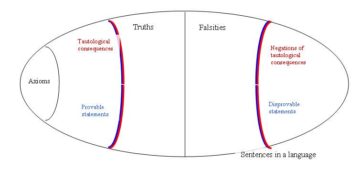 Since logic is the ultimate go-to discipline for determining whether deductions are valid, one might expect basic logical principles to be indubitable or self-evident – so philosophers used to think. But in the past century, every principle of standard logic was rejected by some logician or other. The challenges were made on all sorts of grounds: paradoxes, infinity, vagueness, quantum mechanics, change, the open future, the obliterated past – you name it. Many alternative systems of logic were proposed. Contrary to prediction, alternative logicians are not crazy to the point of unintelligibility, but far more rational than the average conspiracy theorist; one can have rewarding arguments with them about the pros and cons of their alternative systems. There are genuine disagreements in logic, just as there are in every other science. That does not make logic useless, any more than it makes other sciences useless. It just makes the picture more complicated, which is what tends to happen when one looks closely at any bit of science. In practice, logicians agree about enough for massive progress to be made. Most alternative logicians insist that classical logic works well enough in ordinary cases. (In my view, all the objections to classical logic are unsound, but that is for another day.)
more here.
 WASHINGTON, D.C.—A group of scientists, physicians, ethicists, and advocates sent a
 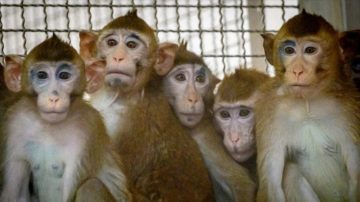 In 2019, immunologist Jonah Sacha received a shipment of monkeys for his research into infectious diseases. But while conducting preliminary chest X-rays, Sacha found one monkey that stood out for all the wrong reasons: it was carrying the bacterium that causes tuberculosis (TB). The infected animal rendered the entire shipment of 20 monkeys unusable for research because of the risk that the infection would spread. “We lost all of those animals,” says Sacha, who investigates stem-cell transplants as a treatment for HIV at the Oregon Health & Science University’s Oregon National Primate Research Center in Beaverton. “That cost hundreds of thousands of dollars of damage and delayed our research by many years.”
 If letter writing is an art form, then
  AI can predict the weather 10 days ahead more accurately than current state-of-the-art simulations, says AI firm Google DeepMind – but meteorologists have warned against abandoning weather models based in real physical principles and just relying on patterns in data, while pointing out shortcomings in the AI approach.
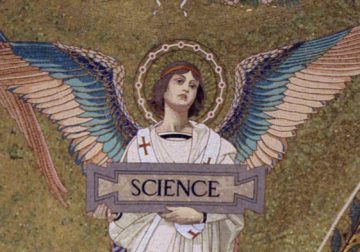 Francis Bacon is known, above all, for conceiving of a great and terrible human project: the
  After serving in the Vietnam War, Charles Figley became interested in the concept of trauma—not only the lasting
 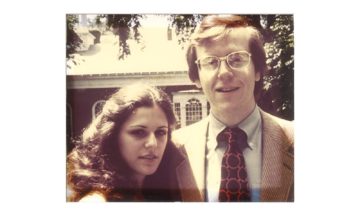 On November 10, 2023, my dear friend John Tooby died—or as he would have put it, finally lost his struggle with entropy. John was a Distinguished Professor of Anthropology at the University of California, Santa Barbara, who together with his wife, Leda Cosmides, founded the field of evolutionary psychology. But that academic accomplishment doesn’t do him justice; it’s the institutional embodiment of the way his mind worked. John had insight into human nature worthy of our greatest novelists and playwrights, grounded in an understanding of the natural world worthy of our greatest scientists. Evolution for him was a link in an explanatory chain that connected human thought and feeling to the laws of the natural world.
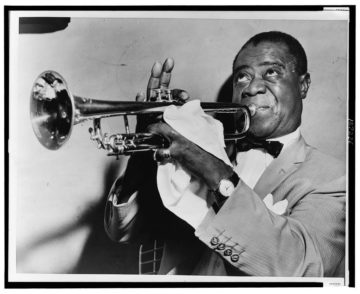 Ever since his seminal first recordings as a leader with his Hot Five and Seven ensembles in the 1920s, jazz musicians have called Louis Armstrong “
 Take intensifiers like ‘totally’, ‘pretty’ and ‘completely’. We might consciously believe them to be exaggerations undermining the speaker’s point, yet people consistently report seeing linguistic booster-users as more authoritative and likeable than others.
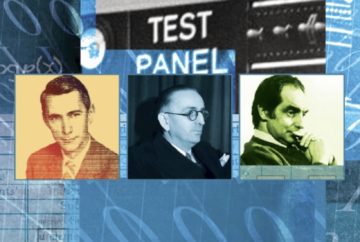 Consider a few of the bolder claims made by experts. Two years ago, Blaise Agüera y Arcas, vice president of Google Research, had already declared the end of the animal kingdom’s monopoly on language on the strength of Google’s experiments with large language models. LLMs, he argued, “illustrate for the first time the way that language understanding and intelligence can be dissociated from all the embodied and emotional characteristics we share with each other and with many other animals.” In a similar vein, the Stanford University computer scientist Christopher Manning has argued that if “meaning” constitutes “understanding of the network of connections between linguistic form and other things,” be they “objects in the world or other linguistic forms,” then “there can be no doubt” that LLMs can “learn meanings.” Again, the point is that humans have company. The philosopher Tobias Rees (among many others) has gone further, arguing that LLMs constitute a “far-reaching, epoch-making philosophical event” on par with the shift from the premodern conception of language as a divine gift to the modern notion of language as a distinctly human trait, even our defining one. On Rees’s telling, engineers at OpenAI, Google, and Facebook have become the new Descartes and Locke, “[rendering] untenable the idea that only humans have language” and thereby undermining the modern paradigm those philosophers inaugurated. LLMs, for Rees at least, signal modernity’s end.
 To do any task on a computer, you have to tell your device which app to use. You can use Microsoft Word and Google Docs to draft a business proposal, but they can’t help you send an email, share a selfie, analyze data, schedule a party, or buy movie tickets. And even the best sites have an incomplete understanding of your work, personal life, interests, and relationships and a limited ability to use this information to do things for you. That’s the kind of thing that is only possible today with another human being, like a close friend or personal assistant.
 The world’s fossil fuel producers are planning expansions that would blow the planet’s carbon budget twice over, a
  I am what I want, and I have the power within myself to make myself what I want to be, if only I find the will to activate this inner potential—or rather, to manifest this authentic identity. Such is the thesis under review in Tara Isabella Burton’s new book,