
Jennifer Szalai at the NYT:
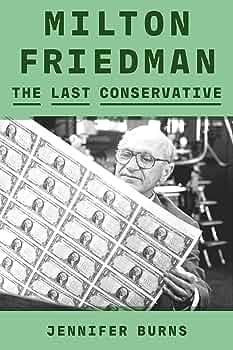 In writing her new biography of the Nobel Prize-winning economist Milton Friedman, known throughout his long life for his cheerful endorsement of deregulation and free markets, Jennifer Burns certainly had her work cut out for her. Reflecting on how controversial her subject was, she says that one of her goals was “to restore the fullness of Friedman’s thought to his public image.” She depicts Friedman, who died in 2006 at 94, as a victim of a “bipartisan assault,” besieged by radicals on the left and populists on the right who decry the “neoliberalism” that he so ardently promoted. “As he increasingly came to symbolize a political movement,” she writes, “the nuance and complexity of his ideas was lost.”
But even Burns has to admit that this attention to “nuance and complexity” was something that Friedman did a lot to discourage. He spent decades fashioning himself into a public celebrity, issuing confident pronouncements on the miracle of markets, whether in his columns for Newsweek or in his 1980 television series, “Free to Choose.”
more here.
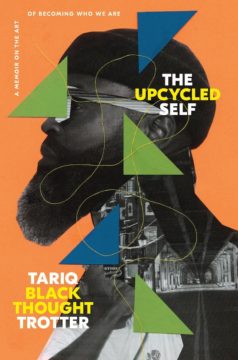 Across three decades as philosophical frontman for the Roots, Tariq Trotter (a.k.a. Black Thought) has composed such an expansive catalogue of keen social commentary and gritty introspection that his verse constitutes a biography in itself. With his memoir, “
 GRIEF, MEMORY, LOVE. I had not planned for this trinity of themes to become the substratum of my pilgrimage. Yet six months on, to arrive in Iraq in the nights leading up to Ashura — the climactic 10th day in a ritual period of mourning for the world’s more than 150 million Shiite Muslims — was to be confronted by a grief so fresh that the event that inspired it, the martyrdom of the Prophet Muhammad’s grandson Hussein in 680, might have occurred yesterday.
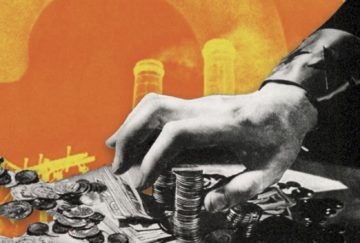 Americans of the left, right, and center are increasingly hostile to big corporations—but not for the same reasons. Many on the left are deeply uncomfortable with capitalism as such—that is to say, with corporate profit. In contrast, the populist right has turned against “woke” corporations that support transgender ideology, affirmative action, and other public policies conservatives oppose. But this is an objection not to corporate profit but to particular exercises of corporate power. Finally, as a response to US deindustrialization and the rise of China’s industrial and military power, there is growing bipartisan support for economic nationalism and industrial policy, particularly among national security experts in both parties. Here the criticism involves corporate purpose: Should American corporations, by investing or manufacturing in China, build up the economy of a country that is increasingly seen as America’s major rival in the world?
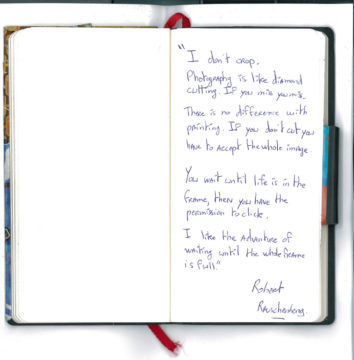 From 1965 to 1970, Robert Rauschenberg made the building his personal and professional HQ, a place to live, work, and (if the story be true) provide surplus shellfish to whomever asked. “I think the house satisfied a mix of aesthetic necessities and social desires for him,” says Kathy Halbreich, lately the executive director of and now an adviser to the Robert Rauschenberg Foundation. Since 1970, when the artist departed for roomier digs in Captiva, Florida, his eponymous organization has kept its offices in the building, remaining there even after Rauschenberg himself died in 2008 and well after bohemia had largely decamped from the neighborhood today known as NoHo. Tucked between a parking lot and the home of the New York University bursar, the five-story, redbrick, round-arch-style structure hides in plain sight, its anonymity somewhat abetted by the foundation’s low profile. “We’ve never really wanted to trumpet our location,” says Halbreich.
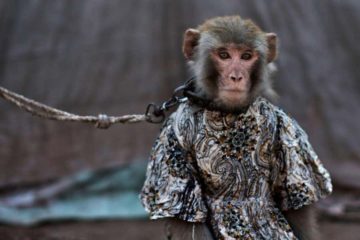 Monkeys that “dance” in street shows in Pakistan have high levels of stress hormones, abnormal behaviour and poor health – but stopping such shows would create a welfare crisis for trainers and their families, researchers say.
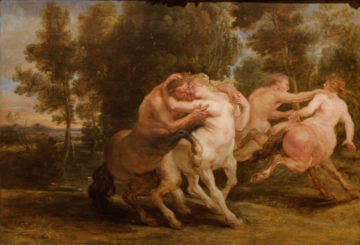 Peter Paul Rubens, known in his lifetime as “the prince of painters and the painter of princes”, is not, perhaps, a figure sympathetic to the modern age. He was by all accounts a charming man with graceful manners who could speak Latin, Dutch, Italian, Spanish, French and German; he was knighted by both Philip IV of Spain and Charles I of England; and employed as a diplomat and spy as well as a painter; he was a man as comfortable in Europe’s courts as in his studio. As such, he is just a tad too smooth when contemporary tastes run to artists with a bit of grit in the oyster.
 For its first two-thirds, Walter Isaacson’s mammoth biography of Elon Musk is an epic romance, like The Lord of the Rings (a Musk favorite) or the Arthurian legends. It portrays the hero and his comrades overcoming seemingly insurmountable obstacles through daring, determination, cleverness, and skill, all in the pursuit of noble goals.
 Although one of the loneliest moments of my life happened more than
  Why fingers shrivel up in water is an age-old question that every child asks at bath time, but the answer may come as a surprise. “The whole body doesn’t wrinkle, and that says a lot,” said
  First, watch this
  According to the
  The latest waves of uprisings in Iran following the movement in defence of Iranian women’s freedoms are among the most significant since the Islamic Republic was established after the overthrow of Mohammad Reza Pahlavi in 1979. The regime’s resulting crackdown has led to mass arrests and prison sentences, as well as a string of executions. These uprisings are symptomatic of prolonged and multifaceted discontent with the Islamic Republic’s perceived governance. One of the oft-cited causes is growing dissatisfaction with principles of government grounded in a religious worldview, and its subsequent patterns of civil liberty violations. The most visible of these violations, which has served as a focal point for resistance, is the law of mandatory hijab for women.
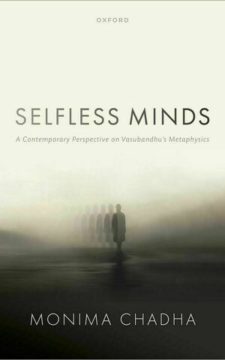 Monima Chadha has given the world of Anglophone philosophy more reason to take Indian Buddhist philosophy seriously in this closely argued study of the philosophy of the 4th century philosopher Vasubandhu, generally regarded as one of the founders (with his older brother Asaṅga) of the Yogācāra tradition, a tradition associated sometimes with idealism, and sometimes with phenomenology. However one reads the vast literature of this school—or, more specifically, the work of Vasubandhu himself—the close attention that Vasubandhu and his followers give to the philosophy of mind and the structure of subjectivity is inescapable and fascinating. Vasubandhu’s influence on subsequent Buddhist philosophy in India, Tibet, China, and beyond is incalculable, and he is surely one of the two or three most important philosophers in the Indian Buddhist tradition. An investigation of his work by an astute philosopher at home in contemporary philosophy of mind is hence most welcome.